Welding is one of the most hazardous activities performed in industrial and construction environments. Welders work in close proximity to extreme heat, intense ultraviolet and infrared radiation, toxic fumes, electrical current, and flammable materials — often all at the same time. According to occupational safety statistics, welders face a significantly higher rate of injury than the average industrial worker, with eye injuries, burns, and respiratory illnesses among the most common outcomes.
The good news is that virtually every welding injury is preventable. With the right welding safety equipment, proper training, disciplined work practices, and a well-managed safety program, welding can be performed day after day without incident. This guide covers the major welding hazards, the personal protective equipment every welder needs, safe work practices, and the responsibilities of both employers and welders in keeping the job safe.
Understanding the Main Hazards of Welding
Before discussing protection, it is essential to understand what welders actually need protection from. Welding combines several distinct hazard categories, each capable of causing serious harm on its own.
Arc Radiation and Welding Flash
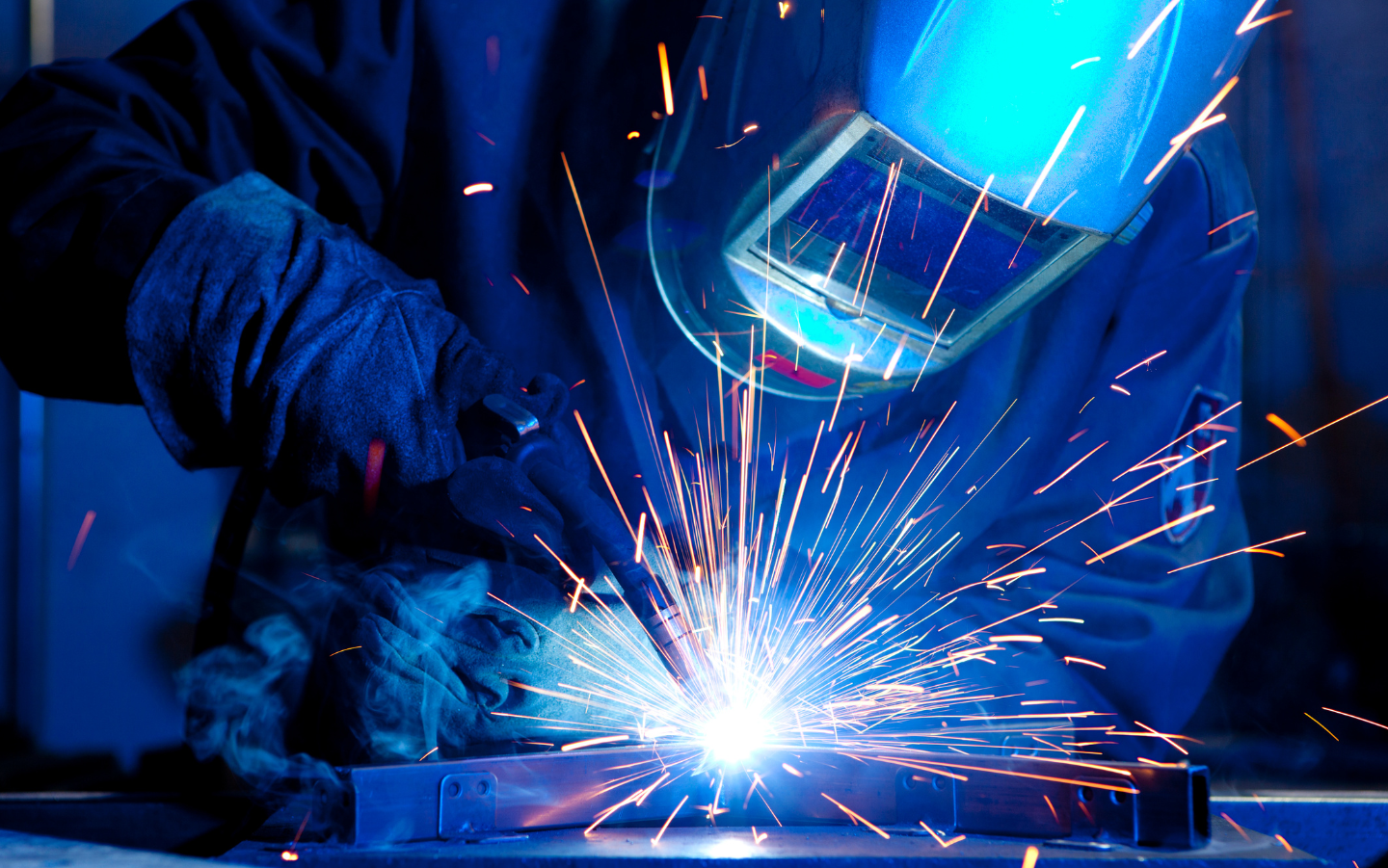
The electric arc used in most welding processes emits intense ultraviolet (UV), visible, and infrared (IR) radiation. Unprotected exposure to UV radiation causes "welding flash" — also known as arc eye, flash burn, or photokeratitis — a painful condition where the cornea is effectively sunburned. Symptoms typically appear several hours after exposure and include intense pain, a gritty sensation in the eyes, light sensitivity, and temporary vision loss. Repeated exposure can contribute to long-term eye damage, including cataracts. Arc radiation also burns exposed skin in the same way severe sunburn does, which is why welders cover virtually every inch of their bodies.
Fumes and Gases
Welding fume is a complex mixture of metal oxides, silicates, and fluorides generated when metal is heated above its boiling point and the vapours condense into very fine particles. Depending on the base metal, filler material, and coatings, welding fume can contain manganese, hexavalent chromium, nickel, zinc, lead, and cadmium. Health effects range from short-term metal fume fever to chronic conditions including occupational asthma, neurological effects associated with manganese, and lung cancer — welding fume is classified as carcinogenic to humans by the International Agency for Research on Cancer. Shielding gases such as argon and carbon dioxide also displace oxygen and can cause asphyxiation in confined spaces.
Fire and Explosion
Welding and cutting produce sparks and molten spatter that can travel ten metres or more from the work area. These hot particles can smoulder unnoticed in cracks, under equipment, or in combustible material and ignite fires hours after work has finished. Welding near flammable liquids, gases, or dusts — or on containers that previously held them — is one of the most common causes of fatal industrial explosions.
Electric Shock
Arc welding equipment uses electrical circuits that can deliver a fatal shock. The most common risk is secondary voltage shock from the welding circuit itself (typically 20–100 volts), which becomes dangerous when the welder touches the electrode and the workpiece simultaneously, especially in wet or sweaty conditions or when kneeling on the workpiece.
Physical and Ergonomic Hazards
Beyond the headline hazards, welders face burns from hot metal, noise-induced hearing loss, crush and impact injuries, working at height, and musculoskeletal strain from sustained awkward postures in confined positions.
Essential Welding Safety Equipment
Personal protective equipment is the welder's last line of defence, and welding demands one of the most comprehensive PPE ensembles of any trade. Quality matters: all welding safety gear should comply with the relevant standards, such as ANSI Z87.1 for eye protection and ANSI Z49.1 as the umbrella standard for welding safety.
Welding Helmets and Eye Protection
The welding helmet is the most recognisable piece of welding safety equipment, protecting the eyes and face from arc radiation, sparks, and spatter. Helmets use filter lenses rated by shade number — typically shade 8 to 13 depending on the process and amperage. Auto-darkening helmets, which switch from a light state to the selected dark shade within milliseconds of arc strike, have become the standard choice because they allow welders to position work accurately with the helmet down, reducing both flash exposure and neck strain.
Critically, the helmet is not enough on its own. Welders should always wear safety glasses with side shields underneath the helmet. This protects against flying particles when the helmet is raised — during slag chipping and grinding, for example — and against arc flash from adjacent welding stations.
Welding Safety Glasses and Goggles
Welding safety glasses deserve specific attention because they are frequently misunderstood. Standard clear safety glasses protect against impact but provide essentially no protection against direct viewing of a welding arc. Shaded welding glasses (typically shade 3 to 5) are appropriate only for low-radiation processes such as oxy-fuel cutting, brazing, and torch soldering — never for arc welding, which requires the much darker shades only a helmet filter provides. Goggles offer a sealed fit useful for grinding and overhead work where particles can enter from any angle.
Protective Clothing and Welding Gear
Welders should wear flame-resistant (FR) clothing covering the entire body: an FR jacket or leathers, FR trousers without cuffs (which catch sparks), and a shirt with a buttoned collar to protect the neck from radiation. Clothing should be free of oil and grease, and synthetic fabrics that melt onto skin must be avoided. Leather welding gloves protect hands from heat, radiation, and electric shock — gauntlet-style for most arc processes, thinner TIG gloves where dexterity is needed. High-top leather boots, a welding cap or hood for head and hair protection, and leather aprons or sleeves for heavy spatter work complete the basic ensemble.
Respiratory Protection
Where ventilation alone cannot keep fume exposure below occupational limits, respiratory protection is required. Options range from disposable P2/N95-style welding respirators worn under the helmet, through half-mask respirators with particulate filters, up to powered air-purifying respirators (PAPR) integrated into the welding helmet, and supplied-air systems for confined spaces or exotic alloys such as stainless steel, where hexavalent chromium exposure is a concern.
Hearing Protection
Welding, gouging, and grinding routinely exceed safe noise levels. Earplugs or earmuffs should be worn in noisy environments, and fire-resistant earplugs also prevent sparks from entering the ear canal during overhead work — a surprisingly common and serious injury. Read more on occupational noise exposure.
Safe Welding Work Practices
Equipment protects the welder; safe practices protect everyone.
Preparing the Work Area
Before striking an arc, remove or shield all combustible materials within at least 10 metres (35 feet) of the work. Use welding screens or curtains to protect nearby workers from arc flash. Verify fire extinguishers are present, charged, and appropriate for the hazard. Where hot work is performed outside designated welding areas, a hot work permit system should control the activity, and a fire watch should remain during the work and for at least 30–60 minutes afterwards to catch smouldering ignition.
Ventilation and Fume Control
Follow the hierarchy of controls: position the head out of the fume plume, use local exhaust ventilation (LEV) such as fume extraction guns or capture hoods placed close to the arc, ensure good general ventilation, and add respiratory protection where engineering controls cannot achieve safe levels. In confined spaces, continuous air monitoring, forced ventilation, and a standby attendant are mandatory.
Electrical Safety
Keep gloves and clothing dry, insulate yourself from the workpiece and ground, never change electrodes with bare or wet hands, inspect cables for damage before each shift, and turn off equipment when not in use. Ensure machines are properly grounded and repairs are performed only by qualified personnel.
Working on Containers and Confined Spaces
Never weld on drums, tanks, or pipes that have held flammable or unknown substances until they have been properly cleaned, purged, and tested. "Empty" containers are often the most dangerous, as residual vapours form explosive atmospheres. Confined space welding requires permits, atmospheric testing, ventilation, rescue arrangements, and removal of cylinders and equipment from the space when not in use.
Training, Responsibility and Safety Management
Who Is Responsible for Welding Safety
Welding safety is a shared responsibility, but the legal duty sits firmly with the employer. Under OSHA regulations and equivalent legislation worldwide, employers must provide a safe workplace, suitable equipment and PPE at no cost to the worker, adequate training, exposure monitoring, and supervision. Supervisors must enforce safe practices, authorise hot work, and ensure that only trained personnel weld. Welders themselves are responsible for following procedures, using their PPE correctly, inspecting their equipment, and reporting hazards. A strong safety culture treats these layers as mutually reinforcing rather than allowing responsibility to be pushed downwards onto the individual welder.
Training and Competence
Every welder should be trained not only in welding technique but in hazard recognition, PPE selection and use, fire prevention, confined space awareness, and emergency response. Refresher training should follow incidents, near misses, new equipment, or changes in process.
Managing Welding Safety Programmatically
Mature organizations manage welding safety through a structured system: documented risk assessments for welding activities, hot work permit workflows, PPE registers and inspection schedules, exposure monitoring records, training matrices, and safety incident tracking. Digital safety management platforms make this dramatically easier by centralising permits, automating training and inspection reminders, and providing auditable records — turning welding safety from a paperwork burden into a live, managed process.
Frequently Asked Questions About Welding Safety
Which of the following is a tip for welding safety — what are the most important rules to follow?
If you had to distil welding safety into its most essential tips, they would be these. First, always wear complete PPE: a properly shaded welding helmet with safety glasses underneath, flame-resistant clothing, leather gloves and boots, and hearing protection — never strike an arc with exposed skin or unprotected eyes, even "just for a second."
Second, control the fire risk: clear or cover combustibles within 10 metres, keep an extinguisher at hand, use a hot work permit outside designated areas, and maintain a fire watch after finishing.
Third, manage what you breathe: keep your head out of the plume, use fume extraction whenever available, and wear a respirator when ventilation is insufficient or when welding stainless, galvanised, or coated metals.
Fourth, respect electricity: keep gloves dry, don't touch the electrode and workpiece simultaneously, and inspect cables daily. Fifth, never weld on closed or formerly flammable containers without proper cleaning and testing. Finally, inspect your equipment before every shift and report defects immediately rather than working around them. Most serious welding accidents involve the violation of one of these basic rules, usually justified by time pressure — which is precisely why disciplined adherence matters more than advanced knowledge.
Who is ultimately responsible for the welder's safety?
Legally and morally, the employer holds ultimate responsibility for the welder's safety. Occupational safety law in virtually every jurisdiction — OSHA's General Duty Clause and welding-specific standards (29 CFR 1910.252) in the United States, the Health and Safety at Work Act in the UK, and equivalent frameworks elsewhere — places the primary duty on the employer to provide a workplace free from recognised hazards. In practical terms this means the employer must assess welding risks, provide compliant equipment and PPE at no cost to the worker, install adequate ventilation, deliver documented training, monitor exposure to fumes and noise, implement hot work permit systems, and supervise the work.
That said, responsibility operates in layers. Supervisors carry delegated responsibility for enforcing procedures on the ground, authorising hot work, and stopping unsafe work. The welder carries personal responsibility for using the provided equipment correctly, following procedures, inspecting their gear, and reporting hazards and near misses — a welder who removes their helmet to "tack something quickly" shares in the outcome. But when something goes wrong, investigators and courts look first at the system the employer created: Was training provided? Was the permit system enforced? Was PPE available and maintained? The most defensible and, more importantly, the safest position is an employer-led safety program in which every layer understands and discharges its role.
Can you get welding flash through safety glasses?
Yes — ordinary clear safety glasses provide little to no protection against welding flash, and you can absolutely suffer arc eye while wearing them. Welding flash (photokeratitis) is caused by ultraviolet radiation, and standard clear polycarbonate safety glasses are designed primarily for impact protection. While polycarbonate inherently absorbs a significant portion of UV radiation, the protection is incomplete, glasses do not seal around the eyes, and UV reflects off surrounding surfaces — walls, stainless steel, even concrete — reaching the eyes from angles the lenses don't cover. Moreover, the intense visible and infrared radiation from an arc also contributes to eye injury and discomfort, which clear lenses do nothing to attenuate.
The arc is so radiologically intense that even brief, repeated glances at it from several metres away while wearing clear glasses can accumulate into a painful flash burn that appears hours later. This is why arc welding must only ever be viewed through a proper filter lens of shade 8–13 in a helmet or fixed screen, and why bystanders and helpers in welding areas need shaded barriers or appropriate eyewear rather than relying on their everyday safety glasses. If you experience the gritty, burning sensation of flash several hours after being near welding, treat it seriously: most cases heal within 24–48 hours, but medical assessment is wise to rule out corneal damage.
Do clear safety glasses protect from welding flash at all — and what should bystanders wear?
Clear safety glasses offer only partial, incidental protection against welding flash — enough to slightly reduce dose, but nowhere near enough to make viewing an arc safe. Their proper role in a welding environment is different and still essential: they protect against flying particles, chipped slag, and grinding debris, and they are worn underneath the welding helmet so the welder's eyes are never unprotected when the hood is lifted. For bystanders, fire watchers, and helpers who work near arcs but do not weld, the correct approach is layered.
First, engineering controls: welding screens and curtains should shield the arc from view wherever practical, which protects everyone regardless of what they're wearing.
Second, distance and orientation: the intensity of arc radiation falls off rapidly with distance, so positioning non-welders several metres away and out of direct line of sight dramatically reduces exposure.
Third, appropriate eyewear: where occasional arc exposure is unavoidable, bystanders should wear safety glasses or goggles with a light welding shade (shade 2–3) and UV-absorbing lenses, which allow normal work while filtering stray flash. Anyone who must deliberately watch an arc — an instructor, inspector, or second welder — needs the same shade protection as the welder. The practical rule of thumb on any site is simple: if you can see the arc clearly and brightly, you are being exposed, and clear lenses are not saving you.
What welding safety equipment is legally required, and what does a complete set of welding safety gear include?
In the United States, OSHA 29 CFR 1910.252 and ANSI Z49.1 define the baseline: employers must provide helmets or hand shields with appropriate filter lenses for all arc welding, spectacles with side shields for resistance welding and for protection under helmets, flame-resistant gloves and clothing where needed, and respiratory protection where exposures exceed permissible limits. Eye protection must meet ANSI Z87.1, and filter shade selection must follow the published tables for the process and amperage in use. Comparable requirements exist under EU PPE and workplace directives and other national regimes.
A complete, well-specified set of welding safety gear in practice includes: an auto-darkening welding helmet (shade 8–13 range) meeting ANSI Z87.1; clear safety glasses with side shields worn underneath; a flame-resistant welding jacket or leathers plus FR trousers without cuffs; gauntlet welding gloves suited to the process (heavier for stick/MIG, thin goatskin for TIG); high-top leather safety boots; a welding cap or balaclava for head, hair, and ear protection; hearing protection, ideally flame-resistant earplugs; a respirator appropriate to the materials being welded — at minimum a P2/N95 welding respirator, escalating to half-mask or PAPR for stainless, galvanised, or coated work; and a leather apron or sleeves for heavy spatter applications. Two purchasing principles matter: buy equipment certified to the recognised standards rather than unrated imports, and remember that PPE has a service life — lenses scratch, FR treatments wash out of some fabrics, and gloves crack, so inspection and replacement schedules are as important as the original purchase.

.png)