For any fleet operating commercial motor vehicles in the United States, compliance with Department of Transportation regulations isn't optional — it's the foundation that everything else in the operation sits on top of. DOT compliance touches drivers, vehicles, and the companies that operate them, covering everything from who is allowed behind the wheel to how long they can drive, how vehicles must be maintained, and what records must be kept to prove all of it.
For fleet managers, DOT compliance can feel like a moving target: rules vary by vehicle weight, cargo type, and operating radius, and the Federal Motor Carrier Safety Administration (FMCSA) updates guidance regularly. But the core structure is consistent, and understanding it well is one of the highest-leverage things a fleet manager can do — non-compliance doesn't just carry fines, it can shut down operations entirely through out-of-service orders or the loss of operating authority.
This guide breaks down the major categories of DOT compliance, what fleets need in place to meet them, and how to build a compliance program that holds up under audit rather than falling apart the moment it's tested.
Why DOT Compliance Matters
The consequences of non-compliance go well beyond a citation. The FMCSA's Compliance, Safety, Accountability (CSA) program tracks carrier performance across several categories, and a poor safety record can trigger increased roadside inspections, audits, and ultimately intervention that threatens a carrier's ability to operate. Insurance premiums are also directly tied to compliance and safety history — carriers with clean records typically pay significantly less than those with a pattern of violations.
Beyond the regulatory and financial stakes, compliance requirements exist because they address real safety risks. Hours-of-service rules exist because fatigued driving causes accidents. Vehicle inspection requirements exist because mechanical failure causes accidents. Drug and alcohol testing requirements exist because impaired driving causes accidents. Treating compliance as a genuine safety program, rather than a paperwork exercise to survive an audit, tends to produce both better safety outcomes and an easier time when an audit does happen.
Who DOT Regulations Apply To
Not every vehicle or driver falls under full DOT regulation, and understanding where the thresholds sit is the first step in building a compliance program.
Commercial Motor Vehicle Definitions
A vehicle generally qualifies as a commercial motor vehicle (CMV) subject to FMCSA regulation if it's used in interstate commerce and meets certain criteria — typically a gross vehicle weight rating (GVWR) of 10,001 pounds or more, is designed to transport 9 or more passengers for compensation, is designed to transport 16 or more passengers regardless of compensation, or is used to transport hazardous materials in a quantity requiring placarding.
Interstate vs. Intrastate Operations
Federal FMCSA regulations apply to carriers operating across state lines. Carriers operating entirely within a single state fall under that state's regulations instead, which are often modeled closely on federal rules but can differ in specific thresholds or requirements. Fleet managers operating in multiple states need to understand both the federal baseline and any state-specific variations that apply to their operations.
Driver Qualification Thresholds
Drivers of vehicles meeting CMV criteria generally need a commercial driver's license (CDL), and the specific class of CDL required depends on vehicle weight, trailer configuration, and whether hazardous materials or passengers are involved.
Driver Qualification Requirements
Commercial Driver's License (CDL) Requirements
Drivers must hold the appropriate class of CDL for the vehicle they're operating, along with any required endorsements for hazardous materials, passenger transport, tanker vehicles, or double/triple trailers. Fleets are responsible for verifying license validity and class before assigning a driver to a route.
Driver Qualification Files
Every CMV driver must have a driver qualification (DQ) file on record, which typically includes the driver's application for employment, motor vehicle record (MVR) checks, a road test certificate or equivalent, medical examiner's certificate, and annual review of driving record. These files need to be kept current and available for inspection.
Medical Certification
CMV drivers must pass a physical examination by a certified medical examiner and hold a valid medical certificate, generally renewed every 24 months, though drivers with certain health conditions may require more frequent recertification. Fleets need a system to track expiration dates and ensure no driver operates with a lapsed certificate.
Drug and Alcohol Testing Program
FMCSA regulations require a comprehensive drug and alcohol testing program covering pre-employment, random, reasonable suspicion, post-accident, return-to-duty, and follow-up testing. Carriers must also be enrolled in the FMCSA Drug and Alcohol Clearinghouse, which tracks violations across the industry and requires carriers to query it before hiring a driver and annually thereafter for current drivers.
Hours-of-Service (HOS) Regulations
Hours-of-service rules limit how long drivers can be on duty and behind the wheel, directly targeting fatigue as an accident risk factor.
Core HOS Rules
For property-carrying drivers, the core rules generally include an 11-hour driving limit within a 14-hour on-duty window, a required 10 consecutive hours off duty between shifts, and a 30-minute break requirement after 8 cumulative hours of driving. Passenger-carrying drivers operate under a different set of limits. These rules are subject to periodic updates, so fleet managers should verify current limits against FMCSA guidance rather than relying on memory.
Electronic Logging Devices (ELDs)
Most drivers required to keep records of duty status must use an ELD to automatically record driving time, replacing paper logs for the vast majority of carriers. ELDs must be registered with FMCSA and meet specific technical requirements. Fleets need a process for ensuring devices stay properly installed, calibrated, and that drivers are trained on correct usage, including how to handle malfunctions.
Exemptions and Short-Haul Provisions
Certain operations qualify for HOS exemptions or modified rules, including short-haul drivers who operate within a limited radius and return to their starting location within a set number of hours. Fleet managers should confirm whether their specific operating pattern qualifies for any exemption rather than assuming standard rules apply uniformly across all drivers.
Vehicle Maintenance and Inspection Requirements
Driver Vehicle Inspection Reports (DVIRs)
Drivers are generally required to conduct pre-trip and post-trip inspections and document any defects found using a Driver Vehicle Inspection Report. Identified defects that affect safety must be repaired before the vehicle is dispatched again, and the fleet must maintain records showing the defect was corrected.
Periodic Vehicle Inspections
Beyond daily inspections, CMVs must undergo a periodic inspection at least annually, covering brakes, steering, lighting, tires, and other critical systems. Fleets can conduct these inspections in-house if they have qualified inspectors, or use a third-party inspection service, but either way records must be retained and available for review.
Maintenance Records
Carriers must maintain records for each vehicle including identification information, a history of inspections, repairs, and maintenance performed, and out-of-service history. These records need to be retained for the duration the vehicle is in service and for a period after it leaves the fleet.
Recordkeeping and Documentation
Retention Requirements
DOT regulations specify minimum retention periods for different categories of records — driver qualification files, HOS records, drug and alcohol testing records, and vehicle maintenance records generally each have their own required retention windows, often ranging from one to several years depending on the record type. Fleets should build retention schedules around the specific requirements for each category rather than applying a single blanket policy.
Accident Registers
Carriers are required to maintain an accident register recording specific details about qualifying accidents, including date, location, injuries, fatalities, and whether a hazardous materials release occurred. This register must be kept for a set period and made available during compliance reviews.
Audit-Readiness
Because FMCSA audits and roadside inspections can happen with little notice, the most resilient compliance programs keep records organized and current continuously, rather than scrambling to assemble them when an audit is announced. Digital record-keeping systems that centralize driver files, HOS data, and maintenance records make this dramatically easier than paper-based systems scattered across multiple locations.
Hazardous Materials Compliance
Fleets that transport hazardous materials face an additional layer of regulation beyond standard DOT requirements.
Hazmat Endorsements and Training
Drivers transporting hazardous materials requiring placarding need a hazmat endorsement on their CDL, which involves a background check through the Transportation Security Administration in addition to standard testing. Fleets must also provide required hazmat training covering general awareness, function-specific duties, safety, and security.
Placarding and Shipping Documentation
Vehicles carrying hazardous materials above certain thresholds must display appropriate placards, and shipments must be accompanied by proper shipping documentation identifying the material, quantity, and emergency contact information.
Building a DOT Compliance Program
Assign Clear Ownership
Compliance responsibilities should be explicitly assigned — someone needs to own driver qualification files, someone needs to own HOS monitoring, someone needs to own vehicle maintenance records. Without clear ownership, compliance gaps tend to fall through the cracks between departments.
Conduct Internal Audits
Regular internal audits, ideally modeled on how an actual FMCSA compliance review would proceed, help catch gaps before an external audit does. This includes spot-checking driver qualification files, reviewing HOS violation reports, and confirming maintenance records are complete and current.
Use Compliance Management Software
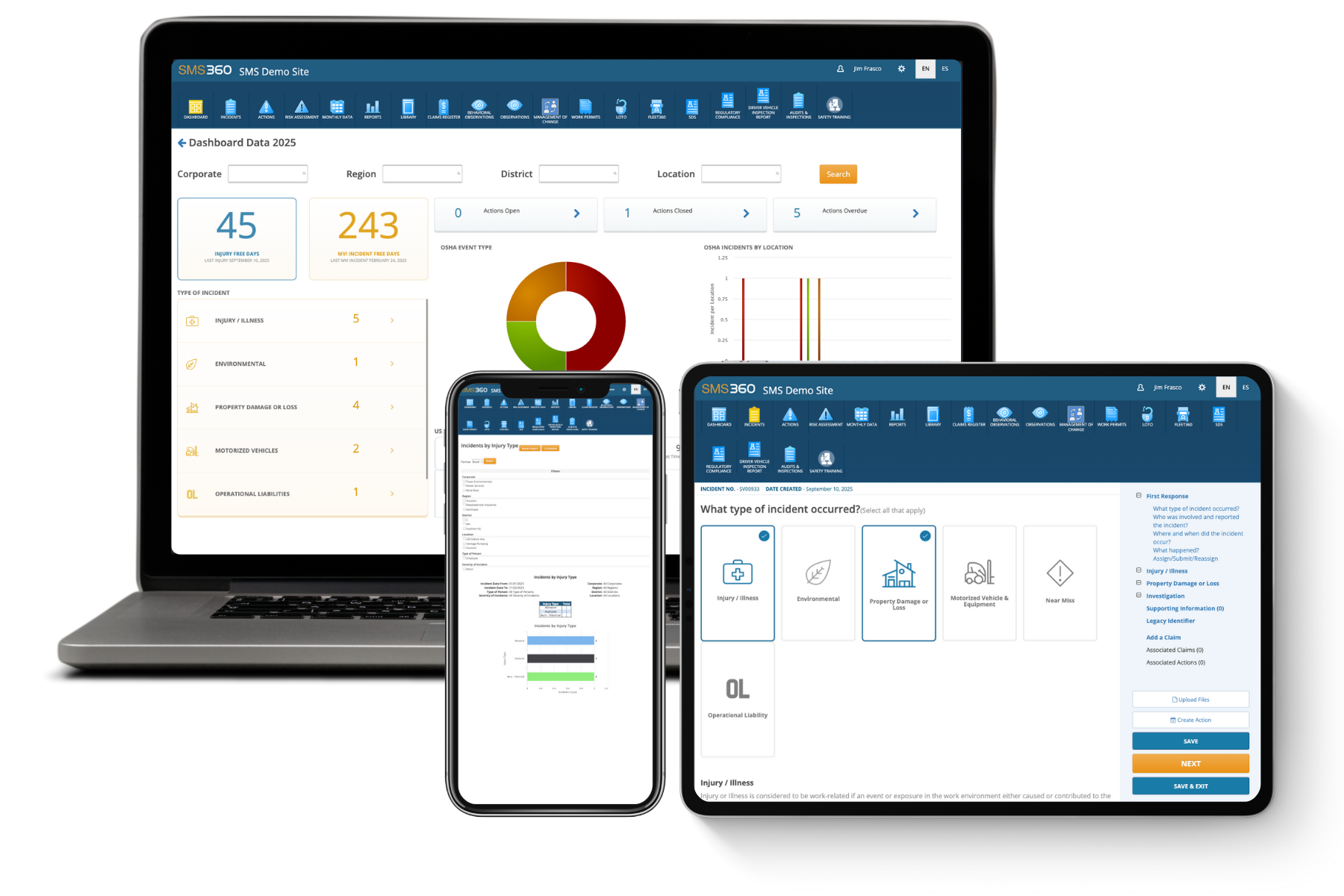
Many fleets now use dedicated compliance management software that tracks license and medical certificate expirations, monitors HOS violations in real time, manages drug and alcohol testing program requirements including Clearinghouse queries, and centralizes maintenance and inspection records. This significantly reduces the risk of a compliance gap being missed simply because a deadline wasn't tracked.
Train Drivers and Staff Continuously
Regulations change, and driver turnover means training can't be a one-time event. Ongoing training on HOS rules, inspection procedures, and reporting requirements keeps compliance knowledge current across the driver pool, not just concentrated with a few long-tenured employees.
Common Compliance Pitfalls
Expired medical certificates or CDLs. Without a tracking system, it's easy for a certification to lapse without anyone noticing until a roadside inspection catches it.
Incomplete driver qualification files. Missing a single required document in a DQ file is one of the most common violations found during audits, even when the driver themselves is fully qualified.
HOS violations from manual tracking. Fleets still relying on paper logs or inconsistent ELD usage are far more likely to have unnoticed HOS violations than those with properly configured electronic systems.
Deferred maintenance defects. A DVIR that identifies a defect but lacks documentation showing it was repaired is a common audit finding, even when the repair actually happened.
Missing Clearinghouse queries. Carriers sometimes overlook the requirement to query the Drug and Alcohol Clearinghouse annually for current drivers, not just at pre-employment.
Staying Current With Regulatory Changes
FMCSA regulations are updated periodically, and fleet managers need a reliable way to stay current rather than relying on outdated assumptions. Subscribing to FMCSA updates directly, working with a compliance consultant or TPA that specializes in transportation regulation, and participating in industry associations are all practical ways to stay ahead of regulatory changes before they catch a fleet off guard. Given how consequential compliance failures can be, this ongoing vigilance is worth treating as a standing responsibility rather than an occasional check-in.
Frequently Asked Questions
What happens if a fleet fails a DOT compliance audit?
Outcomes depend on the severity and pattern of violations found. At the low end, minor or first-time findings typically result in a warning letter or a required corrective action plan, giving the carrier a set window to fix the issue and document that it's been resolved. More serious or repeated violations escalate from there — civil penalties can be assessed per violation, per day, or per driver depending on the issue, and a pattern of violations across multiple categories (driver qualification, HOS, maintenance, drug and alcohol) can result in a conditional or unsatisfactory safety rating from FMCSA.
An unsatisfactory rating is the most severe outcome short of a full shutdown, and for carriers hauling hazardous materials or operating passenger vehicles, it can trigger an automatic out-of-service order, meaning the carrier legally cannot operate until the rating improves. Even short of that extreme, a poor audit outcome has ripple effects that outlast the audit itself: insurance carriers typically raise premiums for carriers with conditional or unsatisfactory ratings, brokers and shippers may decline to work with a carrier that doesn't meet their own safety thresholds, and FMCSA is more likely to schedule follow-up reviews and roadside inspections for carriers with a flagged history. Because of this compounding effect, many fleets treat audit preparation as a continuous practice rather than something to scramble for only when a review notice arrives.
How long must DOT compliance records be kept?
Retention periods vary meaningfully by record type, which is one of the more common sources of confusion for fleet managers trying to build a single, simple policy. Driver qualification files generally need to be retained for the duration of employment and for a period after a driver leaves the company, since a former driver's record can still be relevant to a later audit or incident investigation. Hours-of-service records, including ELD data, are typically required to be kept for a shorter window, often around six months, but fleets frequently choose to retain this data longer than the minimum because it can be valuable evidence in accident investigations or litigation that surfaces well after the fact.
Vehicle maintenance and inspection records generally need to be kept for as long as the vehicle remains in the fleet, plus an additional retention period after it's sold or retired, so that the full maintenance history can be reconstructed if needed. Drug and alcohol testing records have their own retention schedule that varies by test type — some records, like negative test results, have shorter retention windows, while records related to violations or refusals typically need to be kept much longer. Accident register entries also carry their own specific retention requirement, separate from general maintenance or driver files. Because each category has its own rule, the safest approach is to build a retention schedule mapped explicitly to each record type, ideally within a compliance management system that can enforce those schedules automatically rather than relying on someone remembering the specific rule for each document.
Do owner-operators need to meet the same DOT compliance requirements as larger fleets?
Yes, and this is a point that catches a lot of independent operators off guard. DOT and FMCSA requirements attach to the vehicle and the operation, not to the size or structure of the company running it. If a single owner-operator is running a commercial motor vehicle that meets the weight, passenger, or hazmat thresholds in interstate commerce, that operator is subject to the same core requirements as a fleet with hundreds of trucks: a driver qualification file, a valid medical certificate, participation in a drug and alcohol testing program (including Clearinghouse registration and queries), compliance with hours-of-service rules and ELD use where applicable, and proper vehicle maintenance and inspection records.
The practical difference isn't in what's required, but in who has to manage it. A large fleet typically has a dedicated safety or compliance department, and often software that automates tracking of expirations, HOS violations, and maintenance schedules. An owner-operator has to handle all of that personally, often alongside actually driving and running the business side of things, which makes it easy for a certification renewal or a required Clearinghouse query to slip through the cracks. Because of this, many owner-operators and small fleets choose to work with a third-party compliance service or join a group that handles drug testing consortium requirements and record management on their behalf, specifically to reduce the risk of an overlooked deadline turning into a violation.
What's the difference between a DOT number and an MC number?
The two numbers serve different regulatory purposes, and carriers often need both, which is part of why they get confused with each other. A USDOT number is primarily a safety identifier. It's used by FMCSA and state agencies to track a carrier's safety record, inspection history, crash data, and compliance reviews, and it's generally required for any company operating commercial motor vehicles in interstate commerce above the applicable weight or passenger thresholds — including private carriers that only haul their own goods and never charge for transportation services.
An MC (Motor Carrier) number, by contrast, relates to operating authority rather than safety tracking. It's issued to carriers that transport regulated commodities or passengers for compensation across state lines, and it confirms the carrier has met the specific requirements to legally offer for-hire transportation services, including insurance filings and, in some cases, a process agent designation. A carrier that only moves its own freight and never operates for-hire typically needs a DOT number but not an MC number, while a for-hire carrier usually needs both. Because these numbers feed into different systems — safety records under the DOT number, operating authority and insurance filings under the MC number — mixing them up when filing paperwork, renewing insurance, or responding to an audit request can create compliance gaps that are more about administrative confusion than an actual safety issue, but that still need to be corrected promptly once identified.
How often do drivers need to renew their medical certification?
The standard renewal period for most CMV drivers is every 24 months, following an examination by a medical examiner listed on the FMCSA National Registry of Certified Medical Examiners. That two-year window is the default, but it isn't universal — drivers with certain health conditions, such as high blood pressure, diabetes managed with insulin, or other conditions the examiner flags as needing closer monitoring, may be issued a certificate valid for a shorter period, sometimes as little as three or six months, with recertification required on that shorter schedule to confirm the condition remains controlled.
Once certified, the driver's medical certificate information generally also needs to be reflected on their driving record with their state licensing agency, which is a separate step from the physical exam itself and one that's sometimes overlooked. From the fleet's side, the operational risk isn't really about drivers being unaware of the requirement — it's about tracking exact expiration dates across a driver pool where different drivers are on different cycles, some annual, some biennial, some shorter. A single missed renewal means that driver is legally unable to operate a CMV until it's resolved, and dispatching a vehicle to a driver with a lapsed certificate is treated as a serious violation for both the driver and the carrier during roadside inspections and audits. Most fleets address this with a centralized tracking system that flags upcoming expirations well in advance, rather than relying on drivers to self-report their own renewal dates.