Occupational noise exposure remains one of the most common workplace hazards, affecting millions of workers globally across manufacturing, construction, transportation, and entertainment industries. Despite being preventable, noise-induced hearing loss (NIHL) is one of the most prevalent occupational injuries, with workers losing their ability to hear conversations, phone calls, and alarm signals — creating both personal hardship and workplace safety risks. Unlike injuries that announce themselves through pain or bleeding, hearing damage often occurs silently and cumulatively, making it one of the most insidious workplace hazards.
The Occupational Safety and Health Administration (OSHA) requires employers to implement a hearing conservation program when workers are exposed to sound levels of 85 decibels or higher, averaged over an 8-hour work shift. Yet many organizations underestimate noise exposure levels in their facilities and fail to implement adequate hearing protection protocols. Understanding occupational noise exposure, the physiology of hearing damage, available hearing protection options, and proper implementation of hearing conservation programs is essential for any safety professional responsible for protecting worker health.
Understanding Occupational Noise and Its Effects
How Hearing Damage Occurs
Sound travels as waves that vibrate the eardrum, which in turn vibrates three tiny bones in the middle ear. These vibrations are converted into electrical signals that the brain interprets as sound. Excessive noise exposure damages the hair cells in the inner ear that transmit these signals — and unlike most cells in the body, hair cells in the inner ear do not regenerate. Once damaged, they're permanently lost, resulting in permanent hearing loss.
Noise-induced hearing loss typically begins at higher frequencies and gradually progresses to lower frequencies with continued exposure. Initially, workers may notice difficulty hearing conversations in noisy environments or missing high-pitched sounds. Over time, hearing loss affects frequencies used in normal speech, making it difficult to understand conversations even in quiet environments. The insidious nature of occupational hearing loss is that it develops gradually without pain or obvious symptoms, so many workers don't realize they've suffered hearing loss until significant damage has already occurred.
Measuring Noise Exposure
Noise levels are measured in decibels (dB), using a logarithmic scale where each 10-decibel increase represents a tenfold increase in sound intensity. Normal conversation occurs at approximately 60 dB. OSHA's action level of 85 dB requires implementation of a hearing conservation program. At 90 dB, hearing damage can occur with 8 hours of exposure. At 100 dB, hearing damage occurs in less than 2 hours. At 110 dB or higher, hearing damage occurs in minutes.
It's critical to understand that noise exposure is cumulative over time. A worker exposed to 85 dB for 8 hours has the same noise dose as someone exposed to 88 dB for 4 hours or 91 dB for 2 hours. This cumulative effect means that even moderate noise levels over extended periods can cause hearing damage.
Risk Factors for Noise-Induced Hearing Loss
While noise exposure is the primary risk factor, certain workers face elevated risk. Age plays a role — older workers have greater baseline hearing loss from aging (presbycusis), making them more vulnerable to additional occupational hearing loss. Workers exposed to ototoxic chemicals (substances that damage hearing) like certain solvents, metals, or pesticides face compounded hearing damage risk. Simultaneous exposure to loud noise and ototoxic chemicals produces greater hearing loss than noise exposure alone.
Workers with preexisting hearing loss or medical conditions affecting hearing are at higher risk. Additionally, workers in multiple noisy jobs or with significant recreational noise exposure (concerts, motorsports, hunting) accumulate higher lifetime noise doses, accelerating occupational hearing loss.
Types of Hearing Protection Devices
Foam Earplugs
Foam earplugs are among the most commonly used hearing protection devices due to their low cost, ease of use, and effectiveness when properly inserted. Foam earplugs are made from compressible polyurethane or vinyl foam that expands to fill the ear canal, creating an acoustic seal. When properly inserted, foam earplugs can provide noise reduction ratings (NRR) of 20-33 dB.
The effectiveness of foam earplugs depends critically on proper insertion technique. The earplug must be compressed, inserted deeply into the ear canal, and allowed to expand fully — a process that takes 20-30 seconds. Many workers fail to achieve adequate depth or seal, reducing protection effectiveness by 50% or more. Despite their effectiveness when properly used, foam earplugs present compliance challenges because workers often find them uncomfortable, particularly during extended wear.
Pre-Molded Earplugs
Pre-molded earplugs are rigid or semi-rigid devices designed to fit the ear canal without compression. These earplugs, typically made from silicone or thermoplastic rubber, come in multiple sizes to accommodate different ear canal sizes. Pre-molded earplugs are easier to insert than foam earplugs and reduce the skill barrier to achieving proper fit, potentially improving compliance in workforces with varying ability to use foam earplugs correctly.
However, pre-molded earplugs typically provide slightly lower noise reduction (NRR 20-25 dB) than properly inserted foam earplugs, and finding the correct size is essential for both comfort and protection. Reusable pre-molded earplugs require regular cleaning and maintenance, but they're more economical than disposable foam earplugs for organizations with stable workforces.
Earmuffs
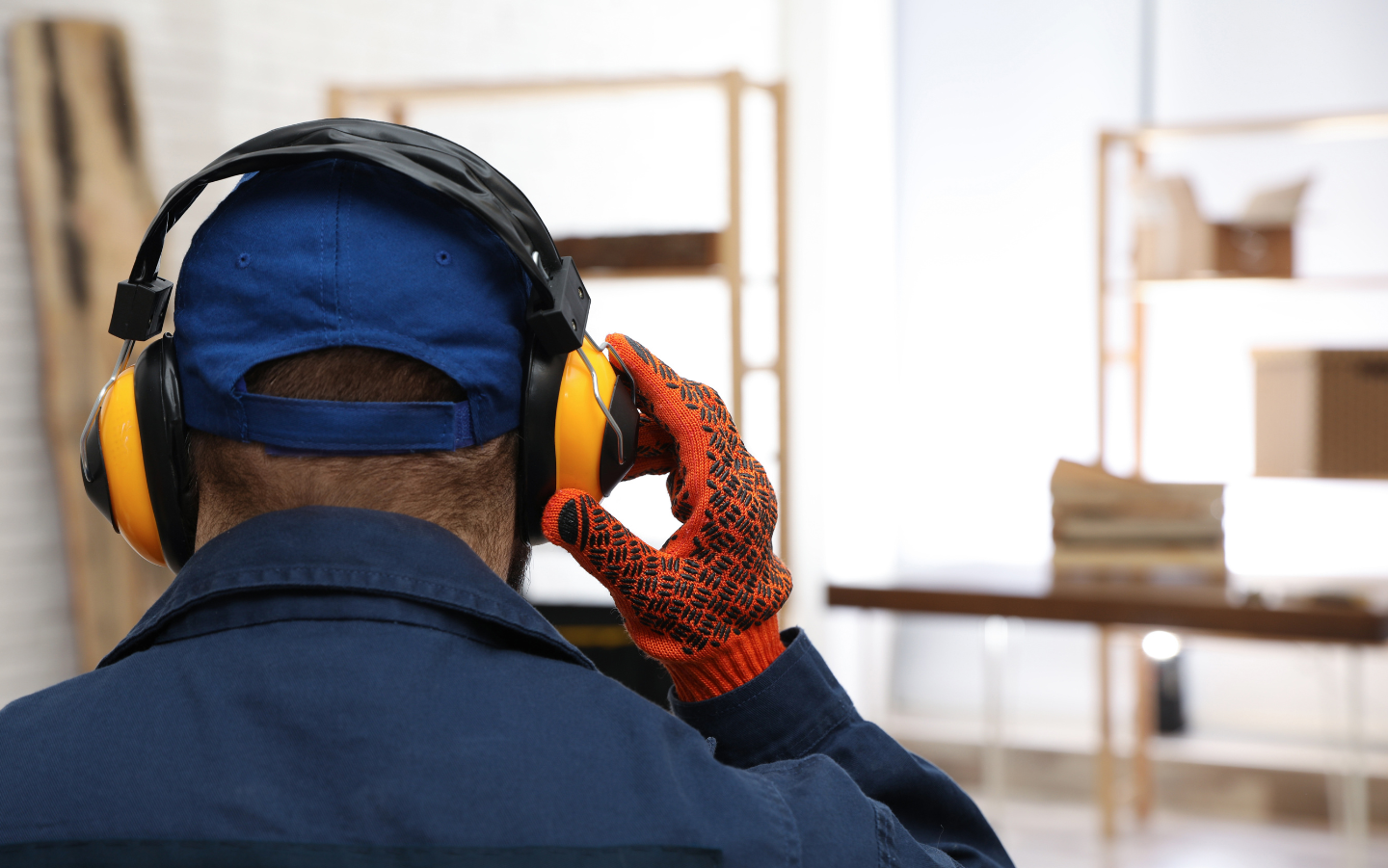
Earmuffs consist of rigid cups that cover the outer ear, connected by a headband, with foam or gel cushions creating a seal around the ear. Earmuffs typically provide NRR ratings of 20-30 dB and are effective at attenuating low-frequency noise better than earplugs. Earmuffs are easier for supervisors to visually verify are being worn, making compliance monitoring more straightforward than with earplugs.
Disadvantages of earmuffs include reduced comfort during extended wear, difficulty wearing with other personal protective equipment like hard hats or safety glasses, and cost higher than disposable earplugs. Additionally, earmuffs must maintain consistent pressure on the ears to be effective — any loosening of the headband reduces protection.
Semi-Insert Devices
Semi-insert devices, sometimes called canal caps, consist of small earpieces attached to a flexible band that rests on top of the head. These devices are easier to remove and reinsert than earmuffs while still providing visible evidence of use. Semi-insert devices work well for environments where workers move between high-noise and lower-noise areas, allowing quick removal without leaving earpieces in the ear canal.
However, semi-insert devices typically provide lower noise reduction (NRR 15-25 dB) than earmuffs or properly inserted earplugs and may be uncomfortable during extended wear.
Level-Dependent Earplugs and Earmuffs
Level-dependent devices contain electronic components that allow low-level sounds like speech and warning signals to pass through while attenuating loud impulse noise like gunshots or hammering. These devices are valuable in environments where workers need to communicate or hear warning signals while protecting against impulsive noise. Military and law enforcement personnel particularly benefit from level-dependent protection.
However, level-dependent devices are significantly more expensive than passive hearing protection and require battery replacement or charging, making them impractical for all-day use in many industrial settings.
Custom-Molded Earplugs
Custom-molded earplugs are individually fitted to each worker's ear canal, typically made from silicone or other moldable materials. Custom earplugs provide excellent fit, comfort, and consistent noise reduction, potentially improving long-term compliance compared to generic earplugs. Some custom earplugs incorporate level-dependent technology, allowing communication while protecting against loud noise.
The primary disadvantage of custom earplugs is cost — they're typically 10-20 times more expensive than disposable foam earplugs. For organizations with stable workforces where workers will use the same earplugs for years, the improved compliance and consistency may justify this cost. For organizations with high turnover or temporary workers, custom earplugs are economically impractical.
Measuring and Assessing Occupational Noise Exposure
Sound Level Measurement
Accurate assessment of occupational noise exposure begins with sound level measurement using calibrated sound level meters. These instruments measure instantaneous sound levels in decibels, providing baseline data about noise exposure in specific work areas. However, because noise exposure is cumulative over time, measuring peak levels is less useful than measuring time-weighted averages.
OSHA requires measurement of 8-hour time-weighted average (TWA) noise exposure for workers. A sound level meter with data logging capabilities can record noise levels continuously throughout a work shift, calculating the TWA exposure and identifying peak exposure periods.
Noise Dosimetry
Personal noise dosimeters are worn by individual workers during their shifts, measuring actual noise exposure experienced by that specific worker. Dosimeters account for the variable noise exposure throughout the day as workers move between different work areas or tasks. This personalized measurement reveals whether individual workers exceed the 85 dB action level, even if area measurements suggest exposure is below the threshold.
Personal dosimetry is particularly valuable in work environments with variable noise levels, such as construction sites where noise varies dramatically depending on which tasks are being performed at any given time.
Audiometric Testing
Baseline audiometric testing before workers begin employment in noisy environments establishes a hearing reference point. Subsequent annual or biennial audiometric testing reveals whether workers are experiencing noise-induced hearing loss. If audiometric testing shows standard threshold shift (STS) — a significant decline in hearing ability — employers must take action including notification to the worker, evaluation of hearing protection effectiveness, and investigation of whether additional control measures are needed.
Selecting and Implementing Effective Hearing Protection
Matching Protection to Exposure
The first step in selecting appropriate hearing protection is understanding the noise exposure levels in specific work areas and tasks. Workers in areas with noise exposure of 85-90 dB might use foam earplugs or earmuffs with NRR 20-25 dB. Workers in areas exceeding 95 dB may require higher-NRR protection, dual protection (earplugs plus earmuffs), or engineering controls to reduce noise at the source.
It's critical to avoid over-protection, as excessive attenuation isolates workers from important sounds like conversation, warning signals, or equipment abnormalities. The goal is adequate protection — not maximum possible protection.
Proper Insertion and Fit
The effectiveness of hearing protection depends critically on proper use. For foam earplugs, workers must compress them fully, insert them deeply into the ear canal (at least halfway into the canal), and allow 20-30 seconds for expansion. Many workers fail to insert earplugs deeply enough, reducing protection effectiveness. Supervisors and safety professionals should conduct insertion technique training and verification.
For earmuffs, workers must ensure the headband provides adequate pressure and the cushions seal completely around the ears. Hair, eyeglasses, or hearing aid components can break the seal, reducing protection.
Hearing Protection Programs
OSHA requires employers with noise exposure at the action level to implement comprehensive hearing conservation programs including baseline and annual audiometric testing, hearing protection selection and training, noise exposure assessment, engineering controls evaluation, and annual program evaluation. Successful programs go beyond minimum compliance, including:
Education about noise-induced hearing loss and the effectiveness of hearing protection when properly used. Many workers underestimate hearing loss risk or believe they're not at risk, reducing motivation to use protection.
Selection of hearing protection options that accommodate different ear sizes and preferences, since individual comfort dramatically affects compliance.
Regular supervisory verification that workers are using hearing protection correctly, not just sporadically.
Follow-up on audiometric testing results, investigating any significant threshold shifts to determine whether hearing protection is being used effectively or whether additional controls are needed.
Maintenance and Compliance
Cleaning and Storage
Reusable hearing protection devices require regular cleaning to maintain effectiveness and hygiene. Earmuffs should be wiped with a damp cloth and allowed to air dry. Pre-molded earplugs should be washed with soap and water and allowed to dry completely before storage. Proper storage in a clean, dry location extends device lifespan and maintains protective properties.
Compliance Monitoring
Supervisor verification that workers are using hearing protection correctly is essential — workers must know their supervisor expects compliance. Supervisory observation during safety audits and informal safety rounds demonstrates organizational commitment and reinforces the importance of hearing protection.
Industry-Specific Noise Exposure Considerations
Manufacturing facilities with machinery exposure, construction sites with power tools and impact noise, transportation operations with engine noise, and entertainment venues with amplified music all present different noise exposure profiles requiring tailored hearing conservation approaches. Temporary and seasonal workers, who may transition between multiple noisy employers, face particular hearing damage risk from cumulative exposure across multiple jobs.
Frequently Asked Questions About Occupational Noise Exposure and Hearing Protection
What exactly is the difference between the OSHA action level (85 dB) and the OSHA permissible exposure limit (90 dB), and why does it matter?
The OSHA action level of 85 dB and the permissible exposure limit (PEL) of 90 dB represent two different triggers for employer responsibilities, and understanding this distinction is critical for hearing conservation compliance. The action level of 85 dB is the threshold at which OSHA requires employers to implement a hearing conservation program, including baseline and annual audiometric testing, hearing protection provision and training, and annual program evaluation. When worker noise exposure reaches the action level, employers must take proactive steps to monitor whether hearing damage is occurring and implement protective measures. The permissible exposure limit of 90 dB represents the maximum allowable noise exposure over an 8-hour shift without requiring additional controls. Exposure above the PEL is a violation of OSHA regulations and requires corrective action beyond just providing hearing protection. The critical point many employers misunderstand is that the action level is not a "safe" exposure level — it's simply the threshold triggering regulatory requirements. Noise-induced hearing loss can occur at exposures below 90 dB, and some individuals are more susceptible to hearing damage than others. Many progressive organizations implement hearing conservation programs at noise exposures below the action level because they recognize that waiting until the action level is reached means workers have already suffered some hearing loss. Additionally, because noise exposure is cumulative, workers with multiple years of exposure at or near the action level will eventually suffer permanent hearing loss. The relationship between the action level and PEL can be understood as a tiered regulatory approach: at 85 dB, monitoring and prevention begin; at 90 dB, they become mandatory; above 90 dB, the employer is in violation and must implement stronger controls.
Why is proper earplug insertion technique so critical, and what's the most common insertion mistake workers make?
Foam earplug effectiveness depends almost entirely on achieving proper insertion and seal in the ear canal, which is why insertion technique is absolutely critical to hearing protection effectiveness. When a foam earplug is properly inserted, it expands to fill the entire ear canal, creating an acoustic seal that attenuates sound as it travels to the eardrum. However, when improperly inserted, the earplug doesn't expand fully, doesn't achieve adequate depth in the canal, or doesn't seal properly — reducing noise reduction by 50% or more. The most common insertion mistake is insufficient depth: workers insert earplugs only into the outer portion of the ear canal, where they don't seal effectively. Proper insertion requires compressing the foam earplug fully between thumb and fingers, pulling the upper ear backward and upward to straighten the ear canal, inserting the earplug deeply into the canal (at least halfway in), and allowing 20-30 seconds for the foam to expand completely. Many workers, accustomed to inserting earplugs quickly, fail to allow adequate expansion time or don't insert deeply enough. Another common mistake is inserting earplugs into the wrong ear — while this seems obvious, workers wearing earplugs often lose spatial awareness and may inadvertently insert them incorrectly, reducing protection. Additionally, many workers fail to clean their hands before earplug insertion, introducing dirt or contaminants that interfere with seal. To ensure proper technique, employers should conduct hands-on insertion training where workers practice under supervision, with trainers verifying correct depth and expansion. Annual retraining is also valuable, as insertion technique degrades over time if not regularly practiced and reinforced. Some organizations use earplug verification devices that simulate the acoustic environment of the ear canal, allowing workers to verify they've achieved proper insertion before entering noisy areas.
How do I determine whether a worker's noise exposure exceeds the OSHA action level, and what measurement method should I use?
Determining whether noise exposure exceeds the OSHA action level requires understanding both the noise levels present in work areas and the duration workers spend in those areas. The action level is based on an 8-hour time-weighted average (TWA) of 85 dB, meaning that a worker exposed to 85 dB for 8 hours reaches the action level, but also a worker exposed to 88 dB for 4 hours reaches the same cumulative exposure. This cumulative nature is critical — many employers mistakenly believe that because peak noise levels don't exceed 85 dB, workers aren't at risk, failing to account for the cumulative effect of 8+ hours of moderate noise exposure. The most straightforward approach is sound level measurement in work areas using a calibrated sound level meter with time-weighting capabilities. A sound level meter with A-weighting (which approximates human hearing sensitivity) provides decibel readings of instantaneous or averaged noise levels. For areas with relatively constant noise levels, area measurements provide sufficient data. For areas with variable noise levels, measuring throughout a typical work shift and calculating TWA provides more accurate exposure assessment. However, because different workers may spend different amounts of time in different areas or perform different tasks with different noise exposures, personal noise dosimetry is more accurate. Personal dosimeters are worn by individual workers throughout their shifts, measuring the actual noise exposure that specific worker experiences, accounting for movement between work areas and task variation. OSHA regulations specify that employers determine whether workers are exposed to the action level, but the standard allows flexibility in measurement methodology. Many organizations conduct initial area measurements, then use personal dosimetry for workers whose area measurements suggest potential action level exposure. Once baseline noise exposure is understood, annual remeasurement is typically adequate unless work processes change significantly.
What should I do if audiometric testing reveals that a worker has experienced significant threshold shift, suggesting noise-induced hearing loss?
If audiometric testing reveals a standard threshold shift (STS) — defined as an average change of 10 dB or greater at 2,000, 3,000, or 4,000 Hz in either ear compared to the baseline audiogram — OSHA requires specific employer actions. First, the employer must notify the affected worker within 21 calendar days that testing revealed a significant change in hearing. Second, the employer must evaluate whether the worker is properly using hearing protection and whether hearing protection is being worn consistently. Third, the employer must fit the worker with new or improved hearing protection if they're not already using the most effective available option. Fourth, the employer must refit the worker with hearing protection and ensure proper insertion technique, potentially including additional training. Fifth, the employer must refer the worker for a clinical audiological evaluation if the employee requests it. Finally, the employer should investigate whether the hearing loss indicates that the hearing conservation program is inadequate — for example, if multiple workers show threshold shift, it may indicate that noise levels are higher than previously measured or that hearing protection effectiveness is lower than expected. While an STS doesn't necessarily mean permanent hearing loss has occurred — some temporary threshold shift can recover after removal from noise exposure — it indicates that hearing damage risk is present and current protective measures are insufficient. The psychological impact on workers learning they've experienced hearing loss should not be underestimated; many workers feel anxiety or depression upon learning of hearing loss, particularly if it affects their ability to hear conversations or enjoy music. Employers should provide supportive resources and ensure workers understand that further hearing loss may be preventable if hearing protection effectiveness is improved.
Is it better to use foam earplugs, earmuffs, or a combination of both, and how do I know which to choose?
The answer depends on the specific noise exposure levels, work environment, and individual worker factors, and often the best approach is offering multiple options so workers can select what works best for them. Foam earplugs provide excellent noise reduction (NRR 20-33 dB when properly inserted) and are economical, making them practical for organizations with many workers and high earplug replacement frequency. However, foam earplugs require proper insertion technique, which many workers fail to achieve consistently, and some workers find them uncomfortable during extended wear. Earmuffs provide good noise reduction (NRR 20-30 dB), are easier to verify are being worn correctly, and may be more comfortable for some workers, but they're more expensive and less practical in environments where workers move frequently between work areas. Dual protection — wearing both foam earplugs and earmuffs simultaneously — provides greater noise reduction and is recommended when noise exposure significantly exceeds the action level or when single protection doesn't provide adequate attenuation. However, dual protection is more cumbersome and uncomfortable, typically reserved for very high noise exposures. Research suggests that offering workers a choice of hearing protection types and allowing them to select what works best for them results in higher compliance than mandating a single type. Additionally, different workers have different ear canal sizes and preferences, and what works well for one worker may be uncomfortable for another. A comprehensive approach provides foam earplugs in multiple sizes, pre-molded earplugs in multiple sizes, earmuffs, and potentially semi-insert devices, allowing workers to experiment and find what provides both adequate protection and comfort. This flexibility-based approach typically results in higher long-term compliance and better actual hearing protection than a rigid one-size-fits-all approach.