Slips, trips, and falls are among the most common — and most consistently underestimated — causes of workplace injury. They don't require heavy machinery, hazardous chemicals, or elevated work to happen; they happen in break rooms, hallways, parking lots, and office kitchens just as often as they happen on construction sites and warehouse floors. Because the hazards involved are so ordinary — a wet floor, a loose cable, an uneven step — they rarely get the same attention as more dramatic risks, even though they routinely rank among the leading causes of lost-time injury across nearly every industry.
This guide breaks down why slips, trips, and falls happen, where they're most likely to occur, and what actually works to prevent them, moving well beyond the generic "watch your step" signage that most workplaces rely on and rarely reinforce with real systems.
Why Slips, Trips, and Falls Deserve More Attention Than They Get
They're Common Precisely Because They're Ordinary
Most serious workplace hazards get built-in respect: people are naturally cautious around forklifts, exposed wiring, or elevated platforms. Slip, trip, and fall hazards don't trigger the same instinctive caution, because a wet floor or a stray extension cord doesn't look dangerous the way a spinning blade does. That mismatch between perceived risk and actual risk is exactly why these incidents remain so persistent — people simply aren't primed to notice or avoid them the way they are for more obviously hazardous conditions.
The Injuries Are Often More Serious Than Expected
A same-level slip can result in anything from a bruise to a fractured wrist, a torn ligament, or a serious head injury, depending on how the fall happens and what the person lands on or against. Falls from height — even modest heights like a step stool or a loading dock edge — carry a substantially higher risk of severe injury or fatality. Because these incidents are so frequent and so varied in severity, they tend to generate a large share of an organization's total injury claims, medical costs, and lost workdays, even when no single incident makes headlines.
They Happen Everywhere, Not Just on Job Sites
Unlike hazards that are specific to certain industries, slip, trip, and fall risk exists in virtually every workplace — offices, retail stores, hospitals, restaurants, warehouses, and manufacturing floors all share this exposure, even though the specific causes differ. That universality is part of why a strong prevention program benefits nearly every organization, regardless of sector.
Understanding the Three Distinct Hazard Types
Slips: Loss of Traction Between Foot and Surface
A slip happens when there isn't enough friction between a person's shoe and the walking surface. The most common causes are wet or oily floors, freshly mopped or waxed surfaces without adequate drying time or signage, loose mats or rugs that shift underfoot, and weather-related hazards like rain, ice, or snow tracked indoors. Smooth-soled footwear on smooth flooring is a frequent contributing factor, especially in kitchens, healthcare settings, and manufacturing environments where spills are common.
Trips: Catching a Foot on an Obstruction
A trip happens when a foot contacts an object or an unexpected change in surface level before the brain has registered it as an obstacle. Common culprits include cluttered walkways, cords and cables running across foot traffic paths, uneven flooring transitions, open drawers or cabinet doors, boxes or materials stored in aisles, and poor lighting that hides these hazards until it's too late. Trip hazards are particularly dangerous because they're often temporary and inconsistent — a cable that's routed safely one day might be crossing a walkway the next, which makes them harder to train around than a permanently hazardous area.
Falls: The Result, Not Just a Category of Its Own
Falls are typically the outcome of a slip or a trip, but they're also categorized separately when they involve a change in elevation — falling from a ladder, a loading dock, a mezzanine, scaffolding, or even a single step. Falls from height are treated with particular seriousness in safety regulation because the consequences scale dramatically with even modest increases in height; a fall from four feet can be just as dangerous as one from ten feet, depending on how the person lands and what's below them.
Where Slips, Trips, and Falls Most Commonly Happen
Entrances, Lobbies, and Transition Zones
Building entrances are disproportionately common fall locations because they combine several risk factors at once: weather-tracked moisture, hard flooring, high foot traffic, and often a transition between different floor surfaces or a mat that can bunch or slide. Rainy or snowy days dramatically increase entrance-area risk, and many organizations don't adjust their entrance protocols — additional mats, more frequent floor checks, wet floor signage — quickly enough when weather changes.
Stairs and Steps
Stairs combine several hazard types at once: they require a change in elevation, they're frequently used while a person is carrying something or looking at a phone, and any single defect — a loose handrail, uneven riser height, poor lighting, or worn tread — can turn a routine trip into a serious fall. Interior stairs, exterior steps, and loading dock stairs each carry slightly different risk profiles and deserve individual attention rather than a single generic "watch the stairs" reminder.
Kitchens, Break Rooms, and Food Service Areas
Anywhere food or beverages are prepared or consumed carries elevated slip risk from spills, grease, and water. Commercial kitchens are particularly high-risk environments because they combine wet or greasy floors with fast-paced work, heavy equipment, and employees moving quickly while carrying hot items — a combination that makes both the likelihood and severity of slip incidents higher than in most other work settings.
Warehouses and Storage Areas
Warehouses introduce trip hazards from pallets, shrink wrap, banding material, and stored inventory extending into aisles, along with slip hazards from forklift fluid leaks or spilled product. Poor lighting in storage areas, combined with workers frequently looking upward at racking rather than down at the floor, creates a specific and often underestimated trip risk.
Parking Lots and Exterior Walkways
Cracked pavement, potholes, poor lighting, and — in colder climates — ice are major contributors to exterior fall incidents. Because parking lots and exterior walkways are often considered "outside" the core workplace, they sometimes receive less consistent inspection and maintenance attention than interior spaces, even though a significant share of workplace fall injuries happen before an employee even reaches the building entrance.
Building an Effective Prevention Program
Housekeeping Is the Foundation, Not an Afterthought
The single highest-leverage action any workplace can take against slip, trip, and fall risk is consistent, disciplined housekeeping. This means establishing clear routines: spills get addressed immediately, not "when someone gets a chance"; cords and cables are routed away from walkways or covered with cable protectors; walkways and aisles stay clear of boxes, tools, and stored materials; and floor mats are inspected regularly for curling edges or slipping. Housekeeping fails most often not because people don't know the rules, but because no one is clearly assigned ownership — a spill in a shared hallway can sit for an hour if every department assumes it's someone else's responsibility.
Flooring, Footwear, and Environmental Controls
Beyond housekeeping, physical controls matter enormously. Slip-resistant flooring or floor coatings in high-risk areas like kitchens and entrances reduce baseline risk regardless of how well housekeeping is maintained. Appropriate footwear policies — requiring slip-resistant soles in kitchens, warehouses, or wet-process environments — address the other half of the friction equation. Adequate lighting throughout walkways, stairwells, and storage areas is one of the most cost-effective interventions available, since a large share of trip incidents happen simply because a hazard wasn't visible in time to react to it.
Signage and Communication That Actually Works
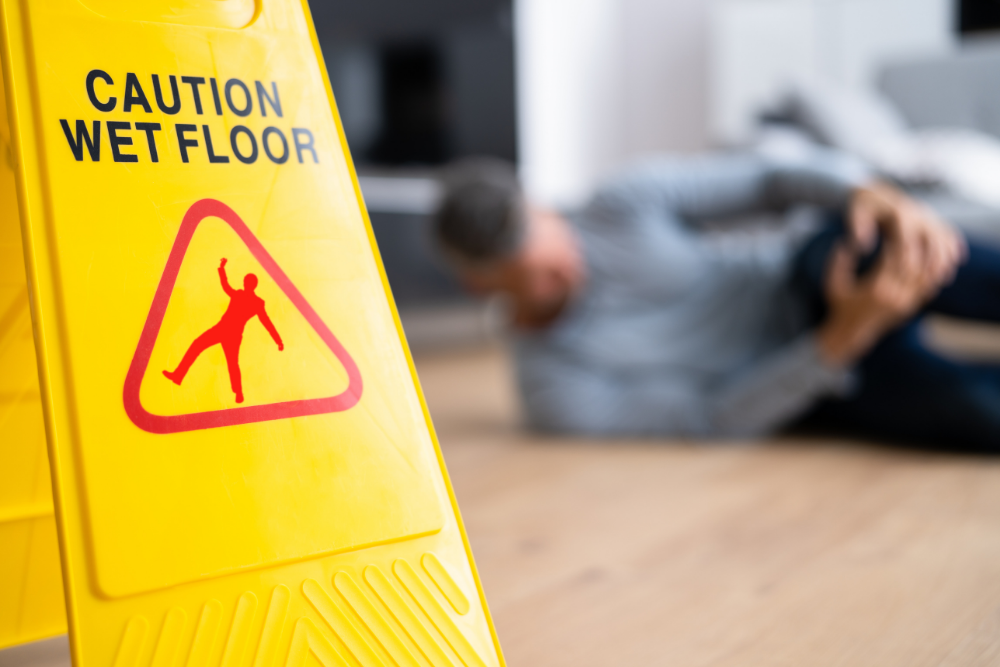
Wet floor signs and hazard warnings only work if they're used consistently and removed once the hazard clears — a permanently displayed wet floor sign near a water fountain trains employees to ignore all wet floor signs, including the ones that matter. Effective signage programs pair clear, temporary warnings with a system for follow-up, so a spill gets both flagged and actually cleaned rather than just marked and left.
Inspection Routines That Catch Problems Before Incidents Do
Regular walkway and facility inspections — checking for loose flooring, damaged stair treads, burnt-out lighting, and cluttered walkways — should be a scheduled routine rather than something that only happens after a near-miss or an actual injury. Assigning specific individuals to conduct and document these inspections, rather than leaving it as a vague shared responsibility, dramatically improves consistency. Many organizations find that a simple weekly walkthrough checklist, covering entrances, stairwells, break rooms, and high-traffic aisles, catches the majority of hazards before they cause an incident.
Fall Protection for Elevated Work
Where work genuinely involves elevation — ladders, mezzanines, loading docks, or roof access — standard slip and trip prevention isn't sufficient on its own. Guardrails, proper ladder selection and inspection, harness and lanyard systems where required, and training on safe mounting and dismounting all need to be part of a comprehensive program. Even routine tasks like accessing a top shelf or a rooftop HVAC unit deserve the same fall protection discipline as more obviously hazardous elevated work, because the consequences of a fall don't scale down just because the task feels routine.
Training That Changes Behavior, Not Just Checks a Box
Move Beyond Generic "Watch Your Step" Messaging
Slip, trip, and fall training often suffers from being too generic to actually change behavior. Employees already know, in the abstract, that wet floors are slippery. Effective training instead focuses on specific, workplace-relevant scenarios: how to walk safely on a freshly mopped floor, how to report a hazard immediately rather than assuming someone else will, and how to recognize the early warning signs of an unsafe walking surface before stepping onto it.
Reinforce Reporting Without Blame
One of the most common reasons hazards go unaddressed is that employees don't report them, often out of a sense that reporting is someone else's job or a fear that flagging a hazard will be seen as complaining. Building a culture where reporting a spill, a loose railing, or a burnt-out light is treated as a normal, expected, and appreciated action — rather than an inconvenience — meaningfully increases how quickly hazards get identified and fixed.
Tailor Training to Specific Roles and Environments
A kitchen worker, a warehouse picker, and an office employee face meaningfully different slip, trip, and fall risks, and training that treats them identically misses the opportunity to address what's actually relevant to each role. Role-specific training — covering the actual hazards a given job regularly encounters — tends to be both more memorable and more effective than a single generic annual session covering every possible scenario at once.
Building Your Slip, Trip, and Fall Prevention Calendar
A strong ongoing program combines several elements working together: disciplined daily housekeeping with clear ownership, physical controls like slip-resistant flooring and adequate lighting, a functioning signage and follow-up system, scheduled and documented facility inspections, role-specific training that goes beyond generic reminders, and a no-blame reporting culture that surfaces hazards quickly. None of these elements alone fully solves the problem — it's the combination, applied consistently, that meaningfully reduces incident rates over time.
Slips, Trips, and Falls: Frequently Asked Questions
What's the actual difference between a slip, a trip, and a fall, and why does the distinction matter for prevention?
A slip occurs when there isn't enough traction between a person's footwear and the walking surface, typically caused by moisture, oil, loose mats, or smooth-soled shoes on smooth flooring. A trip occurs when a foot contacts an unexpected obstruction or elevation change — a cord, clutter, an uneven surface, or an open drawer — before the person has time to adjust their stride. A fall is generally the outcome of either a slip or a trip, though it's treated as its own category when it involves a change in elevation, such as falling from a ladder, loading dock, or stairway.
The distinction matters because slips and trips have different root causes and require different prevention strategies. A slip-prevention program focused only on decluttering walkways won't address a wet floor near a break room sink, and a program focused only on flooring won't catch a trip hazard created by a cable running across an aisle. Effective prevention programs treat these as related but distinct problems: slip prevention emphasizes traction, moisture control, and appropriate footwear, while trip prevention emphasizes housekeeping, lighting, and consistent walkway maintenance. Falls from height require a third layer entirely — guardrails, fall protection equipment, and elevated-work training — since the consequences of a fall scale with height in a way that ground-level slips and trips generally don't. Understanding which category a specific hazard falls into helps target the fix rather than applying a generic "be careful" response that doesn't address the actual mechanism of the hazard.
Why do slip, trip, and fall hazards get less attention than other workplace risks, even though they're so common?
The core reason is a mismatch between perceived risk and actual risk. Workers instinctively treat obviously dangerous equipment — spinning machinery, exposed electrical components, chemical hazards — with a level of caution that matches the visible danger. A wet floor, a stray extension cord, or a slightly uneven step doesn't trigger that same instinctive alertness, because it doesn't look dangerous in the way a piece of heavy machinery does. That psychological gap means people walk past or through slip and trip hazards without the same heightened awareness they'd apply to more visibly hazardous conditions, even though the actual injury risk can be just as serious.
This attention gap tends to compound over time in workplaces that don't actively counteract it. Because these hazards are ordinary and encountered constantly, employees can become desensitized to warning signage that's left up too long, or to minor clutter that "has always been there." Effective programs work against this tendency deliberately — through role-specific training that highlights the real severity of these injuries, through leadership visibly treating housekeeping and hazard reporting as genuinely important rather than a formality, and through consistent enforcement so that a wet floor sign or a cluttered aisle is addressed quickly rather than tolerated as background noise. Without that deliberate counter-effort, slip, trip, and fall hazards tend to receive less attention precisely because they're common, which is exactly backwards from how the actual injury data usually looks.
What are the most effective, practical steps a workplace can take to reduce slip and trip hazards on a limited budget?
Housekeeping is by far the highest-leverage, lowest-cost intervention available, and it doesn't require any capital investment — just consistent execution and clear ownership. Establishing a simple rule that spills are cleaned immediately rather than left for "whoever finds it," that walkways stay clear of boxes and stored materials, and that cords and cables are routed away from foot traffic or secured with inexpensive cable covers addresses a large share of trip hazards without spending anything beyond a bit of organizational discipline. Assigning specific responsibility — a particular person or shift accountable for checking high-traffic areas at set times during the day — tends to work far better than a vague expectation that "everyone" will notice and handle hazards, since shared responsibility often means no one takes ownership.
Beyond housekeeping, a few relatively low-cost physical investments go a long way: replacing burnt-out lightbulbs promptly in stairwells and walkways, adding non-slip mats with beveled, secured edges at entrances and near sinks or wet-process areas, and requiring slip-resistant footwear in kitchens or wet environments where the cost of appropriate shoes is far lower than the cost of a serious fall injury. A weekly walkthrough checklist — covering entrances, stairs, break rooms, and main aisles, and assigned to a specific person to complete and document — is another low-cost step that catches a surprising number of hazards before they cause an incident. None of these measures require major capital spending; they require consistency, clear ownership, and treating hazard prevention as a routine operational task rather than an occasional reactive response.
How should a workplace handle wet floor and hazard signage so it actually prevents incidents instead of being ignored?
Signage is only effective when it's used precisely and consistently, and one of the most common failures is leaving warning signs up permanently or using them so liberally that employees stop registering them as meaningful. A wet floor sign that sits next to a water fountain every single day, whether or not the floor is actually wet at that moment, trains people to walk past all wet floor signs without a second thought — including the ones marking a genuinely hazardous spill elsewhere in the building. Effective signage programs treat warning signs as temporary and specific: a sign goes up when a hazard exists, and it comes down as soon as the hazard is resolved, so that its presence continues to carry real meaning.
Signage alone isn't a complete solution — it needs to be paired with a follow-up system that ensures the underlying hazard actually gets addressed, not just marked. This means establishing a clear process: whoever notices a spill or hazard either resolves it immediately or notifies someone who will, and the sign stays in place only until that resolution happens, not indefinitely as a substitute for actually fixing the problem. It's also worth training employees that a warning sign is not a substitute for reporting; if someone sees a sign that's been up for an unusually long time, or a hazard that clearly hasn't been addressed, they should still flag it rather than assuming the sign itself means the situation is under control. Combining precise, temporary signage with a genuine resolution process is what separates signage that prevents incidents from signage that simply becomes background noise employees learn to ignore.
Why do fall-from-height incidents need a different prevention approach than same-level slips and trips, even for seemingly minor elevation changes?
Same-level slips and trips typically result in injuries limited by the fact that the person doesn't fall very far — bruises, sprains, and occasionally fractures. Falls from height introduce an entirely different risk profile because the severity of injury scales with both the height of the fall and what the person lands on, and that scaling isn't linear or intuitive. A fall from a modest height — a step stool, a loading dock edge, or a few rungs up a ladder — can produce a head injury, spinal injury, or fatality just as easily as a fall from a much greater height, depending on the landing surface and the angle of the fall. This is why regulatory and safety standards treat elevated work with a distinct and more rigorous set of requirements rather than folding it into general slip and trip prevention.
Effective fall-from-height prevention requires layers that same-level hazard prevention doesn't: physical barriers like guardrails around elevated platforms and openings, properly inspected and rated ladders matched to the specific task, and personal fall arrest systems — harnesses, lanyards, anchor points — for work at heights where guardrails aren't feasible. Training also needs to cover specifics that don't apply to ground-level work, such as the three-points-of-contact rule for ladder use, proper mounting and dismounting technique, and recognizing when a task that seems routine — reaching a top shelf, accessing a rooftop unit, working from a raised platform — still requires the same fall protection discipline as more obviously hazardous elevated work. Treating "minor" elevated tasks casually, simply because the height feels unimpressive, is one of the more common and preventable contributors to serious fall injuries, which is exactly why a comprehensive program applies fall protection standards based on the task's actual risk rather than how dangerous the height happens to look.
.png)