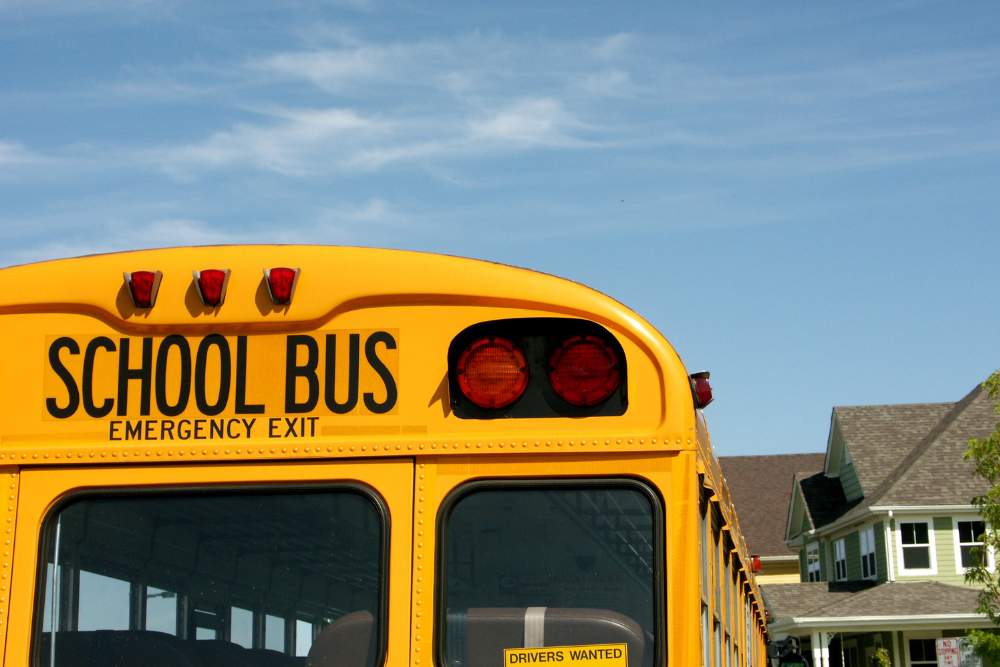
Every school day, roughly 20 million children climb aboard about 500,000 yellow school buses across the United States. Most of those rides end without incident, which is exactly why they rarely make the news. National School Bus Safety Week, held October 19–23, 2026, exists to keep it that way.
This year's observance carries the theme "Safe Rides, Everyday Heroes." It is a fitting message. Keeping students safe depends on bus drivers, parents, students, teachers, and every motorist who shares the road with a stopped bus.
This guide covers what the week is, why the school bus is the safest way to get to school, where the real risks lie, and what each of us can do about them.
What Is National School Bus Safety Week?
National School Bus Safety Week is a nationwide public education campaign held during the third full week of October each year. Its goal is simple: bring parents, students, teachers, motorists, bus operators, and school administrators together to focus on safety on and around the school bus.
Who Sponsors It?
The week is led by the National Association for Pupil Transportation (NAPT), working alongside the National Association of State Directors of Pupil Transportation Services (NASDPTS) and the National School Transportation Association (NSTA). State agencies, school districts, and bus contractors then carry the message into local communities. Some states go further: the New York State Assembly, for example, passed a resolution urging the governor to proclaim October 19–23, 2026, as School Bus Safety Week statewide.
The 2026 Theme: "Safe Rides, Everyday Heroes"
Each year's theme comes from the previous school year's National School Bus Safety Poster Contest. Students in grades K–8 create posters around a set slogan, and that slogan becomes the following year's Safety Week theme. The 2025–2026 contest theme was "Safe Rides, Everyday Heroes," so that is the banner for 2026.
The theme puts the spotlight on people. Drivers who complete thousands of stops without error, crossing guards, transportation staff, and students who follow the rules are all everyday heroes in this story.
This Year's National Poster Winner
The 2026 national poster contest winner is Sai Darshana Yekolu, a sixth grader at Moseley Middle School in Prosper, Texas. Her artwork rose through state-level judging to take the top national prize, and it will be featured during Safety Week to carry a student-made safety message across the country. For the first time, NAPT is also placing the official 2026 poster directly into the October issue of School BUSRide magazine.
Why the School Bus Is the Safest Ride to School
According to the National Highway Traffic Safety Administration (NHTSA), students are about 70 times more likely to arrive at school safely on a school bus than in a car. Four to six school-age children die each year while riding school transportation vehicles. That is less than 1% of all U.S. traffic deaths.
Built Differently by Design
School buses are the most heavily regulated vehicles on the road. Their size and weight mean passengers feel much less crash force than people in cars, pickups, or vans. Distinctive yellow paint, flashing lights, and stop arms make them hard to miss.
What Is Compartmentalization?
Large school buses protect riders through a design NHTSA calls compartmentalization. Closely spaced, high-backed, energy-absorbing seats form a protective pocket around each child, much like eggs in a carton. Smaller buses, those at 10,000 pounds or less, are closer in size to passenger vehicles, so they must have lap or lap/shoulder belts at every seat.
The Real Risk: The Danger Zone
If the ride itself is so safe, where does the danger come from? The answer is the danger zone, the area roughly 10 feet around the bus where the driver's view is limited. Children are most at risk when they are walking to the stop, waiting, boarding, or getting off.
The Kansas State Department of Education has tracked loading-zone deaths nationally since 1970. Since then, school buses themselves have caused 714 of these deaths, and passing vehicles have caused another 499. Progress is real: 75 students died in loading zones in 1975, while the 2022–2023 school year recorded three. But every one of those numbers is a child, which is why the danger zone sits at the center of Safety Week.
School Bus Safety Tips for Students
Students are the heart of Safety Week, and a few simple habits go a long way. These are worth reviewing at home and in the classroom this week.
At the Bus Stop
- Arrive about five minutes early so you never have to run for the bus.
- Wait at least three giant steps (about 6 feet) back from the curb.
- Stay out of the street and save rough play for the playground.
- Wait until the bus comes to a complete stop, the door opens, and the driver signals before you step forward.
Getting On and Off
- Use the handrail and take one step at a time.
- Check that drawstrings, backpack straps, and scarves can't catch on the handrail or door.
- When you get off, walk at least 10 feet away from the bus so the driver can see you.
- Never walk behind the bus.
Crossing in Front of the Bus
If you need to cross the street, walk at least 10 feet ahead of the bus along the side of the road. Make eye contact with the driver and wait for their signal before crossing. Look left, right, and left again, because not every driver obeys the stop arm.
If You Drop Something
This rule saves lives: if you drop a book, ball, or paper near the bus, do not pick it up. Tell the driver first. Bending down near the wheels puts you where the driver cannot see you.
On the Bus
Stay seated and face forward for the whole ride. Keep your head, arms, and belongings inside the bus and out of the aisle. Use a quiet voice so the driver can concentrate, and buckle up if your bus has seat belts.
How Parents Can Help
Parents set the tone for how seriously children take bus safety. A few minutes of practice this week can build habits that last all year.
Walk the Route Together
Walk to the bus stop with your child and point out hazards such as driveways, blind corners, and missing sidewalks. Younger children should have an adult at the stop for pickup and drop-off. If you wait across the street, wait for your child on that side rather than calling them over, which can tempt them to dash into traffic.
Practice the Danger Zone Rules
Role-play the "10 feet" and "see the driver" rules in your driveway or a parking lot. Ask your child to show you where they'd stand and how they'd cross. Children remember what they act out far better than what they're told.
Dress for Visibility
As mornings get darker in late fall, bright clothing and reflective strips on backpacks help drivers see kids at the stop. Keep loose straps and dangling keychains to a minimum.
Stay Connected With the School
Know your child's route number, stop time, and driver's name. Many districts now offer bus-tracking apps that show when the bus is close, which cuts down on long waits at the curb. If you notice cars passing stopped buses on your route, report it to the school's transportation department.
What Every Driver Needs to Know
Of all the threats to students, illegal passing of stopped school buses is the one adults control completely. School transportation leaders consistently call it the greatest danger children face around the bus.
The Scale of the Problem
Each year, NASDPTS asks school bus drivers to count every vehicle that illegally passes their stopped bus on a single day. In the 2026 survey, 101,334 drivers in 39 states and Washington, D.C., reported 56,024 illegal passes in one day. Projected nationally, that works out to roughly 213,800 violations every school day, or about 38.4 million over a 180-day school year.
There is good news inside those figures. The estimate has now fallen two years in a row, down from 39.3 million in the 2025 survey. Still, tens of millions of illegal passes a year means tens of millions of chances for tragedy.
Know the Lights
- Flashing yellow lights: The bus is preparing to stop. Slow down and get ready to stop.
- Flashing red lights and extended stop arm: The bus has stopped and children are getting on or off. Stop and stay stopped until the lights go off, the arm folds back, and the bus starts moving.
When You Must Stop
In every state, traffic behind a stopped school bus must stop. On a two-lane road, traffic in both directions must stop. On divided highways with a physical median, rules for oncoming traffic vary by state, so check your state's driver handbook. When in doubt, stop.
Habits That Save Lives
- Put the phone away in school zones and residential areas during bus hours.
- Slow down near bus stops, especially in early-morning darkness.
- Watch for children walking to or waiting at stops, and expect them to behave unpredictably.
- Give buses extra room; they stop often, including at railroad crossings.
Penalties for passing a stopped bus are steep in most states, often including heavy fines, license points, and possible suspension. Many districts now use stop-arm cameras to catch violators.
Celebrating the Everyday Heroes
This year's theme is a reminder that safety is a human achievement. School bus drivers manage dozens of children, heavy traffic, tight schedules, and changing weather, often before sunrise. Many districts still face driver shortages, so those who stay behind the wheel carry an even bigger load.
Ways Schools Can Observe the Week
- Hold a bus evacuation drill so students know how to exit quickly through front, rear, and roof exits.
- Display student safety posters in hallways and on bus windows.
- Invite a driver to visit classrooms and walk younger students around the danger zone.
- Share safety tips in newsletters, morning announcements, and on social media.
- Host a driver appreciation breakfast or have students write thank-you cards.
Ways Communities Can Get Involved
Local police can run awareness or enforcement campaigns along bus routes. Businesses near stops can post reminders for customers. City and county leaders can issue proclamations that bring media attention to the week, and local news outlets can share stop-arm safety messages with drivers.
Frequently Asked Questions
1. When is National School Bus Safety Week 2026?
It runs Monday, October 19, through Friday, October 23, 2026. The week is always held during the third full week of October.
2. What is the 2026 theme?
The 2026 theme is "Safe Rides, Everyday Heroes." It was the slogan for the 2025–2026 National School Bus Safety Poster Contest, and each contest's theme becomes the following year's Safety Week theme.
3. Why don't most school buses have seat belts?
Large school buses rely on compartmentalization: tall, padded, closely spaced seats that absorb crash energy and hold children in place. Their size also means riders experience much less crash force than people in cars. Small buses of 10,000 pounds or less must have seat belts, and some states and districts now require belts on large buses as well.
4. What is the school bus "danger zone"?
It is the area about 10 feet around the bus on all sides, where children are hardest for the driver and other motorists to see. Most student deaths related to school buses happen in this zone while children are boarding or leaving the bus, not during the ride.
5. What happens if I pass a stopped school bus?
Passing a bus with its red lights flashing and stop arm out is illegal in every state. Penalties vary but often include large fines, points on your license, and possible suspension, and many buses now carry stop-arm cameras that record violators. More importantly, you could seriously injure or kill a child.
Conclusion: Every Ride, Every Day
The yellow school bus is already the safest way for children to get to school. National School Bus Safety Week is about closing the remaining gaps, especially in the few feet around the bus and in the split-second choice a motorist makes when the stop arm swings out.
This October 19–23, take a moment to practice the danger zone rules with a child, slow down near bus stops, and thank the driver who gets your kids to class. Safe rides don't happen by accident. They happen because everyday heroes choose safety every single day.
Sources
- NAPT: National School Bus Safety Week
- Ohio Department of Education: National School Bus Safety Week and Poster Contest
- School Bus Fleet: Texas Sixth Grader Wins 2026 National School Bus Safety Poster Contest
- School Bus Fleet: 2026 NASDPTS Survey Data Shows Further Reduction of Illegal Passing
- BusPatrol: 38 Million Illegal Passings Remain a National Concern
- Vermont DMV: NHTSA on school bus safety
- FreightWaves: Loading zone fatality data
- GHSA: School Bus Safety Action Plan
- New York State Assembly Resolution K1558