When an employee gets hurt on the job, the injury is only the beginning. What happens over the following days and weeks can affect the worker’s recovery, your workers’ compensation costs, your team’s morale, and even your OSHA records. A well-designed return-to-work (RTW) program helps injured employees come back to productive work safely and as soon as their doctor allows.
This guide explains what return-to-work and light-duty programs are, why they matter, how to build one, and the legal issues employers need to keep in mind.
What Is a Return-to-Work Program?
A return-to-work program is a formal process for helping employees who have been injured or become ill get back to work. It typically includes transitional or modified duty that fits within the employee’s medical restrictions, until they can return to their regular job.
Light Duty vs. Modified Duty vs. Transitional Duty
These terms are often used interchangeably, but there are some differences:
- Light duty usually means less physically demanding work, sometimes a different job altogether, such as moving a warehouse worker to inventory counting or paperwork.
- Modified duty means the employee stays in their own job but with changes, such as no lifting over 20 pounds, shorter shifts, or more breaks.
- Transitional duty emphasizes that the assignment is temporary and part of a step-by-step path back to full duty.
Most programs use a combination, depending on the injury and the jobs available.
Why Return-to-Work Programs Matter
Better Recovery for Employees
Workers who stay connected to their jobs often recover better than those who sit at home. Staying active within medical limits, keeping a routine, and staying connected with coworkers can support physical and mental recovery. Long absences, by contrast, make it harder to return at all.
Lower Workers’ Compensation Costs
Lost-time claims are typically much more expensive than medical-only claims, because of wage replacement benefits. Getting an employee back to work in a modified role can reduce or eliminate those payments. Over time, fewer and shorter lost-time claims can also improve your experience modification rate (EMR), which affects your workers’ comp premiums.
Retaining Skilled Workers
Replacing an experienced employee is expensive. Recruiting, hiring, and training a new worker takes time and money, and the knowledge an experienced employee carries is hard to replace. RTW programs help you keep good people.
Better Morale and Culture
When employees see the company supporting injured coworkers, it builds trust. It shows that the company cares about people, not just productivity.
How to Build a Return-to-Work Program
Step 1: Get Leadership Support and Write a Policy
Start with a written policy signed by leadership. It should cover:
- The purpose of the program
- Who is eligible (work-related injuries only, or non-work-related too)
- How modified duty assignments are identified and offered
- Roles and responsibilities
- How long transitional assignments can last
- How the program interacts with workers’ comp, leave policies, and other benefits
Decide early whether your program covers only work-related injuries or all medical conditions. Many employers start with work-related injuries and expand later. Whatever you choose, apply it consistently.
Step 2: Assign a Return-to-Work Coordinator
Someone has to own the process. The coordinator might be in HR, safety, or risk management. They manage communication between the injured employee, supervisor, medical provider, and insurance carrier, and they make sure nothing falls through the cracks.
Step 3: Build a Bank of Transitional Duty Tasks
Don’t wait for an injury to figure out what light-duty work is available. Work with supervisors in each department to make a list of meaningful tasks that can be done within common restrictions, such as:
- Safety inspections and audits
- Training support or shadowing new hires
- Inventory counts and organization
- Document filing, data entry, or scanning
- Quality checks
- Tool and equipment cleaning or tracking
- Answering phones or customer support
- Updating procedures or job hazard analyses
Group tasks by physical demand, such as seated work, no lifting over 10 pounds, or no overhead reaching. This makes it easier to match work to restrictions.
Make sure the work is meaningful. Make-work assignments are demoralizing and can push employees to stay home instead.
Step 4: Use Job Descriptions That List Physical Demands
Doctors can make better decisions about restrictions when they know what the job requires. Prepare job descriptions that list the physical demands of each role, such as lifting weight, standing time, repetitive motions, and climbing. Send these to treating physicians along with a description of available modified duty.
Step 5: Act Fast After an Injury
Timing matters. The sooner you contact an injured employee and offer modified work, the better the outcome tends to be. A typical sequence:
- Report the injury immediately and ensure the employee gets appropriate care.
- Contact the employee within 24 hours to check on them and explain the RTW program.
- Send the physician a work-status form and job description, and ask for specific restrictions.
- Match restrictions to available tasks and make a written offer of transitional duty.
- Review progress regularly, updating assignments as restrictions change.
- Return the employee to full duty once medically cleared.
Step 6: Make Written Offers
Offer transitional duty in writing. The offer should describe the job, the hours, the pay, the physical requirements, the start date, and the supervisor. It should also state that the duties fall within the restrictions provided by the doctor. A written offer protects both the employee and the company and creates a clear record.
Step 7: Train Supervisors
Supervisors make or break RTW programs. Train them to treat employees on modified duty with respect, follow restrictions strictly, avoid pushing employees to do more than they’re cleared for, and keep in touch with the RTW coordinator. An employee who is resented by their supervisor or pressured to exceed restrictions may get re-injured or quit.
Step 8: Set Time Limits and Review Regularly
Transitional duty is meant to be temporary. Many programs set a limit, such as 60 or 90 days, with options to extend in specific cases. Review each case regularly with the medical provider. If the employee isn’t progressing toward full duty, work with the provider and legal counsel to decide next steps.
Legal Considerations
Return-to-work programs touch several laws. Talk to legal counsel when building your program, especially for complex cases.
Workers’ Compensation
State workers’ comp laws govern benefits for work-related injuries. In many states, an employee who refuses a suitable light-duty offer may lose some wage replacement benefits. Rules vary widely by state, so coordinate with your carrier.
Americans with Disabilities Act (ADA)
If an injury or illness qualifies as a disability under the ADA, the employer may need to provide reasonable accommodation and engage in an interactive process with the employee. According to EEOC guidance, the ADA generally doesn’t require employers to create new light-duty positions, but if light-duty positions exist, the employer may need to consider reassigning a qualified employee with a disability to one.
Family and Medical Leave Act (FMLA)
FMLA-eligible employees on protected leave can turn down a light-duty offer without losing their FMLA rights, though doing so may affect their workers’ comp benefits. Time spent on light duty generally does not count against FMLA leave.
Pregnant Workers Fairness Act (PWFA)
The PWFA requires covered employers to provide reasonable accommodations for known limitations related to pregnancy, childbirth, or related medical conditions. If your light-duty program is only open to employees with work-related injuries, review how you handle accommodation requests from pregnant workers.
Consistency
Whatever your policy, apply it consistently. Offering light duty to some employees but not others in similar situations can create discrimination risk.
Return-to-Work and OSHA Recordkeeping
Light duty affects your OSHA records. Under OSHA recordkeeping rules, a work-related injury that results in restricted work or a job transfer is a recordable case and must be recorded on the OSHA 300 log. You count the number of days of restriction or transfer, up to a 180-day cap. These cases also count toward your DART rate.
A light-duty program won’t make an injury non-recordable, but it can turn a days-away case into a restricted case, which is usually better for the employee and the business. Track restricted days accurately, because errors here are a common recordkeeping mistake.
How Software Helps
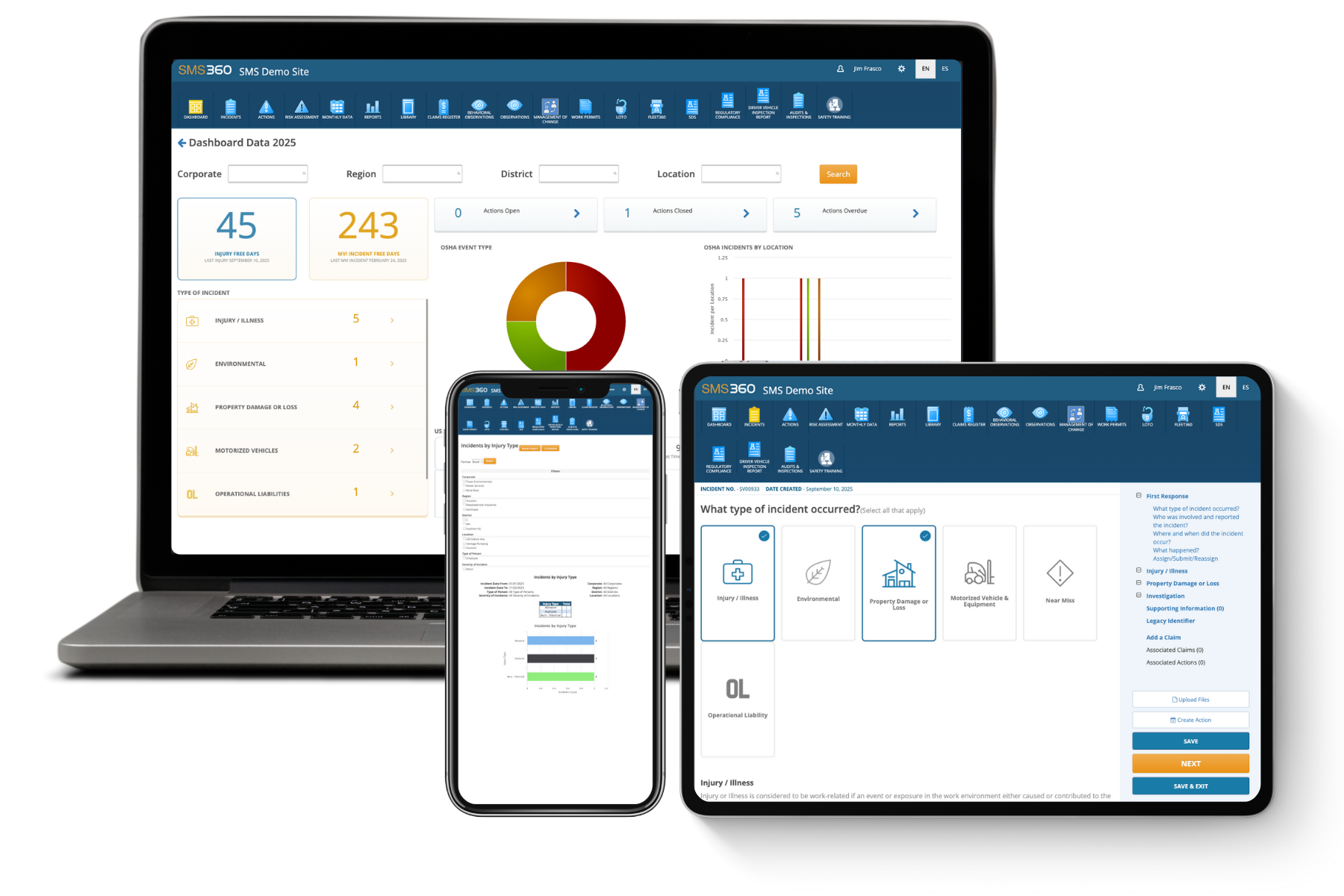
Managing RTW cases on paper is hard. EHS software like SMS360 connects the incident record, OSHA 300 logging, and claims management in one place. You can track restrictions and restricted days, set reminders for physician follow-ups, document transitional duty offers, and monitor claim costs, so nothing slips and your records stay accurate.
Frequently Asked Questions
Do employers have to offer light duty?
In most cases, there is no general legal requirement to offer light duty, but several laws can create obligations in specific situations. Under the ADA, if an employee’s condition qualifies as a disability, you may need to provide a reasonable accommodation, which can include modified duties or reassignment to a vacant light-duty position if one exists. EEOC guidance indicates employers generally aren’t required to create new positions. The Pregnant Workers Fairness Act may require accommodations for pregnancy-related limitations. Some state laws and collective bargaining agreements also include light-duty rules. Even where it isn’t required, offering light duty is usually a smart business decision, because it reduces workers’ compensation wage-loss costs, helps retain experienced employees, and supports recovery. If you offer light duty, apply your policy consistently to avoid discrimination claims, and talk to legal counsel about how it fits with your state’s workers’ comp rules.
Can an employee refuse light duty?
Yes, an employee can turn down a light-duty offer, but there may be consequences depending on the situation. In many states, an employee receiving workers’ comp wage benefits who refuses a suitable light-duty job within their medical restrictions may lose some or all of those wage benefits. The rules vary significantly by state, so check with your carrier. If the employee is on FMLA leave, they have the right to continue that protected leave rather than accept light duty, and refusing will not cost them FMLA job protection, though it may still affect workers’ comp payments. Employers should make light-duty offers in writing, clearly describe the duties and confirm they fit the doctor’s restrictions, and document the employee’s response. If an employee refuses, try to understand why. Sometimes concerns about the assignment can be solved with a small change.
Does light duty make an injury recordable on the OSHA 300 log?
Yes. Under OSHA’s recordkeeping rules, if a work-related injury or illness leads to restricted work or transfer to another job, the case is recordable. Restricted work generally means the employee can’t perform one or more routine functions of their job, or can’t work the full workday they normally would, because of the injury. You record these cases in the restricted or job transfer column of the OSHA 300 log and count the number of days of restriction, with a cap of 180 days per case. These cases count toward your DART rate. The one important detail is that if the restriction only applies to the day of the injury, it isn’t counted. A light-duty program won’t make an injury disappear from your log, but shifting cases from days-away to restricted work is generally better for both the employee and the company.
How long should light-duty assignments last?
Light-duty assignments are meant to be temporary, and most employers set a time limit in their policy, commonly between 60 and 90 days, with the option to extend on a case-by-case basis. The right length depends on your industry, the types of injuries you typically see, and the jobs you have available. What’s most important is that the assignment is tied to medical progress. Review each case regularly with the treating physician, update restrictions and duties as the employee improves, and work toward a return to full duty. If an employee reaches maximum medical improvement and still can’t return to their original job, the situation changes. At that point, you may need to look at permanent accommodations under the ADA or other options, ideally with help from HR and legal counsel. Avoid open-ended light duty without regular review, which can create problems for both sides.
What are good light-duty jobs for injured workers?
Good light-duty jobs are meaningful, fit within the employee’s restrictions, and contribute to the business. Common options include conducting safety inspections or audits, helping update job hazard analyses and procedures, assisting with training or mentoring new hires, inventory counts and organization, quality control checks, data entry or document scanning, answering phones, dispatch support, tool and equipment tracking, and light cleaning or organizing. The best approach is to build a bank of tasks for each department before injuries happen, grouped by physical demands such as seated work, limited lifting, or no overhead reaching. Involve supervisors so the tasks are real work, not busywork. Assignments that feel pointless can hurt morale and slow recovery. Where possible, keep injured employees within their own team or department, since staying connected to coworkers helps them return to their regular job more smoothly.