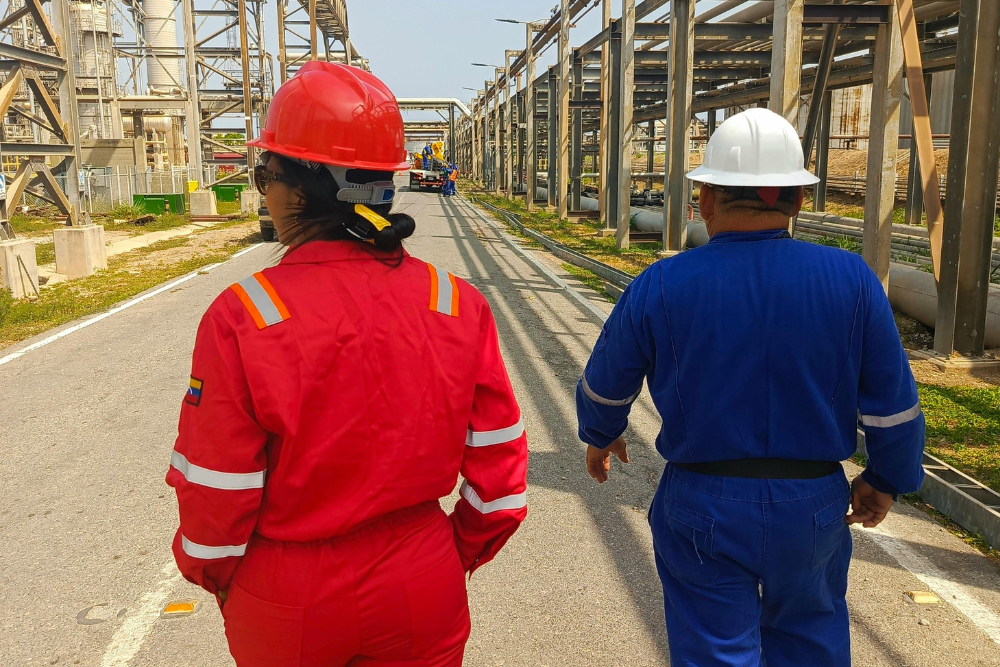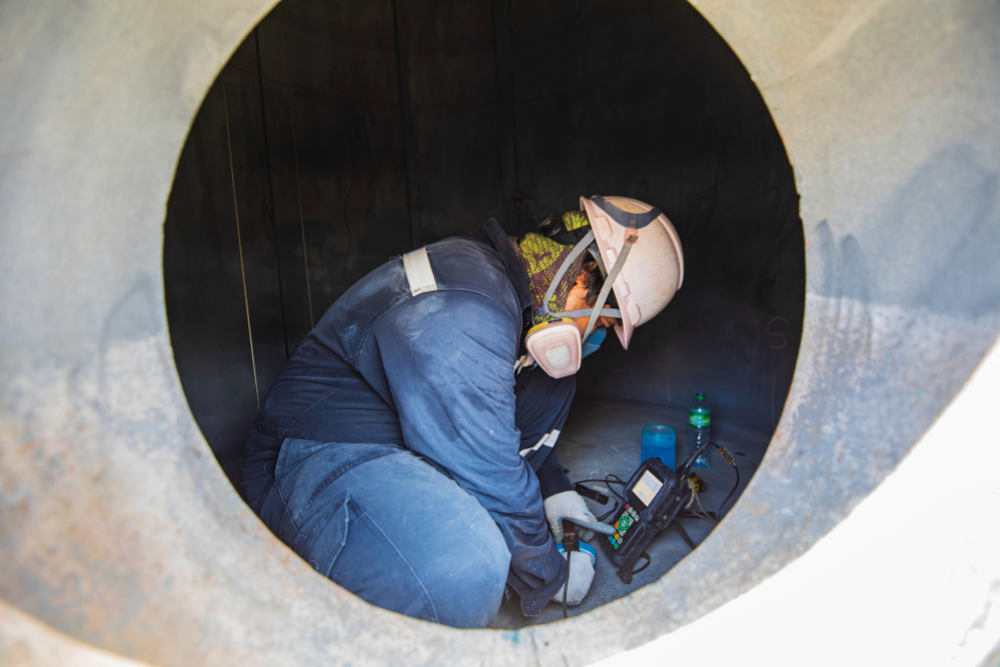
Confined spaces are among the most dangerous work environments in industrial and manufacturing settings — not because the work itself is unusual, but because the space traps hazards that would otherwise dissipate. A gas that would harmlessly disperse in open air can accumulate to lethal concentrations inside a tank. A worker who could easily step back from a hazard in an open plant may have no clear path of retreat inside a vessel, pit, or duct. Confined space incidents are also unusual in another troubling way: a large share of confined space fatalities involve would-be rescuers, not just the original victim, because untrained coworkers instinctively go in after a downed colleague without a plan or protection. Understanding what makes a space "confined" in the regulatory sense, and building a disciplined program around entry, monitoring, and rescue, is one of the highest-leverage safety investments a facility can make.
What Qualifies as a Confined Space
Not every tight or enclosed area meets the formal definition of a confined space, and getting this distinction right matters because it determines which procedures apply.
The Three-Part Definition
A space is generally considered a confined space if it meets three criteria: it is large enough for a worker to bodily enter and perform work, it has limited or restricted means of entry or exit, and it is not designed for continuous human occupancy. Storage tanks, silos, boilers, sewers, pipelines, pits, vaults, and manholes are common examples. The key is that all three conditions must be present — a space might be small and hard to access but still not qualify if it was designed for people to work in regularly, like a mechanical room.
Permit-Required vs. Non-Permit Confined Spaces
Within the broader category of confined spaces, a further distinction separates permit-required confined spaces from non-permit confined spaces. A permit-required confined space has one or more additional hazards: a hazardous atmosphere, material that could engulf an entrant, an internal configuration that could trap or asphyxiate someone (such as inwardly converging walls or a sloped floor narrowing to a smaller cross-section), or any other recognized serious safety or health hazard. If a confined space has none of these characteristics, it may be classified as non-permit, but that classification should never be treated as permanent — conditions inside a space can change, and a space that was safe yesterday can become hazardous today due to a chemical spill, decomposition, or a nearby process introducing gas into the space.
Why the Distinction Matters Operationally
Facilities sometimes misclassify spaces, either by underestimating hazards or by over-applying permit procedures to spaces that don't need them, which burns time and can cause workers to view the permit process as bureaucratic overhead rather than a genuine safety control. A periodic reassessment of every confined space in a facility — not just a one-time classification when the program was built — keeps the classifications accurate as equipment, processes, and building conditions evolve.
The Hazards Inside Confined Spaces
Understanding what actually kills or injures people in confined spaces is the foundation for building effective controls.
Atmospheric Hazards
Atmospheric hazards are the most common and most lethal risk in confined spaces, and they generally fall into three categories: oxygen deficiency, oxygen enrichment, and toxic or flammable gas accumulation. Oxygen deficiency can occur when a gas displaces oxygen in a space, when rusting metal consumes oxygen over time inside a sealed tank, or when biological decomposition uses up available oxygen. Toxic gases such as hydrogen sulfide can accumulate from decomposing organic material, wastewater, or certain industrial processes, and are particularly dangerous because they can rapidly deaden the sense of smell that would normally warn a worker of their presence, making them impossible to detect by smell alone at higher concentrations. Flammable gas or vapor accumulation introduces explosion risk on top of toxicity risk, especially in spaces that recently held petroleum products, solvents, or other volatile materials.
Physical and Mechanical Hazards
Beyond atmosphere, confined spaces often contain physical hazards that are easy to overlook during planning. Engulfment hazards exist in spaces containing loose granular material like grain, sand, or powder, which can behave like quicksand and bury a worker in seconds. Mechanical hazards include augers, mixers, or other equipment that must be fully locked out before entry, since a space that seems empty of moving parts can still have equipment that activates automatically or is inadvertently started by someone outside. Falls, slips, and being struck by falling objects are also elevated in confined spaces due to poor lighting, uneven or wet surfaces, and limited room to maneuver.
Hazards That Develop During the Work Itself
Some of the most dangerous confined space hazards aren't present when the entry begins — they're introduced by the work being performed. Welding, cutting, or the use of certain solvents and coatings can generate fumes or consume oxygen inside a space that had a perfectly safe atmosphere at the start of the job. This is a major reason why continuous atmospheric monitoring throughout an entry, not just a single check before entry, is a critical program element rather than an optional add-on.
Building a Confined Space Entry Program
A written, structured program is what turns confined space safety from a set of good intentions into a consistent, repeatable practice.
Hazard Assessment and Space Inventory
The starting point for any program is a complete inventory of every confined space in the facility, with each one assessed and classified according to the criteria above. This inventory should be a living document, updated whenever new equipment is installed, processes change, or a space is modified in a way that could affect its hazard profile. Each space should have its own hazard profile documenting the specific risks associated with it, since a tank that previously held a corrosive chemical carries different hazards than an empty structural vault.
The Permit System
For permit-required confined spaces, a written permit must be completed before each entry, documenting the location, purpose, duration, identified hazards, atmospheric test results, required PPE, communication procedures, and the names of authorized entrants, attendants, and entry supervisors. The permit should be treated as a living document during the entry, not paperwork completed once and forgotten — conditions can change, and the entry supervisor has the authority and responsibility to cancel a permit if conditions warrant it. Permits should also have a defined expiration, forcing reassessment if the work extends beyond the anticipated duration.
Atmospheric Testing Protocols
Atmospheric testing should follow a specific sequence: oxygen content first, then flammability, then toxicity, because oxygen levels affect the accuracy of flammability readings, and flammable atmospheres pose a more immediate catastrophic risk than most toxic exposures. Testing should occur before entry and continuously or at frequent, defined intervals throughout the work, using calibrated instruments that are checked according to a documented calibration schedule. Testing should also account for stratification — gases of different densities can settle at different levels within a space, meaning a reading taken at the entry point may not reflect conditions at the bottom of a deep vessel.
Ventilation and Atmosphere Control
Where testing reveals or risks a hazardous atmosphere, mechanical ventilation is typically required before and during entry, using forced air ventilation positioned to sweep hazardous air away from the entrant's breathing zone and out of the space. Natural ventilation alone is rarely sufficient and should not be relied upon as a substitute for mechanical ventilation and monitoring in a permit-required space. It's also worth noting that ventilation reduces but does not eliminate the need for atmospheric monitoring — a ventilation fan failure partway through a job can allow hazardous conditions to redevelop quickly, which is why continuous monitoring remains essential even when ventilation is running.
Roles and Responsibilities in Confined Space Entry
A functioning confined space program depends on clearly defined roles, each with distinct responsibilities and training requirements.
The Entry Supervisor
The entry supervisor is responsible for verifying that all pre-entry conditions are met, authorizing the entry, overseeing the work, and terminating the entry if conditions become unsafe or the work is complete. This role carries the authority to stop work at any point and should be filled by someone with sufficient training and standing to make that call without hesitation, even under production pressure.
The Attendant
The attendant remains outside the confined space for the entire duration of the entry, maintaining continuous communication with the entrant, monitoring conditions outside the space that could affect safety inside it, and initiating rescue procedures if needed — critically, without entering the space themselves unless they are trained and equipped as a rescuer and a replacement attendant is in place. This restriction exists precisely because so many confined space fatalities involve an untrained attendant or coworker entering to help a downed entrant and becoming a second victim. The attendant's job is to summon trained rescue, not to become part of the emergency.
The Authorized Entrant
The entrant is responsible for understanding the hazards of the space, properly using any required PPE and equipment, communicating regularly with the attendant, and recognizing the signs and symptoms of hazard exposure in themselves. Entrants should be trained to exit immediately if they notice warning signs of atmospheric hazard exposure — dizziness, nausea, disorientation — or if they sense any change in conditions, and should never assume a symptom is unrelated to the space just because it feels minor.
Rescue Planning and Emergency Response
No confined space entry should proceed without a rescue plan in place, and that plan needs to be specific to the space, not a generic reference to calling emergency services.
Non-Entry vs. Entry Rescue
Non-entry rescue, where the entrant is retrieved using a harness and retrieval line connected to a mechanical device outside the space, is the preferred method whenever the space configuration allows for it, since it doesn't require anyone else to enter a hazardous environment. Entry rescue, where trained rescuers physically enter the space to retrieve a downed entrant, should only be performed by personnel specifically trained and equipped for confined space rescue, using proper atmospheric monitoring and respiratory protection themselves.
Rescue Team Readiness
Whether a facility uses an internal rescue team or contracts with an external rescue service, that team's actual response time to the specific space in question needs to be evaluated realistically, not assumed. A rescue service that can respond in twenty minutes may be entirely inadequate for a hazard, like rapid oxygen deficiency, that can incapacitate a worker in under a minute. Facilities relying on external rescue services should verify, through drills or direct coordination, that the response team is genuinely familiar with the specific space, its access points, and its hazards — not simply available by phone.
Practicing Before It's Needed
Rescue plans that exist only on paper tend to fail when actually needed, because confined space rescue is physically and logistically difficult even under ideal conditions. Regular rescue drills, using the actual equipment and, where possible, the actual spaces involved, reveal gaps that a written plan alone won't surface — a retrieval line that's the wrong length, an anchor point that isn't rated for the load, or a rescue team that hasn't practiced extracting someone through a particular access configuration.
Training and Ongoing Program Maintenance
A confined space program is only as strong as the training and discipline behind it, and both require ongoing attention rather than a one-time setup.
Initial and Refresher Training
All personnel involved in confined space work — entrants, attendants, and supervisors — need training specific to their role, covering the hazards of the spaces they'll work in, the equipment they'll use, and the procedures they're expected to follow. Refresher training should happen on a defined schedule and also whenever there's reason to believe existing training is inadequate — after a near-miss, a change in space configuration, or evidence that a worker's understanding of procedures has drifted.
Auditing the Program, Not Just the Paperwork
Confined space programs are particularly vulnerable to "normalization of deviance," where shortcuts taken without incident gradually become accepted practice. Regular audits — including direct observation of actual entries, not just review of completed permits — help catch this drift before it results in an incident. A permit that looks complete on paper doesn't guarantee that atmospheric testing was actually performed at the depth and frequency required, which is why direct observation matters as much as documentation review.
Confined Space: Frequently Asked Questions
How do I know if a space at my facility needs to be treated as a permit-required confined space rather than a non-permit space?
Start with the basic three-part confined space test: is the space large enough to bodily enter, does it have limited or restricted entry and exit, and is it not designed for continuous occupancy? If all three are true, you have a confined space, and the next question is whether it also has any of the additional hazard characteristics that elevate it to permit-required status — a hazardous atmosphere (actual or potential), material that could engulf an entrant, an internal shape that could trap or asphyxiate someone, or any other serious recognized hazard. If any of those apply, it's a permit-required space and needs the full entry program: permits, atmospheric testing, ventilation as needed, and a rescue plan. The important nuance is that this classification isn't a one-time judgment call. A tank that's normally empty and inert can become hazardous after a spill, a nearby process change, or even organic material decomposing inside it over time. Facilities should reassess classifications periodically and whenever there's a meaningful change to the space or what's stored or processed near it, rather than relying on a classification made years earlier.
What's the right sequence and frequency for atmospheric testing before and during confined space entry?
Before entry, testing should proceed in a specific order: oxygen level first, then flammability (combustible gas), then toxicity. This order matters because oxygen concentration affects how accurately combustible gas readings are interpreted, and because a flammable atmosphere presents an immediate catastrophic risk that needs to be ruled out before further testing and entry proceed. Readings should be taken at multiple points within the space, including near the bottom, middle, and top, since gases of different densities can stratify and settle unevenly — a reading taken only at the entry point can miss a dangerous concentration lower in a deep vessel. Testing shouldn't stop once entry is authorized. Continuous monitoring, or testing at clearly defined short intervals, should continue throughout the work, because conditions can change during the job itself — from the work being performed (welding, use of solvents), from a ventilation system malfunctioning, or from an external process introducing gas into the space. Instruments used for testing need to be properly calibrated on a documented schedule, since a miscalibrated monitor giving a false "safe" reading is arguably more dangerous than no monitor at all, because it creates false confidence.
Why is non-entry rescue preferred over entry rescue, and when is entry rescue actually necessary?
Non-entry rescue — retrieving an incapacitated entrant using a harness and mechanical retrieval device from outside the space — is preferred wherever the space configuration allows it because it removes the single biggest risk factor in confined space fatalities: additional people entering a hazardous space to attempt a rescue. A large share of confined space deaths involve would-be rescuers who went in without proper training, monitoring, or protection, often compounding a single-victim incident into a multiple-fatality one. Non-entry rescue keeps everyone involved in the retrieval outside the hazard zone. Entry rescue becomes necessary when the physical configuration of the space doesn't allow for a retrieval line and mechanical device to work effectively — for example, a space with multiple bends, obstructions, or a configuration where a straight-line retrieval isn't possible. In those cases, entry rescue must be performed only by personnel specifically trained and equipped for confined space rescue, using their own atmospheric monitoring and respiratory protection, and following a rescue plan that was developed in advance for that specific space rather than improvised in the moment. Facilities with spaces that can only be safely handled through entry rescue should give particular attention to whether their rescue provider, internal or external, is truly prepared and drilled for that specific configuration.
Who is responsible for a confined space rescue if something goes wrong, and how do we know our rescue plan is actually adequate?
Responsibility depends on your program design, but every permit-required confined space entry needs a rescue plan in place before entry begins, and that plan needs to specify exactly who will perform the rescue and how quickly they can respond to that particular space. Some facilities maintain their own trained internal rescue team; others rely on a local fire department or a contracted rescue service. Either arrangement can work, but the plan is only adequate if it accounts for realistic response time versus the actual hazard timeline. Some atmospheric hazards, like sudden oxygen deficiency, can incapacitate a worker in under a minute, meaning a rescue response measured in tens of minutes may not prevent a fatality even if it arrives quickly by normal emergency standards. If you're relying on an external rescue provider, confirm directly with them — not just assume — that they know the location, understand the access configuration and hazards of your specific spaces, and have the equipment and training for the type of rescue those spaces might require. The best way to know whether a rescue plan is adequate is to actually test it: run a drill using real equipment and, where feasible, the real space, and time how long it genuinely takes from the moment of a mock emergency to the moment a rescuer could physically reach and extract the entrant. Gaps that look fine on paper — an anchor point in the wrong spot, a retrieval line that's too short, unfamiliarity with a particular hatch or access point — tend to show up immediately in a real drill and almost never show up in a document review.
.png)