Every workplace incident that has ever happened began with a moment — a moment where something was missed, overlooked, or simply not communicated. Safety moments exist to prevent that. Brief, focused, and practically powerful, a safety moment is one of the simplest and most effective tools available to modern safety managers, team leaders, and frontline workers alike.
Whether you are searching for safety moment ideas, looking for a safety moment for today, or exploring the best safety moment topics for your industry, this guide covers everything you need to know — from understanding the basics to building a program that genuinely changes behavior and saves lives.
What Is a Safety Moment?
Defining the Safety Moment
A safety moment is a short, targeted discussion about a specific workplace safety topic. It is typically conducted at the beginning of a work shift, team meeting, or operational briefing and lasts between two and five minutes. The goal is simple: bring one safety issue to the forefront of employees' minds before work begins so that it shapes their behavior throughout the day.
Safety moments are used across virtually every industry — from construction and oil and gas to healthcare, manufacturing, logistics, and office environments. They are sometimes called safety shares, safety briefs, or toolbox talks, though toolbox talks tend to be slightly longer and more structured. Regardless of what they are called, their purpose is the same: to make safety a daily conversation rather than an afterthought.
The Four Core Elements of an Effective Safety Moment
An effective safety moment has four essential elements. First, it must be brief — two to five minutes is the ideal window. Second, it must be focused on a single topic so the message is clear and memorable. Third, it must be relevant to the audience and their actual work tasks. Fourth, it must include an actionable takeaway — something employees can apply immediately on the job.
Safety moments that lack these elements tend to become background noise. When workers feel that a safety moment is irrelevant, overly generic, or simply a compliance checkbox, they disengage. The best safety moments feel urgent, personal, and connected to the work that is about to happen.
Why Safety Moments Matter
The Human Cost of Skipping Safety Moments
In the United States, a worker is injured on the job every seven seconds, according to the National Safety Council. Behind every one of those statistics is a human being — a person who went to work expecting to come home safely. Safety moments are not administrative busywork. They are a direct investment in the physical well-being of the people who power your organization.
When safety moments are conducted consistently and thoughtfully, they reinforce safe behaviors that become second nature over time. Workers who hear about slip prevention on a Tuesday morning think twice before walking across a wet floor on Wednesday afternoon. That mental connection — between the safety moment and the real-world behavior — is what saves lives.
Most workplace accidents are not the result of freak occurrences or unforeseeable equipment failures. They are the result of human error, distraction, complacency, or simply not knowing the correct way to perform a task. A well-delivered safety moment directly addresses all of these root causes by keeping hazard awareness front and center before the workday begins.
The Financial Case for Regular Safety Moments
Beyond the moral imperative, there is a compelling financial case for conducting regular safety moments. The average cost of a workplace injury in the United States — including medical expenses, lost productivity, and administrative costs — runs into tens of thousands of dollars per incident. Severe injuries and fatalities are exponentially more costly, both financially and in terms of organizational reputation and employee morale.
Organizations that prioritize safety culture consistently report lower incident rates, lower workers' compensation premiums, reduced absenteeism, and higher employee retention. The return on investment of a two-minute daily safety moment is difficult to overstate. Small, consistent investments in safety awareness compound over time into significantly safer workplaces and substantially lower costs.
Safety Moments and OSHA Compliance
While OSHA does not specifically mandate daily safety moments by name, the agency's General Duty Clause requires all employers to provide a workplace free from recognized hazards. Safety moments are widely recognized as a best practice for meeting this standard.
In the event of an OSHA inspection or a workplace incident investigation, documented safety moments demonstrate that the employer was proactively communicating safety information to its workforce — a factor that can significantly influence enforcement outcomes. A library of documented safety moments showing topics, dates, presenters, and attendees is compelling evidence of an employer's commitment to worker safety.
Safety Moment Topics and Ideas for Every Industry
How to Choose the Right Safety Moment Topics
Choosing the right safety moment topics requires situational awareness. The best topics are those that directly address the hazards your workers face today, not generic safety concepts pulled from a distant industry or a textbook. Start by reviewing your organization's incident and near-miss log. Patterns in that data will reveal the hazards most likely to cause harm in your specific environment.
Next, consider seasonal risks. Summer brings heat illness, dehydration, and sun exposure. Winter introduces slips on icy surfaces, cold stress, and reduced visibility during early morning and evening shifts. Spring and fall carry their own hazards, from changing weather conditions to variations in daylight hours. Aligning your safety moment topics with the season makes them feel timely and immediately actionable for your workforce.
Finally, listen to your workers. Frontline employees often have the clearest view of the hazards they encounter daily. Soliciting their input for safety moment topics not only produces more relevant content but also increases engagement and reinforces the idea that safety is a shared responsibility across the organization.
Safety Moment Ideas for Construction
Construction is one of the highest-risk industries in the United States, and safety moments are especially critical on job sites where hazards change daily as work progresses. Effective construction safety moment topics include fall protection and proper harness inspection, ladder safety and the three-point contact rule, struck-by hazard awareness for workers operating near crane lifts or overhead activity, proper trenching and excavation safety, and the correct inspection and use of hand and power tools.
For construction teams, a safety moment for today might also cover equipment pre-use inspection checklists, site-specific emergency response procedures, concrete and masonry dust exposure and respiratory protection requirements, or the importance of maintaining clear emergency access routes as the site evolves. Tying the safety moment directly to the specific work scheduled for that day makes it immediately actionable for the crew and far more likely to influence behavior.
Safety Moment Topics for Manufacturing
Manufacturing environments present a distinctive combination of machine hazards, ergonomic risks, chemical exposures, and repetitive motion injuries. High-impact safety moment topics for manufacturing teams include lockout/tagout procedures for equipment maintenance, machine guarding inspections before starting a shift, proper lifting techniques and safe material handling practices, forklift and pedestrian traffic management in shared spaces, and chemical storage requirements and SDS sheet awareness.
Mental fatigue and repetitive strain are also significant and often underaddressed concerns on the manufacturing floor. Safety moments covering these topics help workers recognize the early warning signs of musculoskeletal strain and understand that reporting discomfort before it becomes a serious injury is not a sign of weakness — it is a sign of sound judgment.
Safety Moment Ideas for Healthcare
Healthcare workers face one of the most complex and demanding combinations of workplace hazards of any industry, spanning physical, chemical, biological, and psychological risks. Effective safety moment topics for healthcare environments include safe patient handling and the proper use of mechanical lift equipment, needlestick and sharps injury prevention, correct hand hygiene and infection control procedures, workplace violence prevention and de-escalation strategies, and fatigue management for nurses, physicians, and other shift workers.
Mental health and burnout deserve dedicated attention in healthcare safety moments as well. Frontline clinical staff have experienced extraordinary levels of workplace stress, and safety moments that acknowledge this reality and point workers toward available support resources demonstrate genuine organizational care for employee well-being.
Safety Moment Topics for Oil and Gas
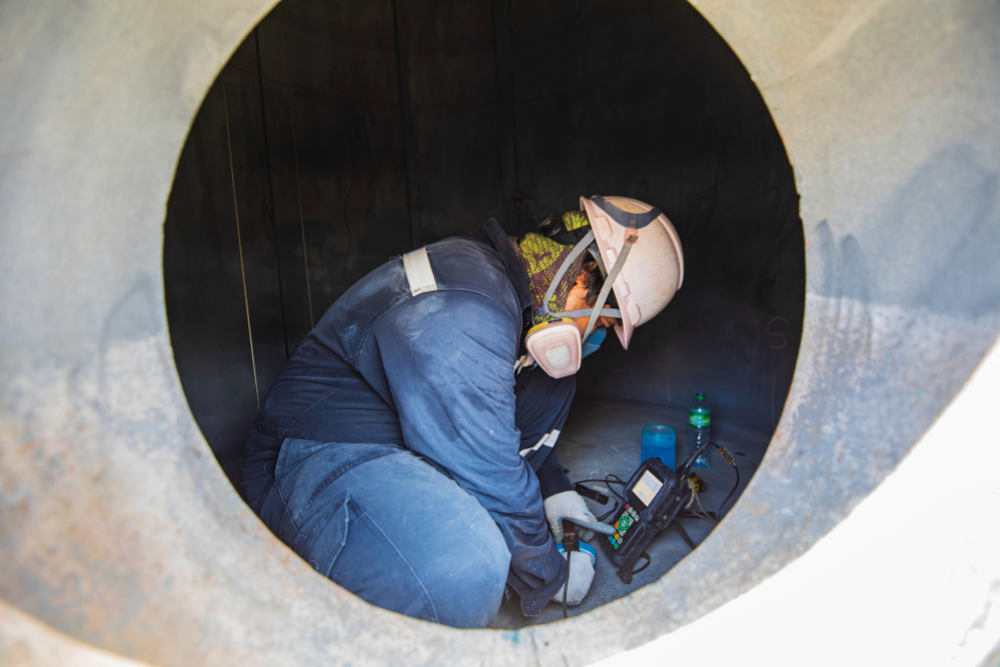
The oil and gas industry operates in some of the most hazardous environments on earth, making daily safety moments an operational necessity rather than a nicety. Essential safety moment topics for this sector include H2S awareness and emergency evacuation procedures, proper use and calibration of gas detection equipment, confined space entry protocols and permit requirements, dropped object prevention in elevated work areas, permit-to-work systems and the importance of following them without shortcuts, and the exercise of stop-work authority when a situation does not feel right.
Safety moments in oil and gas are also an ideal opportunity to reinforce the organizational expectation that every worker has both the right and the responsibility to stop work if they observe an unsafe condition — regardless of production pressure or schedule constraints.
Safety Moment Ideas for Office Environments
Office environments may appear low-risk compared to industrial settings, but they carry meaningful ergonomic, psychosocial, and fire safety hazards that are frequently overlooked. Relevant safety moment topics for office workers include workstation ergonomics and proper monitor height and keyboard positioning, preventing eye strain and screen fatigue from prolonged computer use, slip, trip, and fall prevention in corridors, stairwells, and parking areas, fire evacuation procedures and assembly point locations, cybersecurity best practices and phishing awareness, and mental health resources and stress management strategies available through the organization.
Remote and hybrid workers benefit from safety moments tailored to their home working environments as well, covering ergonomic home office setup, electrical safety, fire safety including smoke detector maintenance, and the importance of maintaining clear boundaries between work time and personal recovery time.
How to Deliver a Safety Moment That Actually Sticks
Preparation Makes the Difference
Even though a safety moment is brief, preparation matters enormously. The presenter should select a specific, timely topic and gather one or two supporting facts, examples, or visuals before the moment begins. A photograph of a real hazard spotted on-site, a brief video clip, or a physical object related to the topic can dramatically increase audience engagement and information retention.
Avoid the temptation to wing it. A rambling, unfocused safety moment that runs too long or jumps between multiple topics is worse than no safety moment at all because it trains workers to tune out future moments. Prepare a clear opening, a concise middle, and a strong close — and stick to a single topic every time.
The Most Effective Safety Moment Format
The most effective safety moment format follows a simple three-part structure. Open with a one-sentence statement of the topic: "Today we are talking about ladder safety." This immediately orients the audience and signals what to listen for. Follow with a brief explanation of why the topic matters right now — ideally tied to a real event, a recent near-miss, or a task coming up later that day that involves the hazard in question. Close with one or two concrete, actionable steps the team can take immediately, and end with a question to encourage brief discussion: "Who can tell me the first thing you should check before stepping onto a ladder?" Even a single response from the group transforms the moment from a one-way lecture into an active conversation.
Rotate Presenters to Build Ownership
One of the most effective and underutilized strategies for increasing engagement with safety moments is rotating who delivers them. When only supervisors or safety officers present safety moments, workers can unconsciously tune out simply because the voice is always the same. When frontline employees take turns preparing and delivering safety moments, several things happen simultaneously.
The presenter researches and internalizes the topic far more deeply than they would as a passive listener. The audience pays closer attention because the voice is different and the perspective is relatable. And the act of distributing the responsibility sends a powerful cultural message — that safety belongs to everyone in the organization, not just the people with safety titles.
Document Every Safety Moment
Documentation transforms a good safety habit into a compliance asset. A properly documented safety moment creates a verifiable record showing that specific safety information was communicated to a specific group of employees on a specific date. This record can be invaluable during regulatory inspections, insurance audits, or investigations following a workplace incident.
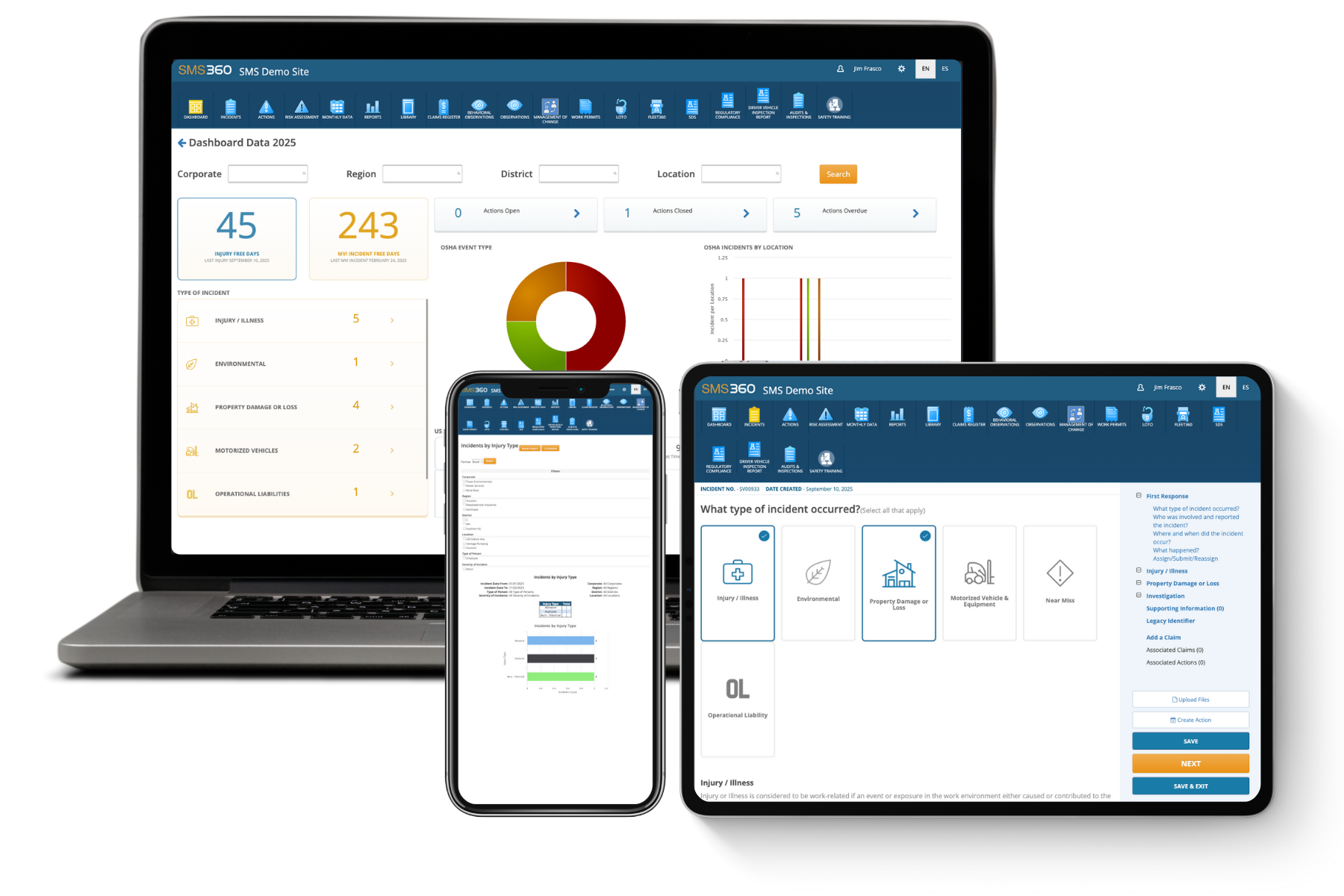
At minimum, every safety moment should be documented with the date, topic, presenter's name, and a list of attendees. Digital sign-in tools, safety apps, and dedicated safety management platforms make this process fast and reliable, eliminating the lost paperwork and incomplete records that plague manual systems.
Building a Safety Moment Program That Lasts
Why Consistency Is Everything
The single most important factor in whether a safety moment program actually changes workplace behavior is consistency. One safety moment delivered brilliantly will be forgotten within days. The same safety moment delivered every morning for a month will reshape how workers think and act. Safety moments work through repetition and reinforcement, not through any single inspired presentation.
Sporadic, ad-hoc safety moments are better than nothing, but they fall far short of what a structured, consistent program can achieve. When safety moments are planned in advance, scheduled around seasonal risks and operational priorities, assigned to specific presenters, and consistently documented, they become a systematic driver of incident reduction rather than a collection of well-meaning gestures.
Building a Library of Safety Moment Topics
One of the most common reasons safety moment programs lose momentum is that presenters run out of ideas. Building a library of safety moment topics in advance solves this problem and ensures that the program keeps moving even when the safety manager is not available to provide guidance.
A good safety moment library organizes topics by category — ergonomics, fire safety, PPE, emergency response, behavioral safety, seasonal hazards — and keeps a running list of topics tied to the organization's own incident history. Resources from OSHA, the National Safety Council, industry associations, and trade publications are all excellent sources of fresh, relevant safety moment content. Employee suggestions are equally valuable and have the added benefit of increasing buy-in when workers see their ideas show up in actual safety moments.
Connecting Safety Moments to Your Broader Safety Strategy
Safety moments are most powerful when they are integrated into a broader workplace safety strategy rather than operating as a standalone activity. The best safety moment programs are informed by real incident and near-miss data, aligned with the organization's identified risk priorities, connected to corrective actions that are already underway, and measured against actual safety performance metrics over time.
When a safety moment is not just a random topic but a direct response to something that happened in your workplace — or something that almost happened — it carries a weight and urgency that generic content simply cannot match. Building that connection between your safety moment program and your organization's real operational experience is what separates a world-class safety culture from one that is simply going through the motions.
5 Frequently Asked Questions About Safety Moments
What Is a Safety Moment and Why Does It Matter in the Workplace?
A safety moment is a brief, focused discussion held at the start of a meeting, shift, or workday to raise awareness about a specific workplace safety topic. Typically lasting between two and five minutes, a safety moment zeroes in on a single subject — such as slip and fall prevention, proper lifting technique, PPE usage, fire evacuation procedures, or distracted driving — and delivers it in a way that is immediately relevant to the people in the room.
The concept sounds simple, and it is. But that simplicity is precisely what makes it so powerful. Unlike lengthy safety training sessions that employees may attend once a year and quickly forget, safety moments are short enough to hold attention, frequent enough to build habits, and specific enough to drive real behavioral change on the job.
Safety moments matter because most workplace accidents are preventable. According to the National Safety Council, a worker is injured on the job every seven seconds in the United States. The overwhelming majority of those injuries are the result of human error, distraction, complacency, or simply not knowing the right way to perform a task. A well-delivered safety moment directly addresses all of these root causes by keeping hazard awareness front and center before work begins.
Beyond injury prevention, safety moments build culture. When an organization conducts safety moments consistently — daily, weekly, or at the start of every team meeting — it sends a clear message to every employee: your safety is a priority here, not an afterthought. That message, repeated over time, shapes how workers think, how they behave, and how they look out for one another. Organizations with strong safety cultures consistently outperform their peers on incident rates, workers' compensation costs, employee retention, and even productivity. A two-minute safety moment is one of the highest-return investments a workplace can make.
What Are the Best Safety Moment Topics and Ideas for Today?
Choosing the right safety moment topics is as important as conducting them in the first place. A safety moment that feels irrelevant to your team's actual work is a missed opportunity. The best safety moment ideas are those that directly connect to the hazards your workers face today — not generic concepts borrowed from a distant industry or a shelf of dusty compliance manuals.
Start by looking inward. Your organization's incident log and near-miss reports are a goldmine of relevant safety moment topics. If workers have been slipping near the loading dock, that is your topic for tomorrow morning. If a near-miss involving a forklift occurred last week, that is your topic for Monday. Real events from your own workplace are far more compelling and memorable than abstract safety statistics from a national database.
Next, think seasonally. Summer brings heat illness, dehydration, and sun exposure. Winter introduces icy walkways, cold stress, and reduced visibility during early morning and evening shifts. Spring and fall carry their own seasonal risks, from changing weather conditions to variations in daylight hours. Aligning your safety moment topics with the season makes them feel timely and immediately actionable.
For a safety moment for today specifically, some universally applicable topics include the correct way to report a near-miss, the location and proper use of fire extinguishers, the importance of keeping walkways and emergency exits clear at all times, how to inspect PPE before use, and the dangers of complacency when performing familiar and routine tasks. The key is always to pick one topic, make it specific to your environment, and give your team one concrete action they can take before the day is over.
How Do You Deliver an Effective Safety Moment That Actually Sticks?
Delivering an effective safety moment is less about oratory skill and more about preparation, relevance, and engagement. Even a two-minute safety moment can be deeply impactful when it is well-structured and personally delivered — or it can be completely forgettable if it feels rushed, generic, or disconnected from the team's daily reality.
The most effective format follows a simple three-part structure. Open with a clear statement of the topic. Follow with a brief explanation of why it matters right now — ideally tied to a real workplace event, an upcoming task, or a seasonal hazard. Close with one or two concrete, actionable steps and a question that invites brief discussion. Even a single response from the group transforms the moment from a passive announcement into an active conversation that people are more likely to remember and act on.
Rotating who delivers safety moments is one of the most underrated strategies for building long-term program engagement. When only supervisors or safety officers present, workers can unconsciously tune out. When frontline employees take turns, the presenter internalizes the topic more deeply, the audience pays closer attention to a relatable peer voice, and the act of sharing responsibility reinforces that safety belongs to everyone.
Consistency is the single most important factor in whether a safety moment program changes behavior over time. One excellent safety moment will be forgotten within days. The same commitment to a brief daily or weekly safety moment, sustained over months, builds the kind of habitual awareness that reduces incidents at the organizational level. Sporadic efforts produce sporadic results. Consistent effort produces a genuine safety culture.
How Do Safety Moments Support OSHA Compliance and Reduce Workplace Incidents?
Safety moments support OSHA compliance in several important ways, even though OSHA does not mandate them by name. The foundation of OSHA's regulatory framework is the General Duty Clause, which requires all employers to provide a workplace free from recognized hazards that are causing or are likely to cause death or serious physical harm. Safety moments are one of the most practical and scalable tools available for meeting this obligation on a continuous, daily basis.
When safety moments are properly documented, they create a paper trail demonstrating that the employer has been consistently communicating hazard information to its workforce. This documentation can be critically important during an OSHA inspection, an internal audit, or in the aftermath of a workplace incident. Safety inspectors and incident investigators look for evidence that the employer took proactive steps to educate workers about the hazards relevant to their roles. A well-maintained record of safety moments — showing topics, dates, presenters, and attendees — is compelling evidence of that proactive effort.
Beyond compliance, the connection between regular safety moments and actual incident reduction is well supported by industry experience. Organizations that conduct safety moments consistently and maintain strong safety cultures report lower rates of recordable injuries, fewer lost-time incidents, and significantly lower workers' compensation costs. The mechanism is straightforward: safety moments keep specific hazards top of mind, and workers who are actively thinking about a hazard are measurably less likely to engage in behaviors that expose them to it.
Safety moments are also particularly effective for addressing the behavioral root causes of workplace accidents, which studies consistently show account for the vast majority of incidents. Factors such as distraction, rushing, fatigue, and simple unawareness of the correct procedure are all directly targeted by a well-designed safety moment program. For high-risk industries, aligning safety moment topics with OSHA's annually published top ten most-cited violations ensures that your program addresses the areas of highest regulatory and operational risk.
How Do You Build a Safety Moment Program That Lasts?
Building a safety moment program that endures and delivers measurable results requires more than good intentions. It requires structure, consistency, and a deliberate strategy for keeping content fresh, presenters engaged, and documentation reliable over the long term.
Start with a content calendar. Map out safety moment topics at least a month in advance, organized around your organization's operational schedule, seasonal hazard patterns, and incident history. A content calendar eliminates the last-minute scramble for topics that causes many well-intentioned programs to stall. It also allows you to build logical progressions — for example, dedicating a full week to fall protection topics in advance of scaffolding work scheduled at a site.
Rotate presenters deliberately and early. Introduce the rotation concept from the beginning of your program so that delivering a safety moment is understood as a normal part of everyone's professional responsibility, not an occasional imposition. Provide presenters with support — a brief topic summary, one or two talking points, and a suggested question for group discussion — so that the responsibility feels manageable rather than intimidating, especially for frontline workers who may not be accustomed to leading group discussions.
Build feedback loops into your program. After conducting safety moments for a month, survey your team about which topics felt most relevant, which formats worked best, and what hazards they believe are not yet being adequately addressed. Use that feedback to improve your content calendar and your delivery approach. Workers who see their input reflected in the program become invested stakeholders rather than passive recipients.
Finally, connect your safety moment program to your organization's actual safety performance data. Track incident and near-miss rates alongside safety moment completion rates over time. When you can demonstrate that consistent safety moments correlate with a reduction in incidents — or identify topic areas where more education is needed — your program evolves from a daily habit into a strategic safety management tool that drives continuous improvement across the entire organization.