Hotels occupy a unique position in the world of physical security. Unlike office buildings or private residences, they must welcome thousands of strangers through their doors every year while still protecting guests, staff, and property from harm. This balancing act between hospitality and safety has never been more important. As travelers become more security-conscious and threats grow more sophisticated, hotel security has evolved from a simple lock-and-key system into a multi-layered strategy involving technology, training, and thoughtful design.
This guide breaks down what modern hotel security actually looks like, why it matters, and what both hoteliers and travelers should know to stay protected.
Why Hotel Security Matters More Than Ever
The hospitality industry has always faced security challenges, but the stakes have risen considerably in recent years. Hotels are high-traffic environments with constant guest turnover, making them attractive targets for theft, fraud, and in rare but serious cases, violence. At the same time, guests are trusting properties with sensitive personal information, from payment details to travel itineraries, which introduces a digital dimension to the security conversation.
Beyond the obvious safety concerns, security failures carry real business consequences. A single high-profile incident can damage a hotel's reputation for years, drive away bookings, and trigger costly litigation. Insurance premiums rise, staff morale suffers, and guest trust — the currency hotels depend on — erodes quickly. For these reasons, security is no longer treated as a back-office function. It's a core part of brand promise and guest experience.
The Shift From Reactive to Proactive Security
Historically, many properties treated security reactively, responding to incidents after they occurred rather than preventing them in the first place. That approach is increasingly seen as inadequate. Today's leading hotels invest in proactive systems: predictive analytics that flag unusual activity, regular risk assessments, and security audits conducted well before problems arise. This shift reflects a broader trend across the hospitality industry toward anticipating risk rather than simply managing its aftermath.
Core Physical Security Measures
Physical security remains the foundation of any hotel safety program. It's the layer guests interact with most directly, even if they rarely think about it.
Access Control and Key Systems
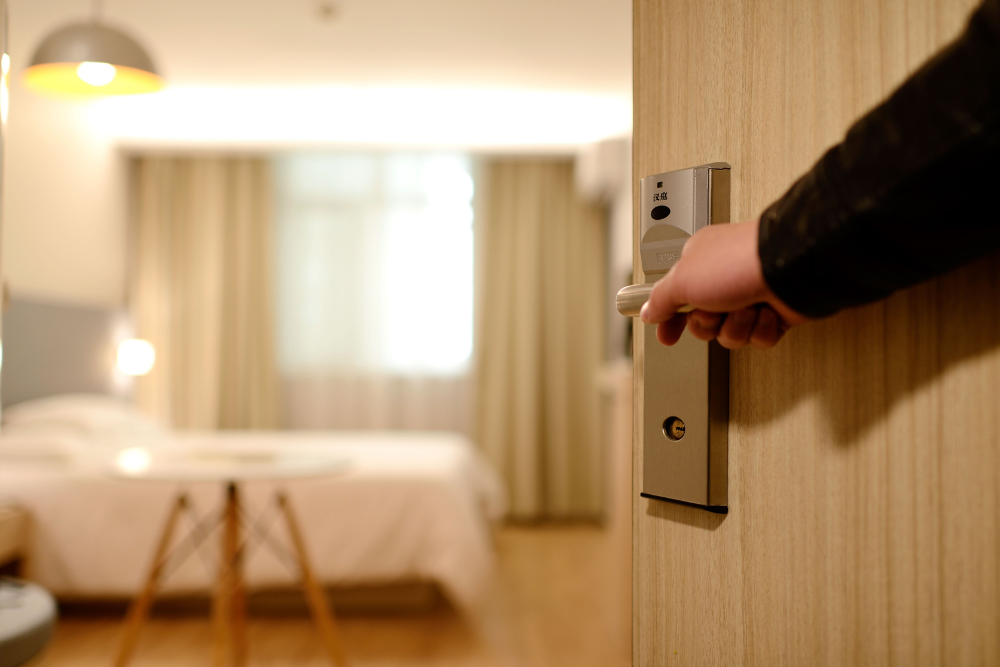
Modern hotels have largely moved away from traditional metal keys in favor of electronic keycards or mobile-based room access. These systems allow properties to track who entered a room and when, deactivate lost or stolen keys instantly, and restrict access to sensitive areas like staff-only corridors, mechanical rooms, and back-office spaces. Some larger properties — including a well-regarded destination hotel near Orlando's theme park district — have gone a step further by piloting fully keyless entry through guest smartphones, reducing the risk of cloned or lost cards altogether.
Elevator access control is another important layer. Many hotels now require a keycard to activate elevator floor buttons, ensuring that only registered guests can reach guest room floors. This simple measure significantly reduces the risk of unauthorized individuals wandering hallways.
Surveillance and Monitoring
Closed-circuit television (CCTV) systems are standard in nearly every modern hotel, covering entrances, hallways, parking structures, and public spaces. Beyond deterring criminal activity, footage provides crucial evidence if an incident does occur. Increasingly, hotels are integrating AI-powered video analytics that can detect loitering, unattended bags, or unusual crowd behavior in real time, alerting security staff before a situation escalates.
Importantly, cameras are typically avoided inside guest rooms and other private spaces, both for legal reasons and to respect guest privacy — a boundary that responsible properties treat as non-negotiable.
Perimeter and Entry Point Security
Controlling who enters the building in the first place is a first line of defense. Well-lit entrances, visible security personnel, and clear sightlines from the front desk all contribute to a safer environment. Many properties also use bollards, controlled vehicle access, and loading dock protocols to prevent unauthorized vehicles from getting too close to the building — a particularly important consideration for hotels near high-traffic tourist corridors or convention centers.
Staff Training and Human Factors
Technology alone cannot secure a hotel. Staff members are often the first to notice something is wrong, whether it's a guest in distress, a suspicious individual loitering in a hallway, or an unattended package in the lobby.
Recognizing and Responding to Threats
Comprehensive training programs teach employees how to recognize warning signs of trafficking, theft, or aggressive behavior, and how to respond calmly and appropriately. Front desk staff, in particular, are trained never to announce a guest's room number aloud or hand over duplicate keys without proper identity verification — small protocols that prevent significant vulnerabilities.
Housekeeping staff also play a critical security role. They're often instructed to report anything unusual, such as excessive "Do Not Disturb" signage over multiple days, unusual odors, or signs of unauthorized guests staying in a room. Because housekeepers enter nearly every room in a property, they function as an informal but valuable layer of situational awareness.
Emergency Preparedness and Drills
Fire evacuations, medical emergencies, and severe weather events all require rehearsed response plans. Leading hotels run regular drills, maintain clear signage for emergency exits, and ensure staff at every level know their role during a crisis. Coordination with local law enforcement and fire departments is also a key part of preparedness, allowing for faster, more organized responses if an incident does occur.
Cybersecurity: The Invisible Layer of Hotel Protection
As hotels have digitized nearly every aspect of operations, from reservations to room access, cybersecurity has become just as important as physical security.
Protecting Guest Data
Hotels collect enormous amounts of sensitive information: names, payment details, passport numbers, and travel patterns. This makes them attractive targets for data breaches. Responsible properties encrypt guest data both in storage and in transit, limit employee access to only what's necessary for their role, and conduct regular penetration testing to identify vulnerabilities before criminals do.
Securing Guest Wi-Fi and IoT Devices
Public hotel Wi-Fi networks are notoriously vulnerable to interception if not properly secured. Hotels are increasingly segmenting guest networks from internal operational systems, so that a compromised guest device can't provide a pathway into reservation systems or keycard databases. As smart room technology — voice assistants, connected thermostats, smart TVs — becomes more common, securing these Internet of Things (IoT) devices adds another layer of complexity that IT and security teams must manage together.
Preventing Fraud and Phishing
Guests are frequently targeted by scams that impersonate hotel booking confirmations or loyalty programs. Hotels combat this by educating guests on official communication channels, using verified booking platforms, and monitoring for fraudulent listings on third-party travel sites. Internally, staff are trained to recognize phishing attempts targeting the property's own systems, since a single compromised employee account can expose an entire guest database.
Guest Safety: What Travelers Can Do
Hotel security is a shared responsibility. While properties invest heavily in protective infrastructure, guests can take simple steps to further reduce their own risk.
Smart Habits for Room Safety
Travelers should always use the deadbolt and secondary latch when in their room, verify identity before opening the door to anyone claiming to be staff, and avoid displaying room numbers or key cards in public. It's also wise to store valuables in the in-room safe rather than leaving them visible, and to be mindful of what's shared on social media — publicly announcing a hotel stay and room number can inadvertently signal an empty home to burglars back home.
Choosing Security-Conscious Properties
Not all hotels invest equally in security, and travelers increasingly factor this into their booking decisions. Reviews, published safety certifications, and visible security measures like well-lit parking and monitored entrances can all serve as useful signals. Properties that are transparent about their safety protocols — rather than treating security as an afterthought — tend to earn stronger guest loyalty over time.
The Future of Hotel Security
Looking ahead, hotel security will likely lean further into biometric authentication, AI-driven threat detection, and even more seamless integration between physical and digital systems. Facial recognition for check-in, predictive analytics for crowd management during large events, and automated anomaly detection in guest behavior patterns are all technologies already being piloted at select properties. As these tools mature, the challenge for the industry will be balancing enhanced protection with guest privacy and the warm, welcoming feel that hospitality is built on.
Cross-property data sharing is another emerging trend, particularly among larger hotel groups. By anonymously sharing patterns around fraud attempts, suspicious bookings, or repeat offenders across a portfolio of properties, chains can spot threats faster than any single hotel could on its own. This kind of collaborative approach mirrors what's already common in banking and cybersecurity, where shared threat intelligence significantly improves detection speed.
Sustainability and security are also beginning to intersect in unexpected ways. Energy-efficient smart locks, for instance, often double as access-control upgrades, while modern building management systems that reduce power consumption also provide better visibility into who is moving through a property and when. As these systems converge, hotels that invest early are likely to see security improvements as a natural byproduct of broader operational upgrades rather than a separate line item.
Ultimately, the hotels that get security right are the ones that treat it not as a barrier to great guest experience, but as a foundation for it. Guests who feel safe are guests who relax, return, and recommend a property to others. As threats continue to evolve, so too will the tools and training hotels rely on — but the underlying goal will always stay the same: protecting people, not just property.
Frequently Asked Questions
1. Are hotel keycards actually safe, or can they be hacked?
Modern keycard systems are generally quite secure, especially compared to traditional metal keys. Reputable hotels use encrypted keycards that are deactivated automatically at checkout and can be remotely disabled if lost or stolen. While no system is completely immune to sophisticated attacks, properly maintained electronic access systems are far more secure than older lock-and-key setups.
2. Do hotels monitor guest rooms with cameras?
No — legitimate hotels do not place cameras inside guest rooms, bathrooms, or other private spaces. Surveillance is limited to public areas such as hallways, lobbies, parking lots, and entrances. If a guest ever suspects a hidden camera in their room, they should report it to hotel management and local authorities immediately.
3. What should I do if I feel unsafe at a hotel?
Contact the front desk or hotel security immediately, and don't hesitate to ask for a room change or additional assistance if something feels wrong. In situations involving immediate danger, contact local emergency services first. Most hotels have 24-hour security staff or a direct line to on-call management specifically for these situations.
4. How can I tell if a hotel takes security seriously before booking?
Look for signals such as published safety policies, well-reviewed access control systems, visible security staff or cameras in public areas, and guest reviews that mention feeling safe. Hotels that are transparent about their safety measures, rather than vague or silent on the topic, are generally a good indicator of a property that prioritizes guest protection.

.png)