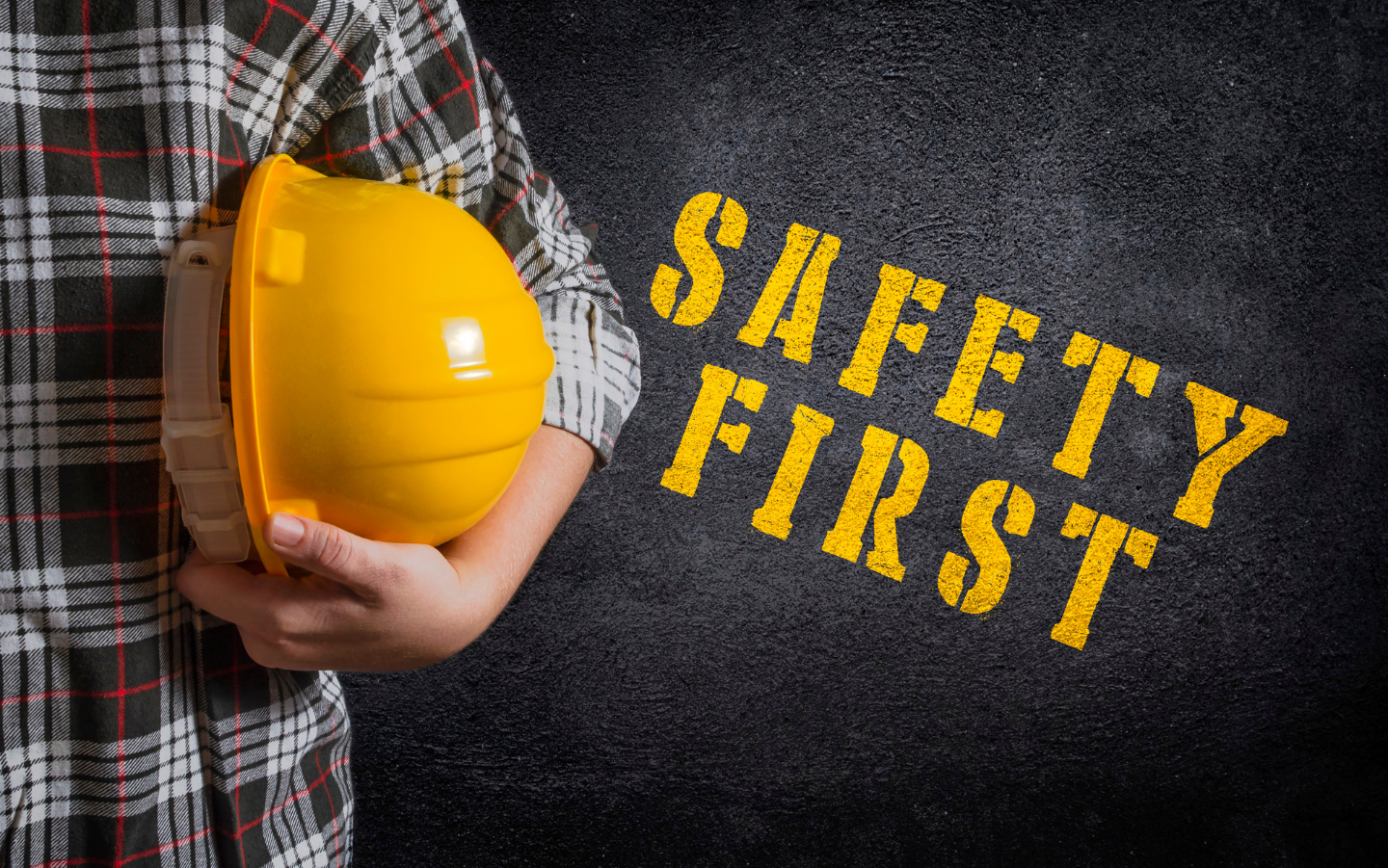
"Safety first." You've seen it on hard hats, banners, break room posters, and the back of work trucks so many times that your brain probably doesn't register it anymore. And that's exactly the problem, and the opportunity, with safety slogans.
A good safety slogan is one of the cheapest, most portable safety tools ever invented: a handful of words that can ride along in a worker's memory and surface at exactly the moment a decision matters, right before someone skips the harness, props open the guard, or reaches into the machine "just for a second." A bad slogan is wallpaper. Worse, a wall covered in stale slogans quietly communicates that safety here is a poster program, not a practice.
This guide covers what makes slogans work (and fail), the psychology behind memorable phrasing, 100+ examples organized by category, how to write your own, and how to deploy them so they reinforce, rather than replace, a genuine safety culture. We close with eight FAQs, including the big one: what actually makes a safety slogan good?
What Is a Safety Slogan and Why Do Companies Use Them?
A safety slogan is a short, memorable phrase designed to keep safe behavior top of mind. It might appear on signage, in email footers, on PPE, in toolbox talks, or as the theme of a safety campaign. Slogans have been part of industrial safety since the early 1900s, when the "Safety First" movement swept American railroads and steel mills and gave the discipline its most famous two words.
The Job a Slogan Is Supposed to Do
It helps to be clear-eyed about what a slogan can and can't accomplish. A slogan cannot fix a broken process, guard a machine, or substitute for training. What it can do is three things:
Prime attention. Hazard awareness fades between training sessions. A well-placed slogan acts as a micro-reminder at the point of risk, at the ladder rack, the loading dock, the chemical storage cabinet, nudging the brain back into alert mode.
Compress a value into portable form. "If you see something, say something" packs an entire reporting culture into seven words. People can't carry a policy manual in their heads; they can carry a phrase.
Signal identity and priority. The slogans an organization chooses, and how fresh and sincere they are, tell employees and visitors what the place cares about. A crisp, current, site-specific message says "we think about this"; a faded 1990s poster says the opposite.
The Evidence: Do Slogans Actually Change Behavior?
Research on safety signage and behavioral prompts offers a nuanced answer: reminders work best when they're specific, placed near the point of decision, and refreshed regularly. Generic messages in unchanging locations quickly suffer from "habituation," the brain's tendency to stop perceiving stimuli that never change. The practical takeaway isn't that slogans don't work; it's that static, generic slogans stop working. Rotation, specificity, and placement keep the tool sharp.
What Makes a Good Safety Slogan? The Anatomy of a Phrase That Sticks
Before we get to examples, it's worth understanding why some slogans lodge in memory for decades while others evaporate on contact. Cognitive science and advertising research point to a consistent set of ingredients.
Brevity
The best slogans run three to eight words. Every additional word raises the cost of remembering and repeating the phrase. "Safety doesn't happen by accident" (five words) survives; a fifteen-word sentence about commitment to continuous improvement in hazard identification does not.
Rhythm and Rhyme
Rhyme isn't just decoration; psychologists have documented a "rhyme-as-reason" effect, in which rhyming statements are perceived as more truthful and are recalled far more easily than non-rhyming equivalents. It's why "When in doubt, get out" and "If it's not locked out, it's not safe, no doubt" outlive their plainer cousins. Alliteration ("Stop, think, then start") and strong meter do similar work.
Concreteness
Abstract slogans ("Excellence in safety") slide off the brain. Concrete ones ("Three points of contact, every climb") create a mental picture and attach to a specific behavior. The more visual and specific the phrase, the more likely it is to surface at the moment of decision.
A Clear Behavioral Ask
The strongest slogans contain an implicit or explicit instruction: buckle up, lock it out, speak up, slow down. A slogan that merely states a value gives the reader nothing to do.
Emotional Resonance
Slogans that connect safety to what workers actually care about, family, going home, their crew, consistently outperform corporate-sounding messages. "Your family is waiting for you" hits differently than "Compliance is everyone's responsibility," because one speaks to love and the other to bureaucracy.
A Note on Humor
Funny slogans ("Shortcuts cut life short" walks the line; "Gravity always wins" crosses into wit) can dramatically boost attention and shareability, but humor is a seasoning, not a main course. It works for general awareness messages and fails badly for topics involving recent injuries or fatalities. Know your audience and your site's history.
100+ Safety Slogan Examples by Category
Use these as-is, adapt them, or treat them as raw material for writing your own. They're grouped by theme so you can match the message to the hazard.
Classic and General Safety Slogans
Safety first, because accidents last. Safety doesn't happen by accident. Work safe today, home safe tonight. The best gift you can give your family is you, coming home. Safety is no accident. A safe day is a good day. Think safety, work safely, live safely. Safety starts with me. No job is so urgent that it can't be done safely. Take five to stay alive. Safety is a full-time job, not a part-time practice. Your life is worth more than a shortcut.
Slogans About Shortcuts and Complacency
Shortcuts cut life short. The shortcut you take today may be your last. Complacency kills; awareness saves. Familiarity breeds shortcuts; shortcuts breed injuries. The job you've done a thousand times deserves the same care as the first. Routine is where risk hides. Don't let experience make you careless. Slow is smooth, smooth is safe.
PPE Slogans
Dress for the task, not for the dash. Your PPE only works when you wear it. Hard hats save hard heads. Protect your eyes, they don't grow back. Gloves on, hands intact. Hearing loss is forever; earplugs take seconds. If the job needs PPE, the job needs you in PPE. Ten seconds to put it on, a lifetime to live without it.
Slips, Trips, and Falls
Watch your step, it's a long way down. Clean floors save sore backs and broken bones. A cluttered floor is an accident waiting for feet. Three points of contact, every climb, every time. Ladders don't forgive; inspect before you ascend. Spot the spill, stop the fall. One misstep can change everything.
Machine and Equipment Safety
If it's not locked out, don't reach in. Lockout today, work tomorrow. Guards are there for a reason, keep them on. Never trust a machine to be off; prove it. Moving parts don't care about your schedule. Respect the machine; it doesn't respect you.
Driving and Vehicle Safety
Arrive alive, don't text and drive. The call can wait; your life can't. Buckle up, every trip, every time. Speed thrills but kills. Drive like your family is in the other car. Two seconds of distraction, a lifetime of consequences. Backing up? Walk it first.
Hazard Reporting and Speaking Up
If you see something, say something. A reported hazard is a prevented injury. Speak up today so everyone works tomorrow. Silence never fixed a hazard. Your voice is safety equipment, use it. The near miss you report saves the injury you'd regret.
Housekeeping
A clean site is a safe site. Everything has a place; put it there. Clutter today, injury tomorrow. Good housekeeping isn't extra work, it's the work.
Health, Heat, and Fatigue
Hydrate before you dehydrate. Beat the heat before it beats you. Fatigue is a hazard; rest is a control. Tired minds make dangerous decisions. Listen to your body; it's the only one you get.
Office and General Workplace
Safety isn't just for the shop floor. Lift with your legs, not your ego. Cords on the floor put people on the floor. An ergonomic today prevents an aching tomorrow.
How to Write Your Own Safety Slogan: A Five-Step Method
Borrowed slogans are fine, but the messages that land hardest are the ones written for your site, your hazards, and yourpeople. Here's a repeatable process.
Step 1: Start With One Behavior
Pick a single, specific behavior you want more of: pre-use ladder inspections, glove compliance in the shop, near-miss reporting, slower forklift speeds in one aisle. A slogan aimed at "safety in general" is aimed at nothing.
Step 2: Find the Real Motivation
Ask why workers should care, in their terms, not the company's. Going home whole. Not letting the crew down. Keeping hands that can still hold a fishing rod or a grandchild. The honest answer becomes the emotional core of the phrase.
Step 3: Draft Fast and Ugly
Write ten to twenty rough versions without judging them. Try a rhyming version, an alliterative version, a question version ("Would you reach in if it were running?"), and a blunt version.
Step 4: Cut Ruthlessly
Remove every unnecessary word. "Always remember to inspect your ladder before every use" becomes "Inspect before you ascend." Read each finalist aloud; if it doesn't roll off the tongue, keep cutting.
Step 5: Test With the Crew
Show your top three candidates to the people who'll see them daily. Which one do they remember an hour later? Frontline reaction is the only vote that counts, and involving workers in the choice builds ownership no poster can buy.
Bonus: Run a Slogan Contest
Many organizations get their best slogans, and a genuine engagement boost, from employee contests. Offer modest prizes, let the workforce vote, and put winning entries on real signage with credit to their authors. A slogan written by a fellow operator carries authenticity that corporate communications can't manufacture.
How to Use Safety Slogans Effectively (So They Don't Become Wallpaper)
Writing a great slogan is half the job. Deployment is the other half, and it's where most programs quietly fail.
Place Messages at the Point of Decision
A ladder-safety slogan belongs on the ladder rack, not in the lunchroom. A lockout message belongs at the energy isolation point. Behavioral research is emphatic on this: prompts work best immediately before the behavior they target, in both time and space.
Rotate Relentlessly
The brain stops seeing anything that doesn't change. Swap posters and digital messages at least monthly, tied to seasons, campaigns, or recent near misses. Some sites deliberately move signs a few feet every few weeks; even a change in location re-triggers attention.
Match the Medium to the Moment
Slogans can live far beyond posters: toolbox talk themes, email signatures, login screens, hard hat stickers, floor decals, vehicle decals, and digital displays. Floor decals at pedestrian crossings and mirror clings in vehicle bays put words literally in the line of sight.
Pair Every Slogan With Substance
A slogan is a headline for a program, never a substitute for one. "Speak up today so everyone works tomorrow" only works if reported hazards visibly get fixed. If the words and the reality diverge, workers believe the reality, and the slogan becomes a daily reminder of the gap. Cynicism about safety messaging is almost always earned by broken follow-through, not bad copywriting.
Retire What's Stale
Audit your signage twice a year. Anything faded, damaged, outdated, or invisible from habituation should come down. A smaller number of fresh, relevant messages beats a museum of old ones.
Common Mistakes That Kill Safety Slogans
A few failure patterns show up repeatedly. Slogan overload: covering every wall until individual messages dissolve into noise. Corporate voice: phrases written by a committee for an audit ("Committed to zero-harm excellence") rather than by a human for humans. Fear without agency: scare messaging that raises anxiety but names no action. Set-and-forget: the 2019 banner still hanging in 2026. And worst of all: slogans as a substitute for fixing known hazards, which workers read, correctly, as an insult.
The Bottom Line
Safety slogans are small tools with a real but limited job: keeping the right behavior in mind at the right moment. Used lazily, they fade into wallpaper. Used well, short, concrete, emotionally honest, placed at the point of decision, rotated often, written with (not just for) the workforce, and backed by visible follow-through, they're one of the highest-leverage few-dollar investments in safety communication available. Words won't guard a machine, but the right words at the right moment have talked countless hands out of harm's way.
Frequently Asked Questions
1. What are good safety slogans?
Good safety slogans share five traits: they're short (three to eight words), rhythmic or rhyming, concrete about a specific behavior, emotionally connected to what workers genuinely care about, and honest, meaning the organization actually lives the message. Proven examples include "Work safe today, home safe tonight" (emotional, behavioral, rhythmic), "Shortcuts cut life short" (concrete, memorable wordplay), "Three points of contact, every climb, every time" (specific and actionable), and "If you see something, say something" (a clear behavioral ask in seven words). The single most reliable test of a good slogan is recall-plus-action: can a worker repeat it an hour after seeing it, and does it tell them what to do? A phrase that passes both tests is good; a phrase that merely sounds impressive in a slide deck is not. When in doubt, choose the plainer, more specific option, "Inspect before you ascend" will always outperform "Committed to elevated work excellence."
2. What is the most famous safety slogan?
"Safety First" is almost certainly the most famous safety slogan in history. It emerged from the American industrial safety movement of the early 1900s, when railroads and steel companies, facing staggering injury rates, launched organized campaigns to put worker protection ahead of production, and the phrase became the movement's banner. More than a century later it appears in virtually every language and industry worldwide. Its ubiquity, however, is also its weakness: the phrase is so familiar that most people no longer consciously register it, a textbook case of habituation. Other widely recognized contenders include "If you see something, say something" and "Click it or ticket" from seatbelt campaigns. The lesson from all three is the same: fame gets a slogan recognized, but freshness and specificity get it acted upon.
3. Do safety slogans actually reduce accidents?
On their own, no single slogan has been shown to reduce injury rates, and no honest safety professional would claim otherwise. What the behavioral research does support is that well-designed prompts, specific messages placed at the point of decision and refreshed regularly, measurably increase target behaviors like PPE use, handwashing, and seatbelt compliance, and those behaviors are what prevent injuries. In other words, slogans work as one reinforcing layer within a functioning safety system: training builds knowledge, engineering controls remove hazards, leadership sets priorities, and slogans keep the message alive in the moments between. Organizations that treat slogans as a substitute for those foundations see no benefit and often breed cynicism. Organizations that use them as reinforcement, tied to real campaigns, rotated often, and matched by visible action on hazards, get a genuine, if modest, contribution to their overall results.
4. How often should we change our safety slogans and posters?
Rotate visible safety messaging at least monthly, and refresh high-traffic locations even more often. The reason is habituation: research consistently shows people stop perceiving stimuli that remain unchanged, often within a few weeks. Practical rotation strategies include a twelve-month calendar of themed campaigns (heat illness in summer, driving safety before winter, hand safety during a machinery-heavy project phase), swapping poster locations even when content stays the same, and digital displays that cycle messages automatically. Twice a year, audit every piece of safety signage and remove anything faded, damaged, obsolete, or invisible from age. A helpful rule of thumb: if you can't remember when a sign went up, it stopped working long ago. Fewer, fresher messages always outperform more, older ones.
5. Should safety slogans be funny?
Humor is a powerful attention-getter, funny slogans get read, remembered, and repeated, but it carries real risks and should be used selectively. It works best for general awareness themes like housekeeping, hydration, or office ergonomics, where a light touch ("Cords on the floor put people on the floor") makes the message stickier without trivializing anything. It fails, sometimes badly, when applied to hazards that have recently injured someone at your site, to fatality-risk topics like confined spaces or fall protection, or in workplaces still grieving an incident. The safest approach: keep a mix of mostly sincere, specific messages seasoned with occasional wit, and always test humorous candidates with frontline workers before printing. If anyone winces, choose another. And never let humor blur the behavioral ask; the joke should carry the instruction, not replace it.
6. How do we get employees involved in creating safety slogans?
The gold standard is a slogan contest. Announce a theme, invite submissions over two to four weeks, and make entry effortless with paper forms or a QR code. Have a small committee shortlist entries for accuracy and tone, then let the whole workforce vote on the winners, which builds broad buy-in rather than just rewarding one author. Award modest but meaningful prizes and put winning slogans on real, professionally produced signage with the author's name if they're willing. Beyond contests, involve crews in choosing which candidate slogans go up in their area, and invite safety committee members to write campaign taglines. Employee-authored messages consistently outperform corporate ones because they use the workforce's own vocabulary and carry built-in credibility, and the process itself is a safety engagement activity worth more than the words it produces.
7. Where should safety slogans be displayed for maximum impact?
Place messages at the point of decision, as close in space and time as possible to the behavior they target. Ladder and fall-protection messages belong at ladder racks and lift staging areas; lockout reminders at energy isolation points; driving messages at key boxes and parking lot exits; hand-safety messages at machine stations; hydration messages at water stations during summer. Entrances and time clocks are valuable general-purpose locations because everyone passes them daily at moments of transition. Beyond walls, consider floor decals at pedestrian crossings, mirror clings in vehicle bays, hard hat stickers, login screens, email signatures, and rotating digital signage. The common mistake is clustering all messaging in the break room, where people are mentally off-duty; a single well-placed decal at the hazard will outperform five posters by the microwave.
8. Can we use famous safety slogans, or do we need to write our own?
You can freely use common safety phrases; expressions like "Safety first" or "Work safe today, home safe tonight" are generic sayings in wide circulation, though specific campaign taglines tied to particular organizations are best adapted rather than copied, and you should never reproduce another company's branded materials. The better question is strategic: borrowed slogans are a fine starting point, but site-specific messages nearly always land harder because they reference your hazards, your layout, and your crews. A practical hybrid works well: use established classics for evergreen general signage, then write custom slogans, ideally through employee contests, for priority campaigns and highest-risk tasks. If you operate in multiple languages, invest in proper translation by fluent speakers rather than word-for-word conversion; rhymes and idioms rarely survive literal translation, and a garbled slogan communicates carelessness, which is precisely the opposite of the point.