Forklifts are among the most useful pieces of equipment in warehouses, manufacturing plants, and distribution centers — and also among the most dangerous when operated by someone who isn't properly trained. Every year, forklift-related incidents result in serious injuries and fatalities across industries that rely on powered industrial trucks, which is exactly why the Occupational Safety and Health Administration (OSHA) requires formal certification before anyone operates one on the job. Forklift certification isn't a formality or a piece of paper to satisfy an auditor. It's a structured process designed to make sure operators understand the equipment, the environment they're working in, and the specific hazards that come with moving heavy loads through spaces shared with other people.
This article covers what forklift certification actually involves, who needs it, how the process works, what employers are legally required to do, and how to keep a certification program compliant and effective over time.
What Forklift Certification Actually Means
Forklift certification is the process by which an employer verifies, through training and evaluation, that an operator is qualified to safely operate a specific type of powered industrial truck in a specific workplace. The term "forklift" is often used generically, but OSHA's standard actually covers a broad category of equipment under the label "powered industrial trucks," which includes sit-down counterbalance forklifts, stand-up forklifts, order pickers, reach trucks, pallet jacks, and rough-terrain forklifts, among others.
Certification is governed primarily by OSHA regulation 29 CFR 1910.178(l), which sets out the training and evaluation requirements employers must follow before allowing an employee to operate a forklift unsupervised. Importantly, OSHA does not issue forklift certifications itself, and there is no single national forklift license. Instead, the employer is legally responsible for training, evaluating, and certifying each operator, either using in-house resources or a qualified third-party training provider.
Certification Is Employer-Specific and Equipment-Specific
One of the most misunderstood aspects of forklift certification is that it doesn't transfer automatically between employers or equipment types. An operator who is certified to run a sit-down counterbalance forklift at one company isn't automatically certified to operate a different type of forklift, and a certification earned at one job isn't automatically valid at a new employer. OSHA requires that certification be specific to the type of truck the operator will use and the environment where they'll be using it. A worker moving from a warehouse job to a construction site, for example, may need additional training to operate a rough-terrain forklift, even if they're already certified on a standard warehouse model.
Why Forklift Certification Exists
The requirement for formal certification isn't arbitrary regulatory overhead. It exists because forklifts, despite their everyday presence in workplaces, are genuinely hazardous equipment, and improperly trained operators are directly linked to a significant share of workplace injuries and fatalities involving powered industrial trucks.
The Risks of Uncertified Operation
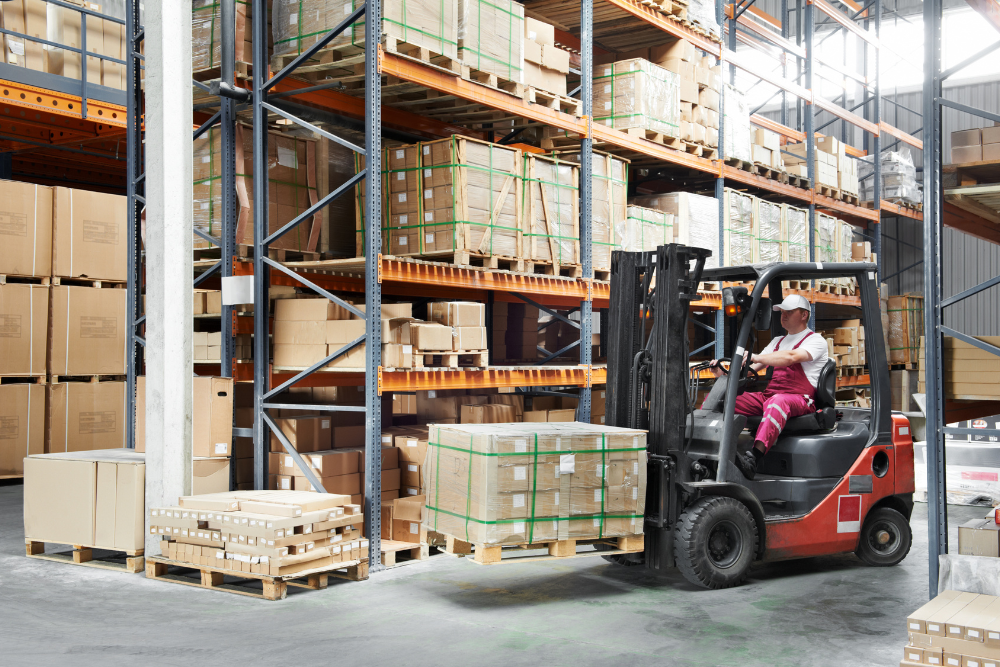
Forklifts differ from cars and other common vehicles in ways that make them easy to misjudge if an operator hasn't been properly trained. They're rear-wheel steered, which makes their turning behavior counterintuitive to anyone used to driving a standard vehicle. Their stability depends heavily on load weight, load position, and mast height, meaning a forklift that handles safely with a light, low load can tip over with a heavier or elevated one. They also operate in close proximity to pedestrians far more often than most vehicles do, often in warehouse aisles with limited visibility around corners and blind spots created by the load itself.
Tip-overs, falling loads, collisions with pedestrians or structures, and falls from elevated forks are among the most common and most severe types of forklift incidents, and virtually all of them are more likely when an operator hasn't been trained to understand the specific handling characteristics and hazards of the equipment they're using.
The Regulatory and Financial Stakes
Beyond the direct safety risk, operating without proper certification exposes employers to significant regulatory and financial consequences. OSHA can issue substantial fines for violations of the powered industrial truck standard, and those fines can escalate quickly for repeat or willful violations. Beyond direct penalties, an incident involving an uncertified operator can expose an employer to liability in a way that a documented, compliant training program would not. Insurance carriers also frequently factor forklift certification compliance into workers' compensation and liability premiums, meaning a weak or nonexistent certification program can carry ongoing financial costs even before an incident occurs.
Who Needs Forklift Certification
OSHA's requirement is broad and applies to essentially anyone who operates a powered industrial truck as part of their job, regardless of how frequently they do so or how experienced they may already be.
Full-Time and Occasional Operators Alike
A common misconception is that certification is only necessary for employees whose primary job function is operating a forklift. In reality, OSHA's standard applies to anyone who operates the equipment at all, including employees who only use a forklift occasionally as part of a broader role. A warehouse associate who spends most of the day picking orders by hand but occasionally hops on a forklift to move a pallet still needs to be certified for that equipment before doing so.
New Hires and Experienced Workers Transferring In
Prior experience at another company doesn't substitute for certification at a new employer. Even a worker with years of forklift experience needs to go through the certifying employer's evaluation process, because OSHA requires the employer itself to verify the operator's competency with its specific equipment, in its specific facility, under its specific conditions. Experienced operators may move through refresher-style training more quickly than a first-time operator, but the formal evaluation and certification step still has to happen.
Minimum Age Requirements
Federal child labor law prohibits anyone under 18 from operating a forklift in non-agricultural workplaces, regardless of any training they may have completed. This applies even in states or situations where a younger worker might otherwise be permitted to perform other warehouse tasks. Some agricultural settings have different age provisions, but for the vast majority of industrial and warehouse environments, 18 is the firm minimum.
The Forklift Certification Process
OSHA's training standard lays out a structured process that combines several distinct components, each of which plays a specific role in preparing and verifying an operator.
Formal Instruction
The first stage of certification is formal instruction, which can be delivered through a lecture, written materials, video, online coursework, or a combination of these methods. This portion of training is meant to build foundational knowledge, covering topics such as:
- Operating instructions, warnings, and precautions for the specific type of truck
- Differences between operating a forklift and driving an automobile
- Load capacity and stability principles, including how load weight and positioning affect balance
- Vehicle inspection and maintenance requirements that operators are responsible for
- Workplace-specific hazards, such as narrow aisles, ramps, uneven surfaces, and areas with pedestrian traffic
- Fueling or battery-charging procedures, depending on the type of truck
- Any additional hazards created by the specific operating environment, such as flammable materials or confined spaces
Hands-On Practical Training
Classroom instruction alone isn't sufficient under OSHA's standard. Operators also need supervised, hands-on practice operating the actual equipment they'll be certified to use, under conditions that reflect the real tasks they'll perform on the job. This typically includes practicing maneuvers like turning, stacking, traveling with a load, and navigating the specific layout and hazards of the facility where the operator will be working.
Evaluation of Performance
The final required step is a formal evaluation of the operator's performance in the actual workplace, conducted by someone qualified to assess whether the operator is competent to operate the equipment safely. This evaluation has to take place in the specific environment where the operator will be working, since a warehouse aisle layout, dock configuration, and traffic pattern all affect what "competent operation" actually looks like in practice. An operator only becomes certified once this workplace evaluation confirms they can operate the equipment safely under real conditions.
Who Can Conduct the Training
OSHA doesn't require training to come from an outside vendor, but it does require that the training and evaluation be conducted by someone with the knowledge, training, and experience to train operators and evaluate their competence. This means an employer can run an in-house certification program using a qualified internal trainer, or it can use a third-party training provider or course. Either way, the responsibility for ensuring the training meets OSHA's requirements, and for formally certifying the operator, rests with the employer.
Employer Responsibilities Beyond Initial Training
Certification isn't a single event that, once completed, satisfies an employer's obligations indefinitely. OSHA's standard requires ongoing oversight to make sure certification remains valid and operators remain competent over time.
Maintaining Certification Records
Employers are required to keep records of each operator's training and evaluation. At a minimum, these records should include the operator's name, the date of training, the date of the evaluation, and the identity of the person who conducted the training and evaluation. These records serve as documentation of compliance and are typically the first thing an OSHA inspector will ask to see following any forklift-related incident or during a routine inspection.
Refresher Training Requirements
Forklift certification isn't permanent. OSHA requires refresher training in several specific circumstances, including when an operator has been observed operating the vehicle in an unsafe manner, when the operator has been involved in an accident or near-miss, when the operator is assigned to operate a different type of truck than the one they were originally certified on, when a workplace condition changes in a way that could affect safe operation, or when an evaluation indicates the operator isn't operating the vehicle safely. Beyond these triggering events, OSHA also requires a formal evaluation of each operator's performance at least once every three years, even if none of the above circumstances have occurred, to confirm the operator remains competent.
Adjusting Training for Workplace Changes
Because certification is tied to a specific workplace, any significant change to that environment can affect whether existing certifications are still adequate. A new warehouse layout, a change in the types of loads being handled, the introduction of a new type of truck, or a shift in traffic patterns are all situations where an employer should reassess whether current operators need additional training, even if they were fully certified under the previous conditions.
Choosing a Forklift Certification Training Program
Employers building or updating a certification program have a range of options, and the right choice often depends on the size of the operation, the number of operators who need training, and how much internal expertise already exists.
In-House Versus Third-Party Training
Larger operations with a steady flow of new hires often find it efficient to develop an in-house training program, using a qualified employee as the designated trainer. This approach allows training to be closely tailored to the specific equipment and layout of the facility from the start. Smaller operations, or those without an employee qualified to serve as a trainer, often turn to third-party providers, which can deliver the classroom and knowledge-based portion of training either in person or online. It's worth noting that even when the classroom portion is outsourced, the hands-on training and final workplace evaluation still need to happen at the actual facility, since OSHA requires the evaluation to reflect real operating conditions.
What to Look for in a Quality Program
Whether training is developed internally or purchased from an outside provider, an effective program should cover the full range of topics required under OSHA's standard, include genuine hands-on practice rather than classroom instruction alone, provide a clear, structured evaluation process, and produce documentation that satisfies OSHA's recordkeeping requirements. Programs that skip the hands-on and evaluation components — offering only a written test or online module — don't meet OSHA's requirements on their own and can leave an employer non-compliant even if operators technically "passed" the course.
Frequently Asked Questions
Does OSHA issue forklift certification cards, and is there a national forklift license?
No. This is one of the most common misconceptions about forklift certification, and it's worth addressing directly because it affects how employers and workers should think about compliance. OSHA does not issue forklift certifications, license cards, or any kind of national credential, and there is no government-run database or registry of certified forklift operators. Instead, OSHA's regulation places the responsibility for training, evaluating, and certifying operators directly on the employer. Many training providers issue wallet cards or certificates upon completion of their course, and these can be useful as documentation and as a practical way for an operator to show they've completed formal training, but they aren't an official government certification and don't carry legal weight on their own. What actually satisfies OSHA's requirement is the underlying training, hands-on practice, and workplace evaluation process — the card is just a record of having gone through it. Because certification is tied to a specific employer and specific equipment, a card from a previous job, however legitimate the training behind it may have been, doesn't automatically qualify someone to operate a forklift at a new employer without that new employer conducting its own evaluation.
How long does forklift certification last before it needs to be renewed?
There isn't a fixed expiration date printed on a forklift certification the way there might be with a driver's license, but OSHA does require ongoing reassessment to keep a certification valid over time. At minimum, employers are required to formally evaluate each operator's performance at least once every three years, even if nothing has gone wrong in the interim, to confirm they're still operating the equipment safely and competently. Beyond that three-year baseline, several specific events can trigger the need for refresher training well before the three-year mark arrives, including if an operator is seen operating the vehicle in an unsafe way, if they're involved in an accident or near-miss, if they're assigned to a new or different type of truck they haven't been certified on, or if changes in the workplace — a new layout, new equipment, new hazards — could affect how safely the operator can do their job. In practice, this means certification should be thought of less as a one-time credential with a fixed shelf life and more as an ongoing status that employers are responsible for actively maintaining and periodically reverifying, rather than something that, once earned, can simply be assumed to remain valid indefinitely.
Can someone be certified to operate a forklift if they're under 18 years old?
No, not in the vast majority of workplace settings. Federal child labor regulations prohibit anyone under the age of 18 from operating a forklift or other powered industrial truck in non-agricultural employment, and this restriction applies regardless of how much training a younger worker may have received or how competent they might genuinely be at operating the equipment. This is a hard age floor set by federal law rather than a matter of employer discretion, meaning an employer cannot choose to certify and permit a 16- or 17-year-old employee to operate a forklift even with full training and a completed evaluation, because the underlying legal prohibition exists independently of the OSHA training standard. There are some differences in agricultural settings, where certain hazardous occupation restrictions are applied somewhat differently under federal law, and employers in agricultural operations should look specifically at the rules that apply to their industry rather than assuming the standard non-agricultural age floor applies unchanged. For the great majority of warehouse, manufacturing, retail, and distribution environments, though, 18 is the firm minimum age, and this should be treated as a non-negotiable eligibility requirement before any younger employee is even considered for forklift-related duties or training.
What happens if an employer allows an employee to operate a forklift without proper certification?
Allowing an uncertified employee to operate a forklift exposes an employer to several layers of risk, starting with the immediate safety hazard of having someone operate potentially dangerous equipment without adequate training in the specific vehicle and environment. From a regulatory standpoint, OSHA can cite and fine employers for violations of the powered industrial truck training standard, and these penalties can be substantial, particularly for violations classified as willful or repeated, or in cases where an inspection follows an actual incident involving an uncertified operator. Beyond direct fines, an employer that allows uncertified operation is in a significantly weaker legal position if an accident occurs, since the absence of documented training and evaluation removes one of the strongest defenses an employer would otherwise have in a workers' compensation claim, a liability lawsuit, or a regulatory investigation. Insurance carriers may also scrutinize or dispute claims tied to incidents involving uncertified operators, and a pattern of non-compliance can affect an employer's insurance rates going forward, independent of whether a specific claim is disputed. Beyond the legal and financial dimensions, there's a reputational cost as well — a documented history of allowing uncertified equipment operation can affect an employer's standing with clients, particularly in industries where safety compliance is a factor in vendor selection or contract requirements.
Do pallet jacks and other smaller equipment require the same certification as a standard forklift?
Generally, yes, though the specifics depend on the type of equipment involved. OSHA's powered industrial truck standard covers a wide range of equipment beyond the classic sit-down counterbalance forklift most people picture, including motorized pallet jacks, order pickers, reach trucks, and other powered material-handling equipment, and the same core training, hands-on practice, and evaluation requirements generally apply to these as well. It's a common misconception that smaller or seemingly simpler equipment, like an electric pallet jack, falls outside the certification requirement because it looks less imposing than a full-sized forklift, but if the equipment is powered and used to lift or move materials, it typically falls under the same regulatory framework. What does change based on equipment type is the specific content of the training, since operating a stand-up reach truck involves different hazards, controls, and handling characteristics than operating a sit-down counterbalance forklift or a pallet jack, and OSHA's requirement that certification be specific to the type of truck being used means an operator certified on one type of equipment isn't automatically certified on another, even within the broader powered industrial truck category. Manually operated equipment that isn't powered, such as a non-motorized hand pallet jack, generally falls outside the scope of the powered industrial truck standard, but employers should verify the specific classification of any piece of equipment rather than assuming based on appearance alone, since the line between what requires formal certification and what doesn't isn't always intuitive.