Every workplace, from a manufacturing floor to a corporate office, carries some level of risk. Someone has to identify those risks, measure them, and figure out how to reduce them before they turn into injuries, accidents, or costly incidents. That someone is usually a safety analyst.
If you've ever wondered what a safety analyst actually does day to day, what skills the job demands, or whether it's a career worth pursuing, this guide walks through everything you need to know — from core responsibilities to salary expectations to how to break into the field.
What Is a Safety Analyst?
A safety analyst is a professional who evaluates workplace environments, processes, and systems to identify hazards, assess risks, and recommend or implement controls that prevent accidents, injuries, and regulatory violations. They sit at the intersection of data analysis, regulatory compliance, and hands-on risk management.
Unlike a general safety officer who might focus mostly on enforcement and daily walkthroughs, a safety analyst leans heavily on data. They collect incident reports, near-miss data, inspection results, and industry benchmarks, then analyze that information to spot patterns, predict where problems are likely to occur, and build a case for specific interventions.
The role exists across nearly every industry — construction, manufacturing, oil and gas, healthcare, transportation, aviation, warehousing, and increasingly, technology and cybersecurity (where the title sometimes refers to information security rather than physical safety). This article focuses primarily on occupational and workplace safety, though many of the underlying skills — risk assessment, data analysis, compliance tracking — translate directly to IT and cybersecurity safety analyst roles as well.
Safety Analyst vs. Safety Officer vs. Safety Manager
These titles often get used interchangeably, but there are meaningful distinctions worth understanding, especially if you're job hunting or building an internal safety team.
- Safety Officer: Typically an entry-to-mid-level, hands-on role focused on daily site inspections, enforcing safety protocols, and responding to immediate hazards.
- Safety Analyst: A more data- and research-driven role. Analysts dig into trends, run risk assessments, model potential failure points, and produce reports that guide policy decisions.
- Safety Manager: A leadership role responsible for the overall safety program, budget, staffing, and strategic direction, often relying on the analyst's data to make decisions.
In smaller organizations, one person might wear all three hats. In larger companies, these are distinct positions that work together as a team.
Core Responsibilities of a Safety Analyst
While the specifics vary by industry, most safety analyst roles share a common set of core duties.
Hazard Identification and Risk Assessment
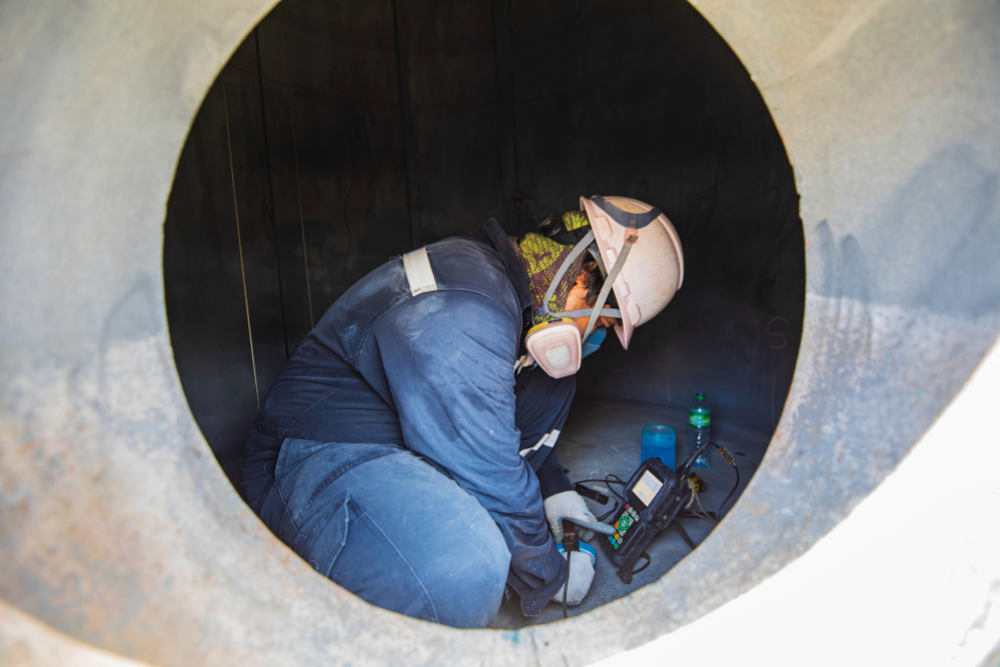
The foundation of the job is identifying what could go wrong. This means walking through facilities, reviewing equipment, observing workflows, and talking to employees to spot hazards — whether that's a poorly guarded machine, a chemical storage issue, an ergonomic problem, or a gap in emergency procedures.
Once a hazard is identified, the analyst assesses its risk level, typically by evaluating both the likelihood of an incident occurring and the severity of the potential outcome. Many organizations use a risk matrix to score hazards and prioritize which ones need immediate attention.
Incident Investigation and Root Cause Analysis
When accidents or near-misses happen, safety analysts are usually the ones who investigate. This involves collecting witness statements, reviewing footage or logs, examining equipment, and reconstructing the sequence of events. The goal isn't to assign blame — it's to find the root cause, whether that's a training gap, equipment failure, procedural flaw, or environmental factor, so it can be fixed at the source.
Data Collection, Tracking, and Trend Analysis
This is where the "analyst" part of the title really shows up. Safety analysts build and maintain databases of incidents, near-misses, inspection results, and audit findings. They calculate key safety metrics — things like Total Recordable Incident Rate (TRIR), Lost Time Injury Frequency Rate (LTIFR), and Days Away, Restricted, or Transferred (DART) rate — and track them over time to spot trends.
If injuries are climbing in a particular department, or a specific type of incident keeps recurring, the analyst is usually the first to notice and the one tasked with explaining why.
Regulatory Compliance
Workplace safety is heavily regulated. In the United States, that means staying current with Occupational Safety and Health Administration (OSHA) standards; in other countries, equivalent bodies set the rules. Safety analysts monitor regulatory changes, ensure company policies and training align with current law, prepare documentation for audits and inspections, and help the organization avoid fines or shutdowns.
Developing and Updating Safety Programs
Based on their findings, analysts help write or revise safety policies, standard operating procedures (SOPs), and emergency response plans. This might include updating a lockout/tagout procedure, redesigning a chemical handling protocol, or building a new fall-protection program for a construction site.
Training and Communication
Data and policies only matter if people follow them. Safety analysts often help design and deliver training programs, create safety materials like signage and toolbox talks, and communicate findings to management in a way that drives action — not just another report that sits in a folder.
Reporting to Leadership
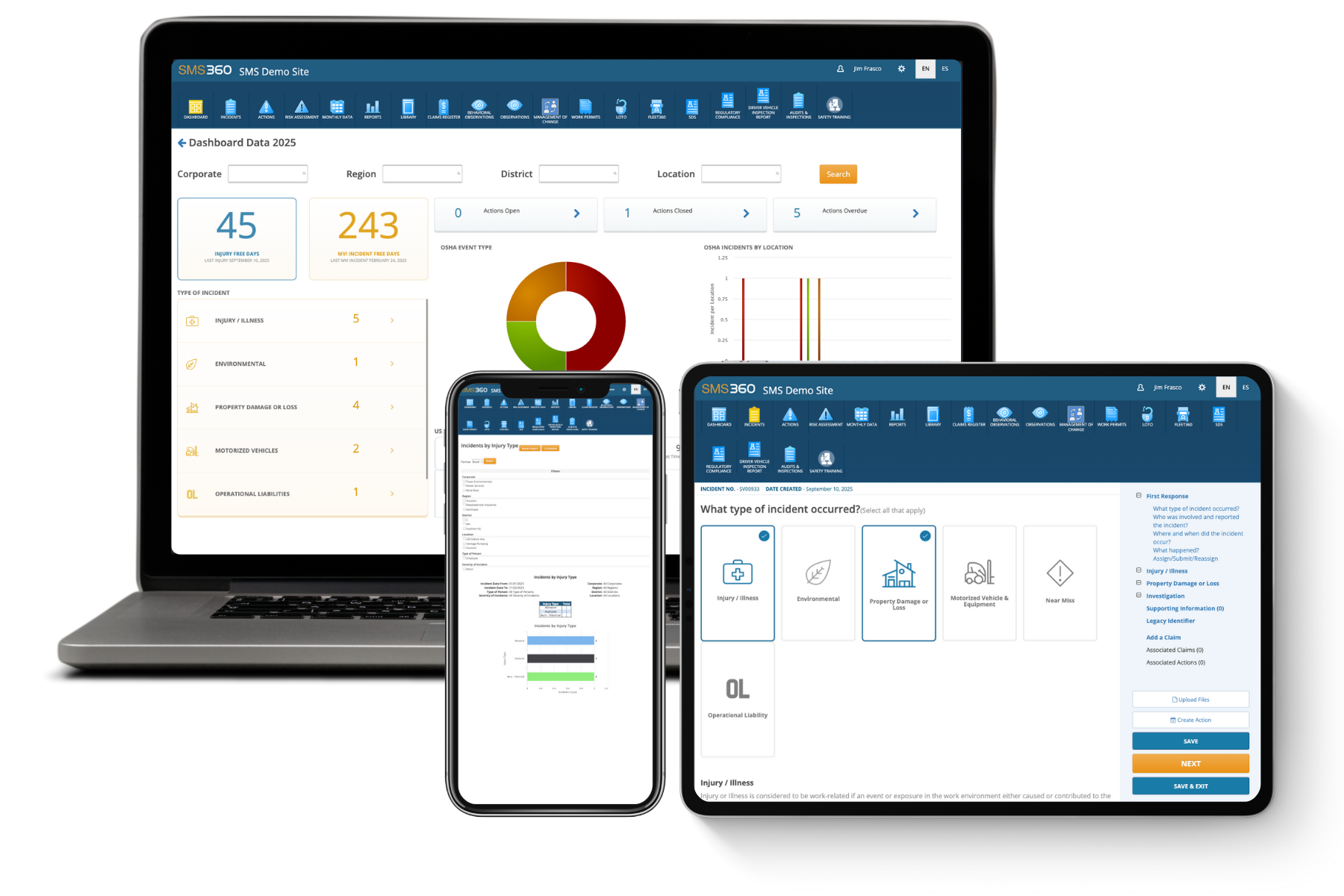
Safety analysts translate raw data into insights leadership can act on. This often means building dashboards, writing executive summaries, and presenting recommendations that tie safety performance to business outcomes like cost savings, insurance premiums, and productivity.
A Day in the Life of a Safety Analyst
No two days look exactly alike, but a fairly typical day might include:
- Reviewing overnight incident reports and flagging anything that needs immediate follow-up
- Conducting a site walkthrough or inspection in a specific department
- Updating a risk register or safety dashboard with new data
- Investigating a recent near-miss and interviewing the employees involved
- Drafting or revising a section of a safety procedure
- Meeting with a department manager to discuss a recurring hazard
- Preparing a report or presentation for an upcoming safety committee meeting
The balance between fieldwork and desk work depends heavily on the industry. A safety analyst at a construction firm might spend most of their time on-site, while one at a corporate headquarters or in a hybrid manufacturing/logistics environment might split time more evenly between inspections and analysis.
Skills Required to Be a Safety Analyst
Technical and Analytical Skills
- Data analysis: Comfort with spreadsheets, databases, and increasingly, business intelligence tools (Excel, Power BI, Tableau) to spot trends in incident and inspection data.
- Risk assessment methodologies: Familiarity with tools like Job Hazard Analysis (JHA), Failure Mode and Effects Analysis (FMEA), and Hazard and Operability Study (HAZOP).
- Regulatory knowledge: Deep familiarity with OSHA standards or the equivalent regulatory framework for your country and industry.
- Technical writing: The ability to turn findings into clear, actionable procedures and reports.
Soft Skills
- Attention to detail: Small oversights in a hazard assessment can have serious consequences.
- Communication: Explaining risk to workers on the floor and to executives in the boardroom requires very different approaches — analysts need to be fluent in both.
- Investigative mindset: Curiosity and persistence matter when digging into why an incident really happened.
- Influence without authority: Analysts often need to convince others to change behavior or invest in fixes without having direct authority over them.
Certifications That Help
While not always mandatory, certain credentials strengthen a safety analyst's resume and, in many cases, are required for advancement:
- OSHA 30-Hour Certification — foundational training on workplace hazard recognition
- Certified Safety Professional (CSP) — a widely respected credential from the Board of Certified Safety Professionals
- Associate Safety Professional (ASP) — often a stepping stone toward the CSP
- Certified Industrial Hygienist (CIH) — valuable for roles focused on chemical, biological, or physical workplace exposures
- Six Sigma certifications — useful for analysts who focus heavily on process improvement and data-driven problem solving
Education and Career Path
Typical Educational Background
Most safety analyst positions require at least a bachelor's degree, commonly in occupational health and safety, environmental science, industrial engineering, or a related field. Some analysts enter the field with degrees in general business or data analytics and pick up safety-specific knowledge through certifications and on-the-job training.
Community college programs and associate degrees in occupational safety can also serve as an entry point, especially when paired with relevant certifications and field experience.
Common Career Progression
- Entry-level safety coordinator or technician — supporting inspections, documentation, and basic reporting
- Safety analyst — taking on data analysis, risk assessment, and investigation responsibilities
- Senior safety analyst or specialist — leading more complex projects, mentoring junior staff, owning specific programs (e.g., ergonomics, chemical safety)
- Safety manager or EHS manager — overseeing an entire safety program, budget, and team
- Director of Environmental, Health, and Safety (EHS) or VP of Safety — setting organization-wide safety strategy
Many analysts also branch laterally into related fields like environmental compliance, quality assurance, or industrial hygiene as their careers develop.
Where Safety Analysts Work
Safety analysts are in demand across nearly every sector that involves physical operations or regulated environments, including:
- Manufacturing — one of the largest employers of safety professionals, given the density of machinery and process hazards
- Construction — high-risk work environments with constantly changing conditions
- Oil, gas, and energy — heavily regulated industries with significant hazard exposure
- Transportation and logistics — warehouses, trucking fleets, and distribution centers
- Healthcare — patient handling, bloodborne pathogens, and workplace violence prevention
- Aviation — safety analysts here often focus on both occupational safety and operational/flight safety
- Government and public sector — agencies overseeing regulatory enforcement or public infrastructure
- Technology and cybersecurity — an emerging use of the title, focused on information security risk rather than physical hazards
Salary Expectations
Compensation varies significantly by industry, geography, experience level, and whether the role is unionized or in a high-hazard sector like oil and gas or aviation. In the United States, safety analysts typically earn somewhere in the range of the mid-$50,000s for entry-level roles up through the $90,000s or higher for senior analysts in high-risk industries, with specialized or highly certified professionals (such as CSP holders) commanding premiums on top of that. Salaries in construction, energy, and manufacturing tend to run higher than in office-based or retail environments, reflecting the greater hazard exposure and regulatory complexity of those industries.
Why the Safety Analyst Role Matters
It's easy to think of safety programs as a compliance checkbox, but the impact goes well beyond avoiding fines. Effective safety analysis:
- Protects workers from injury, illness, and death — the most fundamental reason the role exists
- Reduces costs tied to workers' compensation claims, insurance premiums, equipment damage, and lost productivity
- Improves morale and retention, since employees who feel safe are more engaged and less likely to leave
- Protects the organization's reputation, since serious incidents can cause lasting reputational and legal damage
- Drives continuous improvement, as the data-driven approach analysts bring often uncovers inefficiencies beyond just safety
Organizations with strong safety cultures consistently outperform their peers on both safety metrics and broader operational performance, which is part of why the demand for skilled safety analysts continues to grow.
Is Becoming a Safety Analyst Right for You?
This career tends to be a strong fit for people who enjoy solving problems with data, don't mind spending time both in the field and at a desk, and genuinely care about protecting the people around them. It rewards curiosity, patience, and the ability to communicate clearly with everyone from frontline workers to senior executives.
If you're detail-oriented, comfortable with numbers, and motivated by work that has a tangible, positive impact on people's lives, a career as a safety analyst offers strong job security, decent earning potential, and the satisfaction of knowing your work directly prevents harm.
Safety Analyst: Frequently Asked Questions
What qualifications do I need to become a safety analyst?
Most employers look for at least a bachelor's degree in occupational health and safety, industrial engineering, environmental science, or a closely related field, though some accept an associate degree combined with relevant experience and certifications. Beyond formal education, certifications carry a lot of weight in this field. An OSHA 30-Hour card is often considered a baseline expectation, while credentials like the Associate Safety Professional (ASP) or Certified Safety Professional (CSP) signal a deeper level of expertise and can meaningfully improve both job prospects and salary. Many successful safety analysts also come from adjacent fields — engineering, quality assurance, or even data analytics — and transition into safety roles by picking up domain-specific certifications and on-the-job experience. Employers generally value a combination of technical knowledge, regulatory familiarity, and demonstrated analytical ability over any single credential, so building a well-rounded profile matters more than chasing one specific degree.
What industries hire the most safety analysts?
Manufacturing, construction, and oil and gas are traditionally the largest employers of safety analysts, simply because these industries involve heavy machinery, hazardous materials, and physically demanding work that creates significant injury risk. Transportation and logistics companies also hire extensively, particularly as warehouse automation and fleet safety have become bigger priorities. Healthcare organizations employ safety analysts to manage risks like patient handling injuries, bloodborne pathogen exposure, and workplace violence, which are distinct from the hazards seen in industrial settings. Government agencies, utilities, and aviation companies round out the list of major employers, often with additional layers of regulatory complexity. More recently, the "safety analyst" title has also emerged in the technology and cybersecurity sectors, where the focus shifts from physical hazards to information security risk — so it's worth clarifying which type of role you're pursuing or hiring for, since the required skill sets differ substantially.
What's the difference between a safety analyst and a safety manager?
The core difference comes down to scope and focus. A safety analyst is primarily an individual contributor who conducts risk assessments, investigates incidents, analyzes safety data, and helps develop procedures and reports. Their work is detail-oriented and often data-heavy, focused on understanding what's happening on the ground and why. A safety manager, by contrast, typically oversees the entire safety program for a facility or organization, including budget decisions, staffing, strategic priorities, and relationships with regulators and senior leadership. Safety managers rely heavily on the analysis and reporting that analysts produce to make informed decisions, which makes the two roles complementary rather than competitive. In smaller companies, these responsibilities are often combined into a single position, while larger organizations typically maintain a clear hierarchy with analysts feeding data and recommendations up to managers and directors.
How much does a safety analyst typically earn?
Salaries for safety analysts vary considerably depending on industry, geographic location, years of experience, and certification level. Entry-level positions in lower-risk industries or smaller markets tend to start in the mid-to-high $50,000s in the United States, while experienced analysts working in high-hazard sectors like oil and gas, construction, or heavy manufacturing can earn well into the $80,000s or $90,000s, particularly if they hold advanced certifications like the CSP. Geographic location plays a significant role as well — safety analysts working in major industrial hubs or regions with strict regulatory environments often command higher salaries than those in areas with less industrial activity. Beyond base salary, many organizations offer performance bonuses tied to safety metrics, along with strong benefits packages, since companies recognize that retaining experienced safety talent directly reduces their risk exposure and insurance costs.
What does a typical career path look like for a safety analyst?
Most safety professionals start in entry-level roles such as safety coordinator or safety technician, where they support inspections, maintain documentation, and assist more senior staff with basic reporting tasks. After building foundational experience, they typically move into a dedicated safety analyst role, taking on more responsibility for risk assessments, incident investigations, and data-driven reporting. With several years of experience and often additional certifications, analysts can progress to senior analyst or safety specialist positions, where they may lead specific programs like ergonomics or chemical safety, or mentor junior team members. From there, the natural progression leads toward safety manager or EHS (Environmental, Health, and Safety) manager roles, which involve overseeing entire safety programs, budgets, and teams. The most experienced professionals can eventually reach director or VP-level positions, shaping safety strategy across an entire organization. Along the way, many safety analysts also branch into related specialties like industrial hygiene, environmental compliance, or quality assurance, since the analytical and regulatory skills built in this career translate well across adjacent fields.