When an accident happens at work, what you do in the hours and days that follow matters almost as much as the accident itself. A thorough, well-written accident investigation report doesn't just satisfy regulatory requirements — it uncovers the real reasons an incident occurred and gives your organization a genuine chance to prevent it from happening again.
Too many investigation reports fall short. They describe what happened without explaining why, they stop at the first obvious cause instead of digging deeper, or they're written so vaguely that no one can act on them. This guide walks through exactly how to write an accident investigation report that holds up to scrutiny, drives real corrective action, and protects your organization legally and operationally.
What Is an Accident Investigation Report?
An accident investigation report is a formal document that records the facts, findings, and conclusions of an investigation into a workplace accident, injury, near-miss, or property damage event. It captures what happened, how it happened, why it happened, and what needs to change to prevent recurrence.
Unlike a simple incident report — which is often a brief, initial record filed shortly after an event — an accident investigation report is more comprehensive. It typically includes a full root cause analysis, supporting evidence, witness statements, and specific corrective action recommendations with assigned owners and deadlines.
Why Accident Investigation Reports Matter
A well-executed investigation report serves several critical purposes:
- Prevents recurrence by identifying and addressing root causes, not just surface-level symptoms
- Supports regulatory compliance with agencies like OSHA, which require documentation of certain workplace injuries and incidents
- Protects the organization legally by creating an accurate, timely record in case of litigation, workers' compensation claims, or insurance disputes
- Builds organizational learning by turning a single incident into a lesson that improves safety practices across the entire organization, not just the specific location where it occurred
- Demonstrates due diligence, showing regulators, insurers, and employees that the organization takes safety seriously and responds to incidents systematically
Poorly written reports fail at all of these. A report that simply states "employee slipped and fell" without exploring contributing factors like wet flooring, inadequate signage, or improper footwear policy leaves the organization exposed to the same incident happening again — and offers little defense if the incident results in a legal claim.
Before You Start Writing: The Investigation Process
You can't write a strong report without first conducting a strong investigation. Rushing to write before gathering complete information almost always produces a weak, incomplete document.
Secure the Scene and Respond Immediately
The first priority after any accident is always the injured person's safety and medical care. Once that's addressed, the scene should be secured as quickly as possible to preserve evidence — this might mean roping off an area, photographing conditions before anything is moved or cleaned up, and identifying witnesses before they leave the area or their memories fade.
Gather Evidence Promptly
Evidence should be collected as soon as possible after the incident, ideally within hours. This includes:
- Photographs and video of the scene, equipment involved, and any visible injuries or damage
- Physical evidence such as damaged equipment, torn clothing, or spilled materials
- Environmental conditions at the time of the incident — lighting, weather, noise levels, temperature
- Documentation including maintenance logs, training records, prior incident reports for the same area or equipment, and relevant safety data sheets
- Witness statements, gathered individually and as close to the time of the incident as possible
Interview Witnesses and Involved Parties
Interviews are often the most valuable — and most sensitive — part of an investigation. A few principles make interviews more effective:
- Interview people individually, not in groups, to avoid one person's account influencing another's
- Ask open-ended questions rather than leading ones ("Walk me through what happened" instead of "Was the floor wet when you fell?")
- Focus on facts and observations, not blame or speculation
- Document statements as close to verbatim as possible, and have witnesses review and sign their statements when feasible
- Interview the injured employee if they're able and willing, along with any witnesses, supervisors, and anyone with relevant expertise about the equipment or process involved
Conduct a Root Cause Analysis
Once evidence is gathered, the investigation team needs to move beyond describing what happened and determine why it happened. This is arguably the most important — and most frequently rushed — part of the process.
Root Cause Analysis: Getting Past the Obvious Answer
Why Root Cause Analysis Matters
It's tempting to stop investigating once you find an obvious explanation. An employee tripped because there was a cable across the walkway — case closed, right? But that surface-level explanation doesn't explain why the cable was there, why it wasn't secured or covered, why no one flagged it as a hazard, or whether this is a recurring issue in that area. Without digging deeper, the corrective action will likely just be "move the cable," which does nothing to prevent the next hazard from causing the next incident.
The "5 Whys" Technique
One of the simplest and most effective root cause tools is the "5 Whys" method, which involves repeatedly asking "why" until you reach a systemic, addressable cause rather than a superficial one.
Example:
- Why did the employee fall? — They tripped over a power cable.
- Why was the cable across the walkway? — A temporary extension cord was run across the floor to power a space heater.
- Why was a space heater being used? — The HVAC system in that area wasn't providing adequate heat.
- Why wasn't the HVAC issue addressed? — There was no process for employees to report facility maintenance issues.
- Why was there no reporting process? — Facility maintenance requests were handled informally and inconsistently, with no formal tracking system.
The root cause here isn't "an employee tripped over a cable" — it's a missing facilities maintenance reporting process. Addressing that root cause prevents a much wider range of future incidents, not just this specific one.
Fishbone (Ishikawa) Diagrams
For more complex incidents with multiple contributing factors, a fishbone diagram helps organize potential causes into categories — commonly people, equipment, methods, materials, environment, and management systems. This visual tool helps investigation teams avoid tunnel vision on a single explanation and ensures they've considered contributing factors across all relevant categories.
Distinguishing Root Causes from Contributing Factors
Most accidents don't have a single cause — they result from a combination of factors that align at a particular moment. A strong report distinguishes between the root cause (the underlying systemic issue that, if fixed, would prevent recurrence) and contributing factors (conditions or actions that made the incident more likely or severe, but aren't the fundamental issue). Both should be documented, but corrective actions should primarily target root causes.
Structuring the Accident Investigation Report
A clear, consistent structure makes reports easier to write, easier to read, and easier to compare across incidents over time. While formats vary by organization and industry, most effective reports include the following sections.
1. Report Header and Basic Information
Start with essential identifying details:
- Date, time, and location of the incident
- Names and job titles of the injured or involved parties
- Names of the investigation team members
- Date the investigation was conducted and the report completed
- Report or case number for tracking purposes
2. Incident Summary
A brief, factual overview of what happened — typically two to four sentences that summarize the event without going into deep analysis yet. This section should be understandable to someone who hasn't read the rest of the report, giving them the essential facts immediately.
3. Detailed Description of the Incident
This is a more thorough, chronological account of the events leading up to, during, and immediately following the incident. It should answer the basic questions of who, what, when, where, and how, written in clear, objective language.
Keep Language Factual and Objective
Avoid speculative language, opinions, or blame in this section. Write "The employee was operating the forklift when it struck the shelving unit" rather than "The employee carelessly drove the forklift into the shelving." The goal is to document what's known to be true, not to assign fault.
Include a Timeline
For more complex incidents, a timeline with specific timestamps helps clarify the sequence of events and can be critical for understanding contributing factors like fatigue, shift changes, or equipment maintenance schedules.
4. Evidence and Supporting Documentation
List and reference all evidence gathered during the investigation — photographs, video footage, physical evidence, maintenance records, training records, and any other relevant documentation. Where possible, attach or reference this evidence directly rather than just describing it, since supporting documentation strengthens the credibility of the report's conclusions.
5. Witness Statements
Summarize or include witness statements, clearly attributing each account to the person who provided it. If accounts conflict, note the discrepancy rather than silently choosing one version over another — this preserves the integrity of the investigation and can be important if the incident is later disputed or litigated.
6. Root Cause Analysis
Present the findings of the root cause analysis, including the methodology used (5 Whys, fishbone diagram, or another approach) and the reasoning that led to the identified root cause and contributing factors. This section should clearly separate the root cause from contributing factors, and explain the logic connecting the evidence to the conclusions.
7. Findings and Conclusions
Summarize what the investigation determined, tying together the evidence, witness statements, and root cause analysis into clear conclusions about why the incident occurred. This section should be direct and specific rather than vague — "inadequate lockout/tagout procedures" is more useful than "safety procedures could be improved."
8. Corrective and Preventive Actions
This is arguably the most important section for actually preventing future incidents. Each recommended action should be:
- Specific — clearly describing what needs to change, not just a general intention
- Assigned — naming a specific individual or role responsible for implementation
- Time-bound — including a target completion date
- Verifiable — describing how completion will be confirmed
Corrective actions should address the root cause, not just the immediate, visible hazard. Where possible, distinguish between immediate actions (quick fixes to address urgent risk) and long-term corrective actions (systemic changes that address the underlying root cause).
9. Sign-Off and Approval
Most formal accident investigation reports require sign-off from the investigation team, the relevant safety manager, and often a senior leader or department head, confirming the report's accuracy and commitment to implementing the corrective actions.
Writing Tips for a Strong Accident Investigation Report
Write for Multiple Audiences
Your report will likely be read by safety managers, department leaders, HR, legal counsel, insurance representatives, and potentially regulators. Write clearly enough that someone unfamiliar with the specific work area can understand what happened and why, while still including the technical detail needed for safety professionals to evaluate the findings.
Stick to Facts, Not Opinions or Blame
Investigation reports are strongest — and most legally defensible — when they focus on facts, evidence, and systemic causes rather than assigning individual blame. Even when human error contributes to an incident, strong reports explore why the error was possible (inadequate training, unclear procedures, fatigue, production pressure) rather than simply concluding "the employee wasn't careful enough."
Be Specific and Avoid Vague Language
Phrases like "unsafe conditions" or "improve safety awareness" don't give anyone actionable direction. Specify exactly what conditions were unsafe and what concrete action will address them. Precision in language translates directly into precision in corrective action.
Use Clear, Consistent Terminology
If your organization uses specific terms for hazard categories, incident severity levels, or investigation methodologies, use them consistently throughout the report. This makes reports easier to compare and analyze in aggregate over time, which supports trend analysis across your broader safety program.
Include Visuals Where Helpful
Diagrams, photographs, and simple sketches of the incident scene often communicate information more efficiently and clearly than text alone, particularly for readers who weren't present at the location.
Review Before Finalizing
Have at least one other team member — ideally someone not directly involved in the investigation — review the report before it's finalized. A fresh set of eyes often catches gaps in logic, unclear language, or missing evidence.
Common Mistakes to Avoid
Rushing the Investigation
Pressure to close out an incident quickly, especially after a minor injury, often leads to shallow investigations that miss systemic issues. A rushed investigation today often means a repeat incident — sometimes more severe — down the road.
Stopping at the First Obvious Cause
As discussed above, the first explanation is rarely the full picture. Reports that stop at "employee error" without exploring the systemic factors that enabled the error tend to produce corrective actions that don't actually prevent recurrence.
Failing to Follow Up on Corrective Actions
A report full of well-written recommendations is worthless if those actions are never implemented or verified. Strong safety programs track corrective actions to completion and audit whether they were effective, not just whether they were technically closed out.
Inconsistent Documentation
Reports that vary wildly in format, depth, and terminology from incident to incident make it difficult to spot patterns across multiple events. A standardized template, used consistently, makes both individual reports and long-term trend analysis significantly more effective.
Using the Report to Assign Blame
Reports that read as though they're building a case against a specific employee tend to damage trust and discourage future incident reporting. Employees who fear blame are far less likely to report near-misses and minor incidents, which removes valuable early-warning data from the organization's safety program.
After the Report: What Happens Next
Writing the report isn't the final step. Effective organizations treat the report as the beginning of a process, not the end of one.
Communicate Findings Appropriately
Relevant findings and corrective actions should be communicated to affected employees, supervisors, and teams — not necessarily the entire detailed report, but the key lessons and changes being implemented. This reinforces the idea that investigations lead to real change, which encourages continued reporting of future incidents and near-misses.
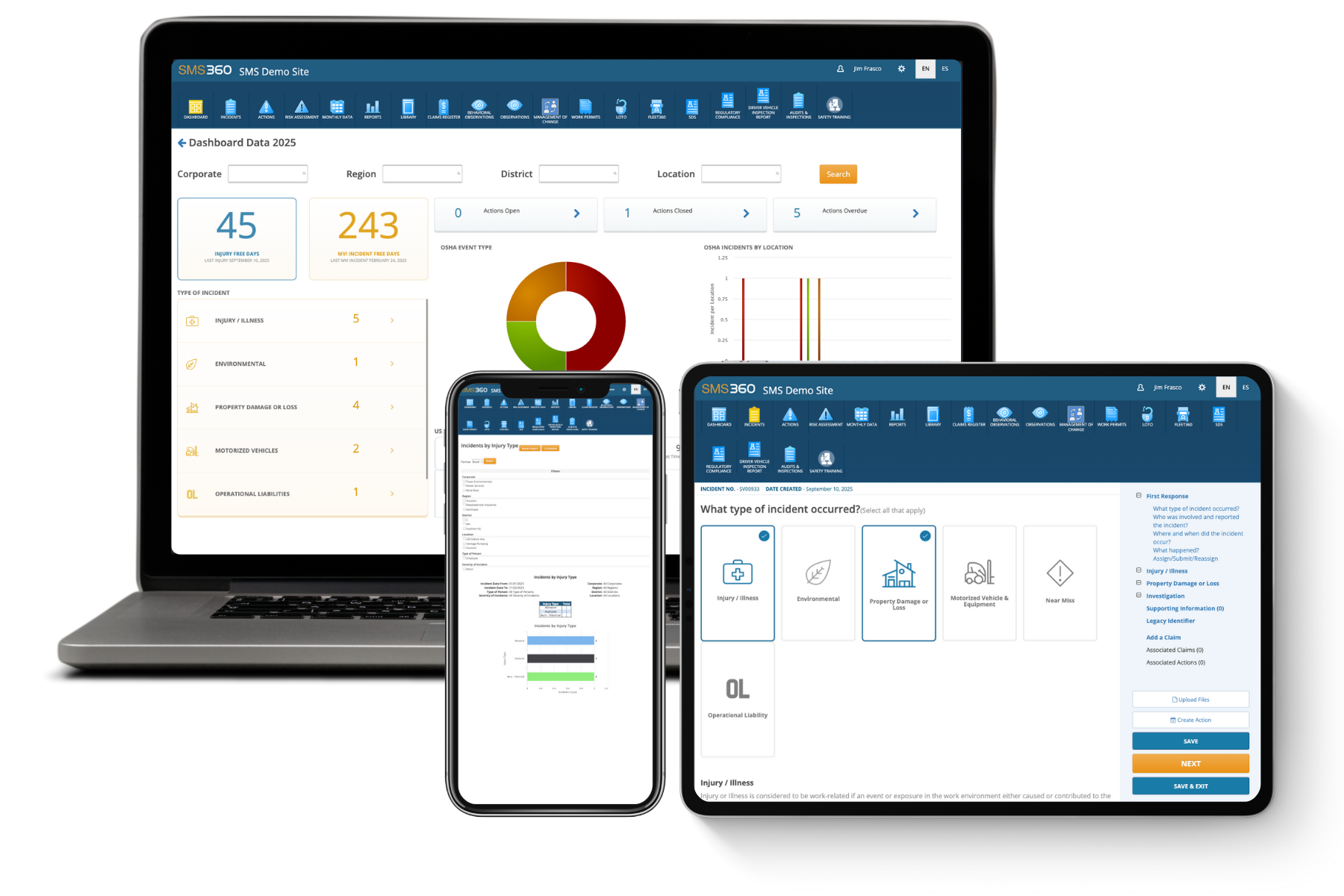
Track Corrective Actions to Completion
Corrective actions identified in the report should be tracked in a system that flags overdue items and verifies completion, rather than simply being filed away once the report is finished.
Analyze Trends Across Multiple Reports
Individual reports become significantly more valuable when analyzed collectively. Recurring root causes across multiple incidents — inadequate training, understaffing, equipment maintenance gaps — often reveal systemic issues that wouldn't be obvious from any single report alone.
Update Policies and Training
When an investigation reveals a genuine gap in policy, procedure, or training, that gap should be addressed at the organizational level, not just within the specific department or location where the incident occurred, if the same conditions exist elsewhere.
Frequently Asked Questions
What's the difference between an incident report and an accident investigation report?
An incident report is typically a brief, initial document filed shortly after an event occurs, capturing the basic facts — who was involved, what happened, when and where it occurred, and any immediate actions taken. It's often completed by a supervisor or the employee involved and serves as the first record of the event, sometimes required within a specific timeframe (such as 24 hours) by company policy or regulation. An accident investigation report, by contrast, is a more comprehensive document produced after a thorough investigation process, including root cause analysis, evidence review, witness statements, and specific corrective action recommendations. While every accident investigation typically starts with an initial incident report, not every incident report leads to a full investigation report — organizations usually have criteria (based on severity, injury type, or regulatory requirements) that determine which incidents warrant a full investigation. Think of the incident report as capturing "what happened" quickly, while the investigation report explains "why it happened" and "what will prevent it from happening again" in much greater depth.
Who should be involved in conducting an accident investigation?
The ideal investigation team varies based on the severity and complexity of the incident, but generally includes a mix of perspectives to ensure a thorough and balanced analysis. At minimum, this typically includes a safety professional or safety manager who understands investigation methodology and regulatory requirements, along with the direct supervisor of the area or department where the incident occurred, who brings operational context and familiarity with normal procedures. For more serious incidents, it's valuable to include someone with technical expertise relevant to the specific equipment or process involved, such as a maintenance technician or engineer, since they can identify mechanical or procedural issues that a generalist might miss. Many organizations also include an employee representative, particularly in unionized environments, which helps build trust that the investigation is fair and not solely management-driven. It's generally best practice to avoid having the injured employee's direct supervisor lead the investigation alone if there's any possibility that supervisory decisions contributed to the incident, since this can create a real or perceived conflict of interest. For serious incidents involving significant injury, regulatory reporting requirements, or potential legal exposure, many organizations also involve legal counsel or a dedicated corporate EHS team to ensure the investigation meets all necessary standards.
How soon after an accident should the investigation report be completed?
Timing requirements vary by jurisdiction, industry, and internal company policy, but there's a strong general principle that applies universally: investigations should begin as soon as possible after the incident, ideally within hours, while evidence is fresh and witness memories are accurate. The initial incident report is often required within 24 hours under many company policies, and certain serious incidents — such as fatalities, hospitalizations, or amputations — may carry strict regulatory reporting deadlines, such as OSHA's requirement to report fatalities within 8 hours and certain severe injuries within 24 hours in the United States. The full investigation report, which includes root cause analysis and corrective action recommendations, typically takes longer to complete thoroughly — often anywhere from a few days to a couple of weeks depending on the complexity of the incident, the number of witnesses involved, and whether specialized expertise is needed to analyze equipment or technical factors. That said, there's a meaningful tradeoff between speed and thoroughness: rushing to close out a report to meet an arbitrary internal deadline often produces a shallow investigation that misses systemic root causes, while taking excessively long allows evidence to degrade and corrective actions to be delayed, leaving the organization exposed to repeat incidents in the meantime. Most well-run safety programs aim to complete investigations within one to two weeks for standard incidents, while reserving faster turnaround expectations for the most serious events.
What should you do if witnesses give conflicting accounts of what happened?
Conflicting witness accounts are common in accident investigations, and handling them well is a sign of a credible, well-conducted investigation rather than a problem to be hidden or smoothed over. The first step is to document each account accurately and separately, without attempting to force agreement between witnesses or discarding an account simply because it doesn't match the majority view. Investigators should look for physical evidence — photographs, equipment logs, security camera footage, or physical damage patterns — that can help corroborate or clarify which account, or which parts of each account, align most closely with the objective facts of the scene. It's also worth considering factors that might explain discrepancies without anyone being dishonest, such as different vantage points, the natural unreliability of memory during a stressful or fast-moving event, or witnesses focusing on different aspects of the incident. In the final report, it's important to be transparent about any unresolved discrepancies rather than silently picking one version of events and presenting it as the definitive account; noting that witness accounts differed on a specific detail, along with the reasoning used to reach a conclusion despite that discrepancy, actually strengthens the credibility and legal defensibility of the report. If the discrepancy is significant and can't be resolved through available evidence, it's appropriate to document the investigation team's best assessment while explicitly acknowledging the uncertainty, rather than overstating confidence in a specific version of events.
How do you write effective corrective actions that actually prevent recurrence?
Effective corrective actions start with being genuinely tied to the root cause identified in the investigation, not just the most visible or easiest-to-fix symptom of the incident. A corrective action that only addresses a contributing factor — like replacing a specific damaged guard rail — without addressing why that guard rail was damaged and not detected sooner, leaves the underlying systemic issue in place and likely to cause a similar incident again. Strong corrective actions are specific and concrete rather than vague; "improve equipment inspection procedures" gives no one clear direction, while "implement a documented weekly inspection checklist for all forklifts, with completed checklists filed and reviewed monthly by the maintenance supervisor" gives a clear, actionable, and verifiable requirement. Every corrective action should have a specific person or role assigned as the owner, along with a realistic but firm deadline for completion, since actions without clear ownership and timelines tend to get deprioritized against other daily operational pressures. It's also valuable to distinguish between immediate corrective actions, which address urgent risk right away (such as temporarily blocking off a hazardous area), and longer-term systemic corrective actions, which address the root cause more permanently (such as redesigning a process or updating a training program) — both types are often necessary, and a report should be clear about which category each recommendation falls into. Finally, corrective actions should be tracked to verified completion, not simply marked as closed once implemented; effective safety programs periodically check whether the corrective action actually reduced the relevant risk in practice, rather than assuming that completing the assigned task automatically solved the underlying problem.