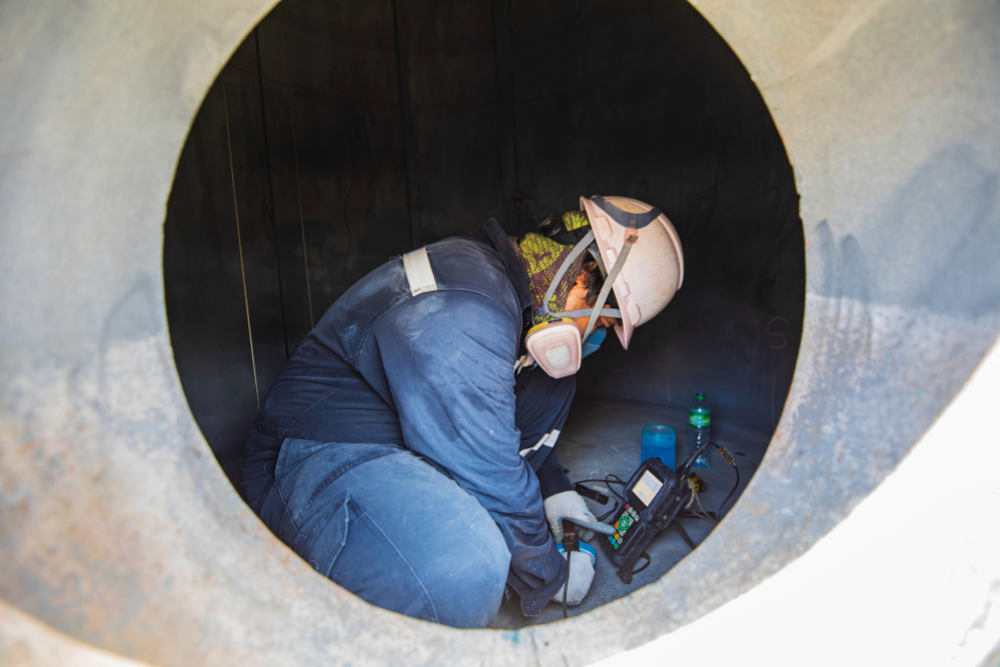
Behind every workplace with a strong safety record is a set of clear, well-communicated policies and procedures that everyone actually follows. Behind every workplace with a poor safety record, you'll often find the opposite — policies that exist only on paper, procedures no one remembers, or a safety manual that hasn't been updated since the building was new.
Safety policies and procedures are the backbone of any occupational health and safety program. They translate an organization's commitment to safety into specific, actionable expectations that guide behavior, meet regulatory requirements, and ultimately protect people from harm. This guide covers what safety policies and procedures actually are, how they differ, how to write them effectively, and how to make sure they don't just sit in a binder collecting dust.
What Are Safety Policies and Procedures?
Safety policies and procedures are the written documents that define an organization's approach to protecting employees, visitors, and the public from workplace hazards. While often discussed together, they serve distinct purposes and operate at different levels of specificity.
Safety Policies
A safety policy is a high-level statement of an organization's commitment, principles, and overall approach to safety. Policies establish the "why" and the broad "what" — they define organizational values, set expectations for behavior, assign general responsibilities, and often reference the regulatory framework the organization operates within. A safety policy might state that the organization is committed to providing a workplace free from recognized hazards, that safety takes priority over production schedules, or that every employee has both the right and responsibility to stop unsafe work.
Safety Procedures
A safety procedure is a detailed, step-by-step set of instructions for how to perform a specific task safely. Where policies set direction, procedures provide the specific mechanics — how to lock out a machine before performing maintenance, how to respond to a chemical spill, how to safely operate a forklift, or how to properly don and doff personal protective equipment. Procedures are typically far more detailed and task-specific than policies, and they're the documents employees actually reference when performing hazardous work.
How Policies and Procedures Work Together
Think of policies as the constitution of a safety program and procedures as the specific laws that implement it. A policy establishing a commitment to fall protection, for example, is supported by specific procedures covering how to inspect harnesses, how to properly anchor lanyards, and what steps to take before working at height. Without procedures, policies remain abstract intentions with no practical mechanism for implementation. Without policies, procedures lack the overarching context and authority that makes them part of a coherent, organization-wide safety commitment rather than a scattered collection of individual instructions.
Why Safety Policies and Procedures Matter
Preventing Injuries and Fatalities
The most fundamental purpose of safety policies and procedures is straightforward: preventing people from getting hurt. Clear, well-communicated procedures reduce the likelihood that workers will perform hazardous tasks incorrectly, whether due to lack of knowledge, inconsistent practice, or simple oversight.
Legal and Regulatory Compliance
Regulatory bodies like OSHA require documented policies and procedures for many types of hazardous work — lockout/tagout, confined space entry, hazard communication, respiratory protection, and many others. Having a policy or procedure that exists only informally, passed along verbally between employees, generally isn't sufficient to meet these documentation requirements, and gaps here are a common source of citations during inspections.
Consistency Across the Organization
Written procedures ensure that hazardous tasks are performed the same way regardless of who's doing them, which shift they're working, or how experienced they are. This consistency reduces the risk that arises when informal, undocumented practices vary from worker to worker or drift gradually over time as institutional knowledge is passed down imperfectly.
Legal Protection and Liability Management
In the event of an incident, documented policies and procedures provide evidence that the organization took reasonable steps to identify hazards and establish safe work practices. This documentation can be critical in workers' compensation claims, regulatory investigations, and litigation, demonstrating that the organization exercised due diligence rather than leaving safety to chance.
Supporting Training and Onboarding
Clear procedures give new employees a concrete, reliable reference for how tasks should be performed safely, rather than relying entirely on informal mentorship that may pass along shortcuts or outdated practices along with genuinely useful knowledge.
Building a Positive Safety Culture
Organizations with clear, consistently enforced policies send a strong signal that safety is a genuine priority, not just a compliance formality. This reinforces trust and encourages employees to actively participate in maintaining a safe workplace, including reporting hazards and near-misses without fear of blame.
Types of Safety Policies Every Organization Should Consider
General Safety Policy Statement
A foundational document, often signed by senior leadership, that establishes the organization's overall commitment to safety, outlines general roles and responsibilities, and sets the tone for the rest of the safety program.
Hazard Communication Policy
Addresses how information about hazardous chemicals and materials is communicated to employees, including labeling requirements, safety data sheet access, and training obligations.
Personal Protective Equipment Policy
Establishes when and where specific PPE is required, who is responsible for providing and maintaining it, and expectations for employee compliance.
Incident Reporting Policy
Defines how employees should report injuries, near-misses, and hazards, what timelines apply, and what protections exist for employees who report issues in good faith.
Emergency Action Policy
Outlines the organization's approach to emergency preparedness, including evacuation procedures, emergency contacts, and roles during a crisis.
Substance Abuse Policy
Establishes expectations regarding drug and alcohol use as it relates to workplace safety, particularly in safety-sensitive roles involving machinery, vehicles, or hazardous materials.
Return-to-Work Policy
Defines the process for safely reintegrating employees who have been injured or ill, including any modified duty arrangements and medical clearance requirements.
Types of Safety Procedures Every Organization Should Consider
Lockout/Tagout Procedures
Detailed, equipment-specific instructions for de-energizing machinery before maintenance or repair work, preventing unexpected startup that could cause serious injury.
Confined Space Entry Procedures
Step-by-step protocols for safely entering, working in, and exiting confined spaces, including atmospheric testing, ventilation, and rescue planning.
Emergency Response Procedures
Specific instructions for responding to particular emergency scenarios — fires, chemical spills, medical emergencies, severe weather — including evacuation routes, assembly points, and communication protocols.
Equipment Operating Procedures
Task-specific instructions for safely operating machinery and equipment, from forklifts and cranes to power tools and production line equipment.
Personal Protective Equipment Procedures
Detailed instructions for selecting, inspecting, donning, doffing, and maintaining specific types of PPE relevant to particular tasks or hazards.
Incident Investigation Procedures
Step-by-step guidance for how investigations should be conducted following an incident, including evidence collection, interview protocols, and root cause analysis methodology.
How to Write Effective Safety Policies
Start with a Clear Purpose Statement
Every policy should open with a concise explanation of what it's intended to accomplish and why it matters. This context helps employees understand the reasoning behind the policy, which tends to improve genuine buy-in compared to policies that simply issue directives without explanation.
Define Scope Clearly
Specify exactly who and what the policy applies to — particular roles, departments, locations, or types of work. Ambiguity about scope creates confusion and inconsistent application.
Assign Clear Roles and Responsibilities
Effective policies specify who is responsible for what, at every level of the organization — from senior leadership's role in resourcing and supporting the safety program to individual employees' responsibility to follow procedures and report hazards.
Reference Applicable Regulations
Where relevant, policies should reference the specific regulatory standards they're designed to satisfy, which helps demonstrate compliance intent and gives employees and auditors a clear connection between organizational policy and legal requirements.
Keep Language Clear and Accessible
Policies written in dense legal or technical jargon are less likely to be understood and followed. Effective policies use plain, direct language that's accessible to the full range of employees who need to understand and apply them, regardless of their educational background or role.
Include a Review and Revision Process
A strong policy specifies how and when it will be reviewed and updated, ensuring it doesn't become outdated as regulations, equipment, or operations change over time.
How to Write Effective Safety Procedures
Break Tasks into Clear, Sequential Steps
Procedures should walk through a task in the actual order it's performed, with each step described specifically enough that someone unfamiliar with the task could follow it accurately. Vague or out-of-sequence instructions increase the risk of steps being skipped or performed incorrectly.
Use Simple, Direct Language
Just as with policies, procedures should avoid unnecessary jargon and complexity. Short, direct sentences using active voice ("Attach the lockout device to the energy-isolating device" rather than "The energy-isolating device should have a lockout device attached to it") are easier to follow accurately, especially under time pressure or stress.
Include Visuals Where Helpful
Diagrams, photographs, and flowcharts often communicate complex sequences more effectively than text alone, particularly for tasks involving specific equipment configurations or spatial relationships that are difficult to describe in words.
Specify Required PPE and Equipment
Procedures should clearly state what protective equipment, tools, and materials are required before beginning a task, rather than assuming this information is already known or covered elsewhere.
Address What to Do When Something Goes Wrong
Beyond describing the normal sequence of steps, effective procedures anticipate common problems or deviations and specify what action to take — for example, what to do if a lockout device can't be applied as expected, or if unexpected conditions are discovered during a confined space entry.
Validate Procedures with the People Who Do the Work
Procedures drafted entirely by safety professionals or management, without input from the employees who actually perform the task, often miss practical details or fail to reflect how the work is genuinely done. Involving frontline workers in procedure development — and testing draft procedures against real working conditions — produces more accurate, more usable documents.
Keep Procedures Focused and Manageable
Extremely long, complex procedures are harder to follow accurately and more likely to be skimmed rather than read carefully. Where a task naturally breaks into distinct phases, consider splitting it into multiple, more focused procedures rather than one unwieldy document.
Implementing Safety Policies and Procedures
Communicate Clearly at Rollout
New or updated policies and procedures should be actively communicated to affected employees, not simply posted or filed where they might be overlooked. This might include team briefings, updated training sessions, or direct discussion during safety meetings, depending on the significance of the change.
Provide Adequate Training
Written documentation alone rarely ensures genuine understanding or consistent application. Hands-on training, especially for complex or high-risk procedures, helps employees build real competence rather than simply having read through a document once.
Make Documents Easily Accessible
Policies and procedures that are difficult to locate when needed provide little practical value. Whether through physical binders in relevant work areas, digital document management systems, or posted references near the equipment or task they cover, accessibility should be a deliberate design consideration, not an afterthought.
Reinforce Through Supervision
Frontline supervisors play a critical role in reinforcing policies and procedures day to day, both by modeling correct behavior themselves and by addressing deviations promptly and constructively rather than allowing shortcuts to become normalized over time.
Build in Accountability
Effective implementation includes clear consequences for policy violations, applied consistently across the organization, alongside positive reinforcement for employees who consistently follow safe practices and report hazards proactively.
Reviewing and Updating Safety Policies and Procedures
Establish a Regular Review Cycle
Policies and procedures shouldn't be treated as permanent, unchanging documents. Establishing a regular review schedule — annually for most documents, with more frequent review for particularly high-risk or rapidly evolving areas — helps ensure documentation stays current and relevant.
Update After Incidents or Near-Misses
When an incident investigation reveals that an existing procedure was inadequate, unclear, or not followed, that finding should directly inform a review and revision of the relevant procedure, closing the specific gap the investigation uncovered.
Update When Regulations Change
Regulatory requirements evolve over time, and policies and procedures need to be reviewed and revised whenever applicable standards are updated, to ensure continued compliance.
Update When Equipment or Processes Change
New equipment, new materials, or changes to how a task is performed can all render existing procedures outdated or inaccurate. Procedure updates should be a standard part of any change management process, not an afterthought addressed only after problems arise.
Solicit Ongoing Feedback
Employees who use procedures daily often notice gaps, inaccuracies, or opportunities for improvement that aren't visible from a management perspective. Building in a simple, low-friction mechanism for employees to flag procedure issues helps keep documentation accurate and genuinely useful over time.
Common Mistakes in Safety Policies and Procedures
Writing Policies That Are Too Vague to Be Actionable
Broad statements like "employees should work safely at all times" provide little practical guidance. Effective policies pair general commitments with specific expectations and clear connections to the procedures that implement them.
Letting Documentation Become Outdated
Policies and procedures that reference obsolete equipment, outdated regulations, or discontinued processes actively undermine trust in the broader safety program and can create genuine confusion about current expectations.
Failing to Train Employees on Updates
Revising a procedure without communicating the change or retraining affected employees means the update exists on paper but not in actual practice, leaving the organization exposed to the exact gap the revision was meant to close.
Creating Procedures Without Frontline Input
Procedures written entirely from a management or engineering perspective, without validation from the people who actually perform the work, often contain impractical steps or miss real-world complications, which undermines both their accuracy and employees' trust in the broader documentation.
Inconsistent Enforcement
Policies that are enforced inconsistently — strictly for some employees or situations but overlooked for others — quickly lose credibility and can create the impression that written policies aren't genuinely taken seriously.
Treating Documentation as the End Goal
Some organizations focus heavily on producing thorough, well-written policies and procedures without dedicating equal attention to training, reinforcement, and verification that the documented practices are actually being followed in daily operations. Strong documentation is necessary but not sufficient on its own.
Building a Culture Around Policies and Procedures
The most effective safety programs treat policies and procedures not as a static compliance requirement but as living tools that actively shape daily behavior. This requires genuine leadership commitment — visible participation in safety practices, consistent enforcement, and adequate resourcing — combined with ongoing employee engagement, where frontline workers are treated as valuable contributors to procedure development and refinement rather than passive recipients of top-down instructions.
Organizations that get this right tend to see policies and procedures function as they're intended: not as a binder that sits on a shelf until an auditor asks for it, but as a genuine, actively used foundation for how work gets done safely, day after day.
Frequently Asked Questions
What's the difference between a safety policy and a safety procedure?
A safety policy and a safety procedure serve distinct but complementary roles within a safety program, and understanding the difference helps organizations build more effective, well-structured documentation. A safety policy is a high-level statement of organizational commitment, values, and general expectations regarding safety — it establishes the "why" behind a safety program and sets broad principles, such as a commitment to providing a hazard-free workplace or a statement that every employee has the authority to stop unsafe work. Policies tend to be relatively stable over time, since they reflect core organizational values rather than the specific mechanics of any one task, and they're often signed or endorsed by senior leadership to signal genuine organizational commitment. A safety procedure, by contrast, is a detailed, step-by-step set of instructions for how to safely perform a specific task or respond to a specific situation, such as how to lock out a particular piece of equipment before maintenance or how to respond to a chemical spill in a specific work area. Procedures are far more granular and task-specific than policies, and they tend to require more frequent updates as equipment, materials, or processes change. In a well-structured safety program, policies provide the overarching framework and authority, while procedures provide the practical, actionable guidance that actually implements that framework in day-to-day operations — you generally need both working together, since policies without procedures remain abstract, and procedures without policies lack organizational context and consistency.
How often should safety policies and procedures be reviewed and updated?
There's no single universal timeline that applies to every organization or every document, since the appropriate review frequency depends on factors like the pace of regulatory change, how frequently equipment and processes evolve, and the severity of the hazards a particular policy or procedure addresses. As a general practice, many organizations establish an annual review cycle for their core safety documentation, ensuring that even stable, low-risk procedures don't go multiple years without any reassessment. However, certain triggers should prompt an immediate review outside of the routine schedule, regardless of when the last scheduled review occurred. These triggers include any incident or near-miss investigation that reveals a gap or inaccuracy in an existing procedure, changes to applicable regulations or industry standards that affect compliance requirements, the introduction of new equipment, materials, or processes that the existing documentation doesn't adequately address, and significant organizational changes such as facility relocations, major staffing shifts, or changes in production methods. High-hazard procedures — such as those governing lockout/tagout, confined space entry, or hazardous chemical handling — generally warrant more frequent review than lower-risk administrative policies, given the greater consequences of an outdated or inaccurate document in these areas. Beyond formal scheduled reviews, building in an ongoing, low-friction mechanism for employees to flag outdated or inaccurate procedures as they encounter them in daily work helps catch issues between formal review cycles, rather than waiting for a fixed annual schedule to surface problems that could be addressed much sooner.
Who should be responsible for writing and maintaining safety policies and procedures?
While a safety professional, EHS manager, or safety committee typically leads and coordinates the process of writing and maintaining safety policies and procedures, the most effective documentation is rarely produced by a single person or department working in isolation. Safety professionals generally bring essential expertise in regulatory requirements, risk assessment methodology, and industry best practices, making them well-suited to lead the overall documentation effort and ensure consistency and compliance across the organization. However, frontline employees and supervisors who actually perform the tasks being documented bring irreplaceable practical knowledge about how work genuinely gets done, including real-world complications, common problems, and informal workarounds that a document written purely from a management or engineering perspective might miss entirely. Involving these employees in drafting and reviewing procedures — not just approving a finished document, but genuinely contributing to its content — tends to produce documentation that's both more accurate and more likely to be trusted and followed by the broader workforce. For specialized or technical procedures, input from relevant subject matter experts, such as engineers, equipment manufacturers, or industrial hygienists, adds another important layer of accuracy. Senior leadership also plays an essential role, not typically in drafting the granular details of specific procedures, but in reviewing, endorsing, and resourcing the overall policy framework, which signals genuine organizational commitment and ensures policies carry real authority rather than existing as a purely departmental initiative. In short, the strongest safety documentation tends to emerge from a collaborative process involving safety expertise, frontline practical knowledge, technical specialists where relevant, and visible leadership support, rather than being produced entirely by any single role in isolation.
What happens if employees don't follow established safety procedures?
The consequences of employees not following established safety procedures can range from relatively minor to extremely serious, and how an organization responds matters significantly for both immediate safety and long-term safety culture. In the most direct sense, failing to follow a safety procedure increases the likelihood of an injury, illness, or fatality, since procedures are specifically designed to control identified hazards, and deviating from them removes or weakens that protection. Beyond the immediate safety risk, procedural non-compliance can also expose the organization to regulatory citations if discovered during an inspection, particularly for procedures tied to specific legal requirements like lockout/tagout or confined space entry, and it can complicate legal defense in the event of a workers' compensation claim or lawsuit following an incident. That said, it's important for organizations to think carefully about why non-compliance is happening before jumping straight to disciplinary action, since procedural violations often stem from underlying issues rather than simple carelessness — procedures that are unrealistic, poorly communicated, inadequately trained, or genuinely impractical for real working conditions can drive employees toward informal shortcuts even when they generally want to work safely. Effective organizations investigate the root cause of non-compliance, which might reveal a need for procedure revision, additional training, better equipment, or clearer communication, rather than assuming disciplinary action alone will resolve the underlying issue. At the same time, clear, consistently applied accountability for genuine violations — particularly willful or repeated non-compliance with well-communicated, reasonable procedures — remains an important component of a credible safety program, since inconsistent or absent enforcement tends to undermine trust in the seriousness of the organization's broader safety commitments.
How can an organization ensure employees actually follow safety policies and procedures, rather than just having them on file?
Bridging the gap between documented policies and actual daily behavior requires a deliberate, multi-layered approach rather than relying on written documentation alone to drive compliance. Effective training is foundational — hands-on, task-specific training that goes beyond simply having employees read a document tends to produce much stronger genuine understanding and retention, particularly for complex or high-risk procedures where the consequences of error are significant. Making documentation genuinely accessible at the point of use matters as well; procedures that are difficult to locate when actually needed, whether buried in a rarely accessed digital folder or filed in a binder far from the relevant work area, are far less likely to be consulted or followed consistently in practice. Frontline supervisors play a particularly critical role in day-to-day reinforcement, both by modeling correct behavior themselves and by addressing deviations promptly, constructively, and consistently, rather than allowing shortcuts to gradually become normalized through inconsistent enforcement. Building genuine employee buy-in also matters significantly — involving workers in the development and refinement of procedures, explaining the reasoning behind specific requirements rather than simply issuing directives, and creating an environment where employees feel comfortable reporting when a procedure seems impractical, tend to produce far stronger voluntary compliance than a purely top-down, enforcement-focused approach. Finally, ongoing verification through observation, audits, and periodic refresher training helps organizations catch and correct compliance gaps before they contribute to an incident, rather than only discovering non-compliance after something has already gone wrong. Organizations that combine these elements — strong initial training, accessible documentation, consistent supervisory reinforcement, genuine employee involvement, and ongoing verification — tend to see policies and procedures function as an active, trusted part of daily work, rather than a compliance exercise that exists primarily on paper.