Why Safety Risk Assessments Matter More Than Ever
Every workplace contains risk. In manufacturing plants, on construction sites, in warehouses, or in corporate facilities, hazards exist in different forms — physical, chemical, ergonomic, environmental, and behavioral. A safety risk assessment is the structured process organizations use to identify hazards, evaluate risk levels, and implement controls before injuries occur. Strong organizations don’t wait for incidents to expose weaknesses. They build systems that anticipate them.
A modern safety risk assessment isn’t just a checklist exercise for compliance. It’s a strategic process that strengthens operational continuity, protects workers, reduces financial exposure, and supports long-term safety performance.
What Is a Safety Risk Assessment?
A safety risk assessment is a systematic evaluation of workplace hazards to determine:
- What could go wrong
- How likely it is to happen
- What the consequences would be
- What controls are needed to reduce risk
It involves both identifying hazards and assessing the severity and probability of potential harm.
The Core Components of a Risk Assessment
1. Hazard Identification
This step involves identifying potential sources of harm, including:
- Moving machinery
- Electrical exposure
- Fall risks
- Confined spaces
- Chemical handling
- Fatigue and human performance factors
Hazard identification should involve frontline employees. They often see risks leadership may overlook.
2. Risk Analysis
After identifying hazards, organizations evaluate:
- Likelihood of occurrence
- Severity of potential injury or damage
- Exposure frequency
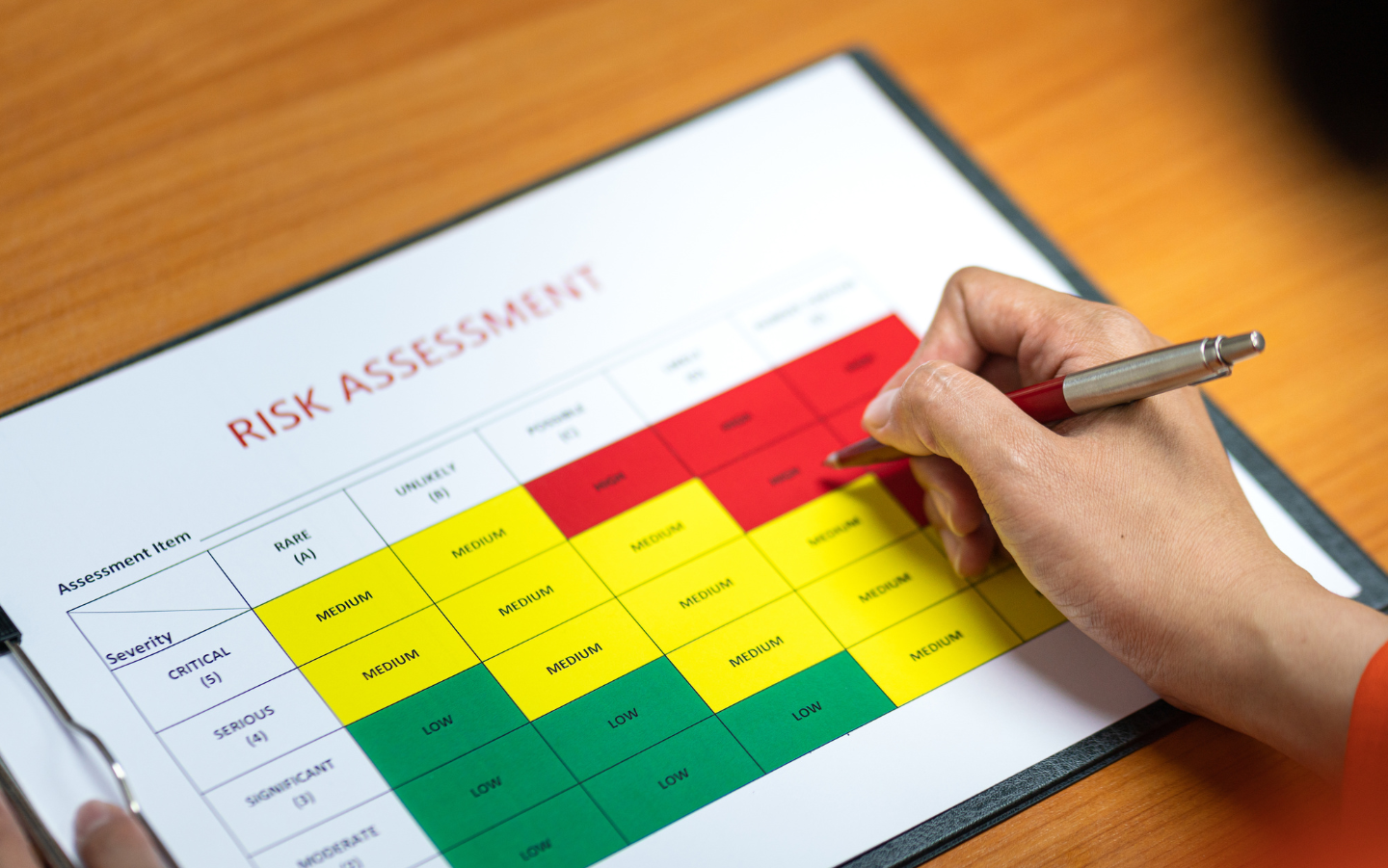
Many companies use a risk matrix to score hazards based on these factors.
3. Control Measures
Controls are implemented following the hierarchy of controls:
- Elimination
- Substitution
- Engineering controls
- Administrative controls
- Personal protective equipment (PPE)
The goal is always to eliminate or reduce risk at the source rather than relying solely on PPE.
4. Documentation and Monitoring
Risk assessments must be documented, communicated, and reviewed regularly. Risks evolve as operations change, equipment ages, or new processes are introduced.
Types of Safety Risk Assessments
Different industries and risk profiles require different assessment types.
Job Safety Analysis (JSA)
A task-based evaluation breaking down specific job steps and identifying hazards associated with each one.
Process Hazard Analysis (PHA)
Used heavily in chemical, oil & gas, and manufacturing environments to evaluate complex systems and failure scenarios.
Dynamic Risk Assessments
Real-time assessments conducted in changing environments, such as construction sites or field operations.
Enterprise-Level Risk Assessments
Used by multi-site organizations to standardize risk evaluation and compare risk trends across locations.
The Business Impact of Strong Risk Assessments
Organizations that treat risk assessments strategically see measurable improvements:
- Reduced recordable incidents
- Lower workers’ compensation costs
- Improved audit outcomes
- Fewer operational disruptions
- Stronger safety culture
More importantly, they shift from reactive to proactive safety management.
Instead of asking, “Why did this happen?” they begin asking, “How do we prevent this from ever happening?”
Common Challenges in Risk Assessment Programs
Despite their importance, many companies struggle with execution.
Inconsistent Documentation
Paper-based assessments create fragmented data and make it difficult to track trends.
Limited Visibility Across Sites
Large organizations often lack centralized insight into risk exposure across facilities.
Poor Follow-Through on Corrective Actions
Identifying risk is only useful if corrective actions are tracked and completed.
Outdated Assessments
Risk assessments are often treated as one-time exercises instead of living processes.
How Technology Strengthens Risk Assessments
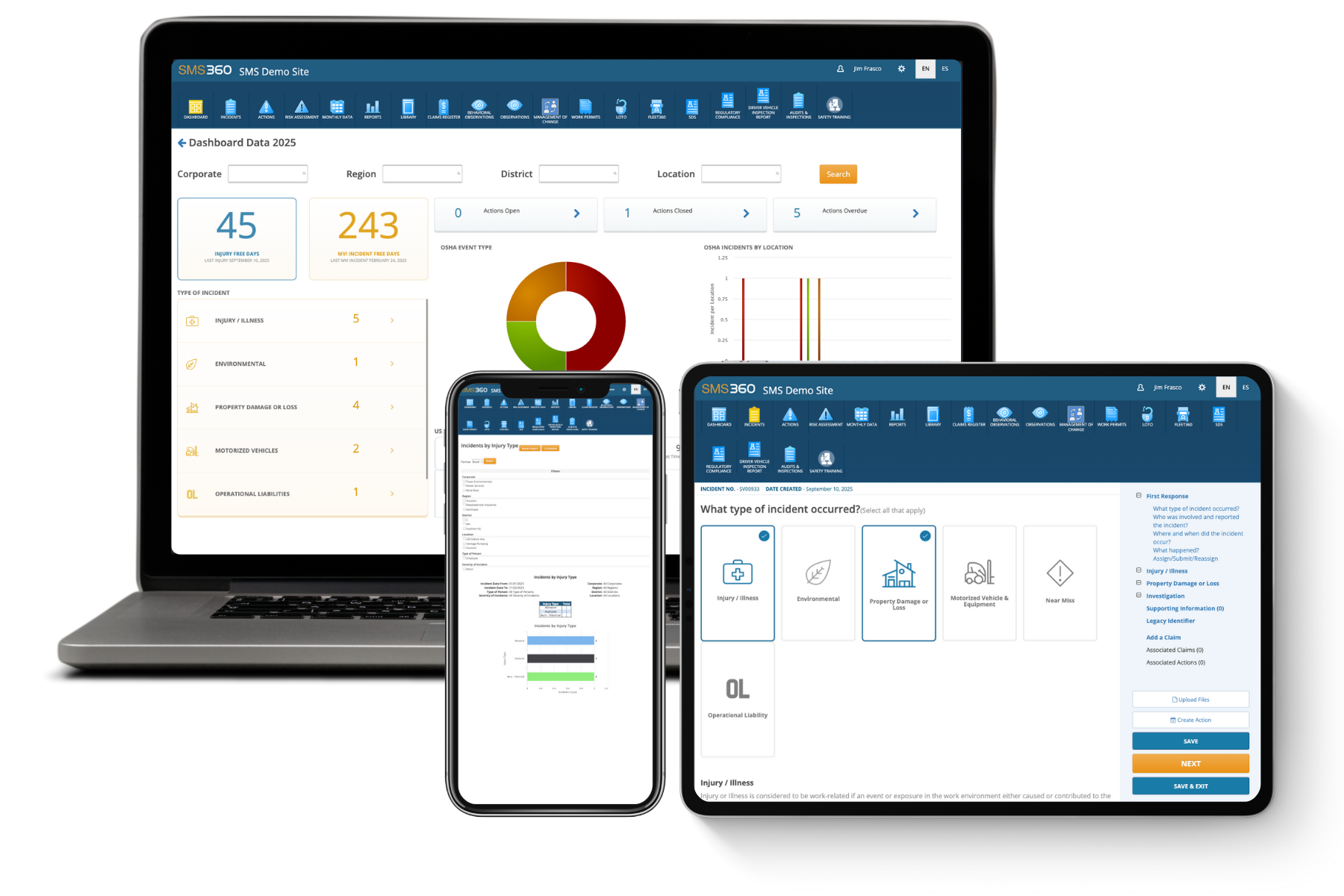
Modern EHS platforms elevate risk assessment programs by:
- Standardizing forms and scoring models
- Enabling mobile hazard reporting
- Tracking corrective actions to closure
- Providing real-time dashboards
- Identifying recurring hazards through data analytics
With centralized visibility, safety leaders can compare risk levels across sites and prioritize high-exposure areas.
Instead of manually compiling spreadsheets, leaders gain instant insight into leading indicators such as near misses, open hazards, and recurring risk patterns.
Building a Proactive Risk Culture
An effective risk assessment program isn’t owned by one department — it’s embedded across the organization.
Encourage Reporting
Workers should feel empowered to report hazards without fear of blame.
Integrate Risk Reviews into Operations
Safety discussions should be part of shift meetings, toolbox talks, and management reviews.
Track Leading Indicators
Near misses and unsafe conditions provide early warning signals long before recordables occur.
Review and Improve
Risk assessments must evolve alongside business operations.
Organizations that regularly evaluate trends outperform those that only respond after incidents.
From Compliance to Competitive Advantage
Risk assessments began as compliance requirements. Today, they represent a competitive advantage.
Companies that manage risk effectively:
- Attract stronger insurance terms
- Win contracts requiring robust safety records
- Improve workforce retention
- Strengthen brand reputation
In high-risk industries, safety performance directly influences financial performance.
A mature safety risk assessment process creates resilience — protecting people while protecting the business.
FAQs About Safety Risk Assessments
1. How often should safety risk assessments be conducted?
Risk assessments should be reviewed annually at minimum, and whenever significant operational changes occur — such as new equipment, new processes, or organizational restructuring.
2. Who is responsible for conducting a risk assessment?
While safety leaders typically facilitate the process, risk assessments should involve supervisors and frontline employees who understand daily operational realities.
3. What is the difference between a hazard and a risk?
A hazard is a potential source of harm. Risk is the likelihood and severity of harm resulting from that hazard.
4. Are risk assessments required by OSHA?
Yes. OSHA requires employers to identify workplace hazards and implement controls, though specific assessment formats may vary by industry.
5. How can EHS software improve risk assessment programs?
EHS software centralizes documentation, automates corrective action tracking, enables mobile reporting, and provides analytics that reveal recurring risks across facilities — helping organizations move from reactive compliance to proactive prevention.