AI-powered safety tools are moving from pilot programs to real-world deployment. Here is what safety managers need to understand about machine learning and computer vision — and how these technologies are reshaping hazard detection and prevention.
The application of artificial intelligence to workplace safety is no longer a future concept. Machine learning algorithms are already processing safety data to identify risk patterns that human analysis would miss. Computer vision systems are watching production floors, construction sites, and warehouses in real time, automatically detecting unsafe conditions and behaviors and alerting safety teams before an incident occurs. For safety professionals trying to stay ahead of a rapidly evolving technology landscape, understanding what these tools can do — and what their limitations are — is increasingly important.
What Is Machine Learning in the Context of Workplace Safety?
Machine learning is a branch of artificial intelligence in which algorithms learn from data to identify patterns, make predictions, and improve their performance over time without being explicitly programmed for each task. In workplace safety, machine learning is being applied to analyze historical incident and near-miss data, identify leading indicators of injury risk, predict which workers, departments, or conditions are most likely to produce an incident, and optimize the deployment of safety resources and interventions.
How Machine Learning Differs From Traditional Safety Analytics
Traditional safety analytics applies statistical techniques to historical data to identify trends and correlations. Machine learning extends this by building predictive models that can handle much larger and more complex datasets, identify non-obvious relationships between variables, and update their predictions as new data becomes available. The practical difference for safety managers is that machine learning can surface insights that would never emerge from standard reporting — for example, that incidents on a specific production line spike during shift transitions on Tuesday and Thursday afternoons, or that workers who have not completed a specific training module are three times more likely to be involved in a near-miss within their first 90 days.
Computer Vision: Real-Time Hazard Detection
Computer vision is the branch of AI concerned with enabling machines to interpret and understand visual information from cameras and video feeds. In workplace safety, computer vision systems analyze video streams in real time to detect unsafe conditions and behaviors, classify what they observe, and trigger alerts or automated responses.
What Computer Vision Can Detect
Modern computer vision safety systems are capable of detecting a remarkable range of workplace hazards and behaviors. Current deployments include PPE compliance monitoring — detecting whether workers are wearing required hard hats, high-visibility vests, safety glasses, and other protective equipment; slip, trip, and fall hazard detection, including spills, obstructions, and workers in precarious positions; proximity alerts that detect when workers approach restricted zones or come dangerously close to moving equipment or vehicles; ergonomic risk detection that identifies repetitive motion patterns or lifting postures associated with musculoskeletal injury; and social distancing and crowd density monitoring in applications where worker proximity creates risk.
How Computer Vision Alerts Work
When a computer vision system detects a potential hazard or non-compliant behavior, it can trigger several types of response. Real-time alerts can be sent to supervisors via mobile notifications, enabling immediate intervention. On-screen warnings can be displayed in the monitored area to alert the worker directly. The system can generate a timestamped log of the event with video capture for review and investigation. In some applications, the detection can trigger an automated equipment stop or access control response.
Practical Applications Across Industries
Manufacturing
In manufacturing environments, computer vision is being used to monitor PPE compliance at machine interfaces, detect when guards have been removed or bypassed, identify workers who have entered restricted zones, and track ergonomic risk across assembly line operations. Machine learning is being applied to analyze maintenance records, equipment sensor data, and incident history to predict equipment failures that could create safety hazards before they occur.
Construction
Construction sites present particularly challenging conditions for safety monitoring due to their constantly changing layouts, high worker density, and diverse range of hazardous activities. Computer vision systems on construction sites are being deployed to monitor fall protection compliance — detecting workers at height without proper harness use — identify unauthorized access to restricted areas, monitor crane and heavy equipment exclusion zones, and track PPE compliance across large, dynamic worksites where supervisor-to-worker ratios make manual monitoring impractical.
Warehousing and Logistics
Warehousing operations are using computer vision to manage the interaction between pedestrian workers and forklift traffic — one of the leading causes of serious injury in these environments. Systems can detect when workers enter forklift travel lanes, alert operators to pedestrian proximity, and generate data on traffic pattern risks that can inform facility layout improvements.
Limitations and Responsible Deployment
Machine learning and computer vision are powerful tools, but they are not infallible. False positives — alerts triggered by benign conditions that resemble hazards — can erode trust in the system and lead to alert fatigue. False negatives — missed detections of actual hazards — can create a false sense of security. Model performance depends heavily on the quality and diversity of training data, the environmental conditions in which the system operates, and the ongoing monitoring and calibration of the system over time.
Privacy considerations are also significant. Workers have legitimate interests in how video monitoring data is collected, stored, and used. Organizations deploying computer vision systems should develop clear policies on data retention, access controls, how footage will be used in disciplinary proceedings, and how workers will be informed about monitoring. Transparent communication and genuine worker involvement in program design consistently produce better outcomes than unilateral surveillance deployments.
Frequently Asked Questions on Machine Learning in Workplace Safety
Can machine learning really predict workplace incidents before they happen?
Predictive safety models can identify elevated risk conditions that correlate with higher incident rates — they are not crystal balls that predict specific events. What they can do is analyze patterns across large datasets of historical incidents, near misses, inspection findings, training records, and behavioral observations to identify the combinations of conditions that have historically preceded incidents. When those conditions appear again, the model flags elevated risk, allowing safety managers to investigate and intervene proactively. The accuracy of these predictions depends heavily on the quality, volume, and diversity of the training data, which is why organizations that invest in consistent data collection across leading indicators get more value from predictive analytics than those relying solely on incident records.
Is computer vision PPE monitoring accurate enough to rely on?
The accuracy of computer vision PPE monitoring systems varies significantly depending on the system, the environmental conditions, and the specific PPE being monitored. High-contrast, standardized PPE — bright orange vests, yellow hard hats — is generally easier to detect reliably than more variable items. Challenging lighting conditions, occlusion by equipment or other workers, and unusual camera angles can reduce accuracy. The best implementations use computer vision as a high-volume screening tool that flags potential non-compliance for human review, rather than as an autonomous enforcement system. Organizations should evaluate system accuracy carefully during piloting, set appropriate expectations with workers and supervisors, and build in human review processes for flagged events.
What are the privacy implications of using computer vision in the workplace?
Workers have legitimate privacy interests even in workplace settings, and the deployment of AI-powered video monitoring raises significant questions about consent, data use, and proportionality. From a legal standpoint, requirements vary by jurisdiction — some states and countries require explicit employee notice or consent before implementing workplace monitoring, while others permit it with general employment policy notification. Beyond legal compliance, there are important practical considerations: worker trust, union agreement requirements, data retention limits, access controls on footage, and clear policies on how monitoring data will and will not be used. Organizations that approach computer vision deployment transparently, involve worker representatives in program design, and establish clear governance frameworks consistently achieve better safety outcomes and encounter less resistance than those that implement monitoring unilaterally.
How does machine learning integrate with existing safety management systems?
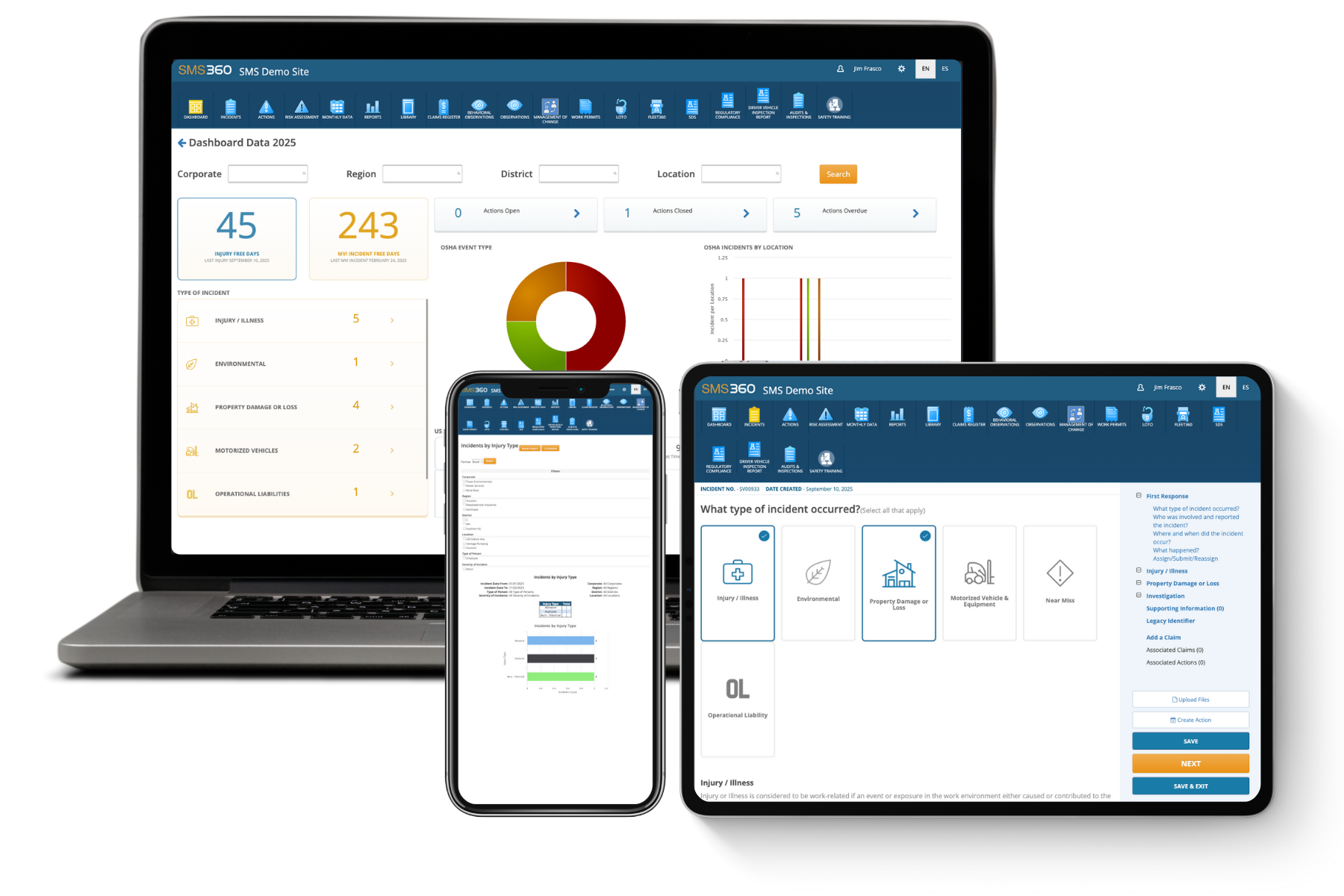
The integration model depends on the specific tools involved. Some machine learning safety applications are built as standalone platforms that generate alerts and reports independent of other systems. Others are designed to integrate with existing EHS platforms through APIs, feeding their outputs — risk scores, predicted incident likelihood, flagged conditions — directly into the workflows safety managers already use for corrective action assignment, investigation, and reporting. The most effective implementations connect machine learning insights to the operational workflows where they can drive action: when a predictive model flags elevated risk in a specific work area, that flag should automatically generate an inspection assignment in the safety management system, not simply appear in a separate dashboard that may not be regularly reviewed.
What data does a machine learning safety model need to be effective?
The more data a machine learning model has access to, and the higher its quality and consistency, the more accurate and useful its predictions will be. For safety applications, the most valuable inputs include historical incident and near-miss records with detailed causal categorization; inspection and audit results linked to specific locations, equipment, and time periods; training completion records by employee, role, and topic; behavioral observation data; environmental and production data such as output rates, shift schedules, and seasonal patterns; and equipment maintenance and failure records. Models trained on rich, multi-dimensional datasets consistently outperform those trained only on incident history. This is one of the strongest arguments for investing in comprehensive safety data collection through a centralized EHS platform before attempting to apply advanced analytics.
.png)