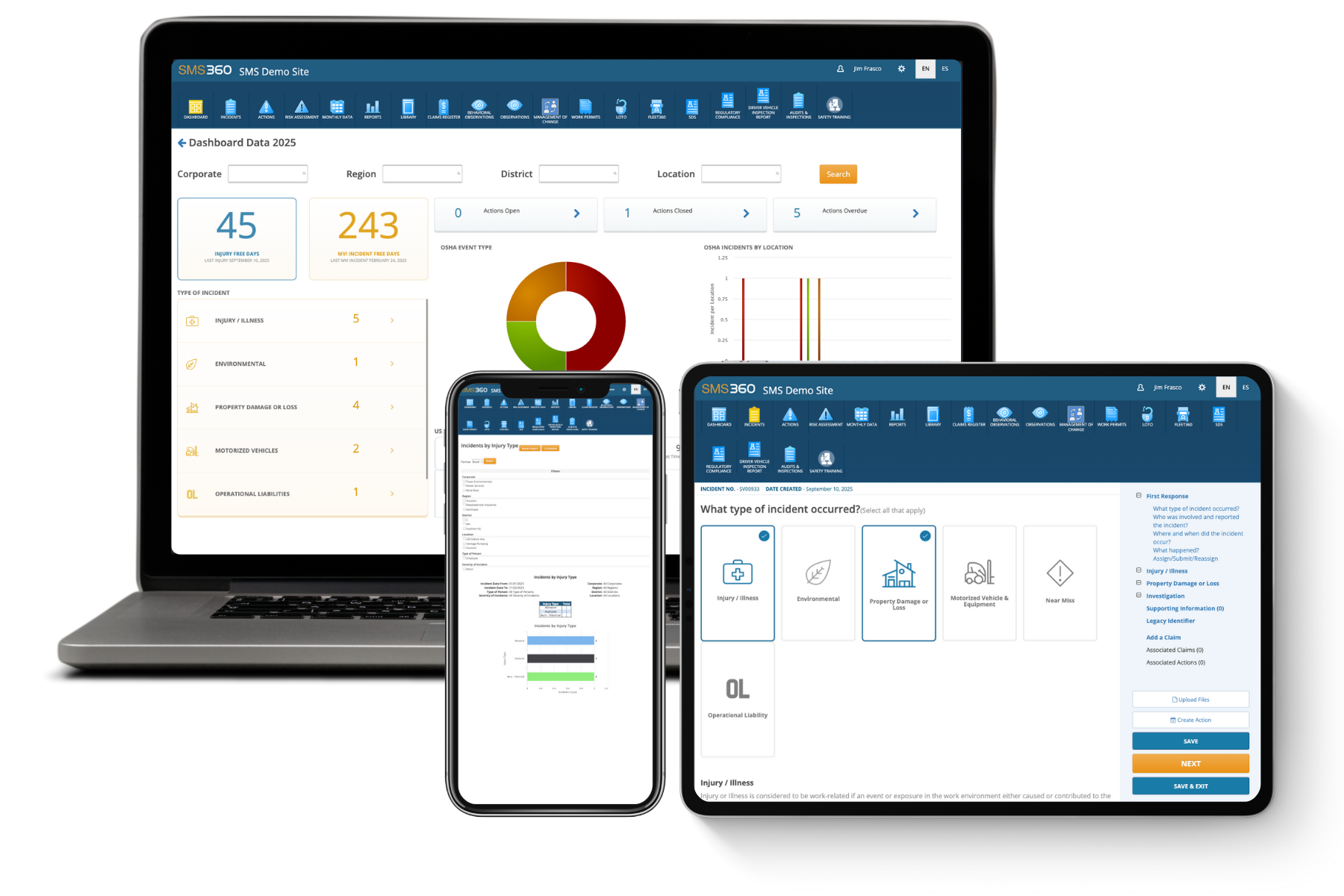
Accurate incident reporting is one of the most important pillars of a strong safety program. When incidents are poorly documented, organizations lose critical information that could prevent future injuries, strengthen compliance posture, and protect against legal exposure.
An effective incident report template ensures consistency, accuracy, and accountability. It transforms scattered information into structured insight that drives corrective action and continuous improvement.
This guide outlines what a strong incident report template should include, how to structure it, and how organizations can modernize reporting processes.
Why Incident Reporting Matters
Workplace incidents do more than cause injuries — they reveal system weaknesses.
Every incident report should answer three key questions:
- What happened?
- Why did it happen?
- What will prevent it from happening again?
Without standardized reporting, organizations struggle to identify recurring hazards, evaluate trends, and demonstrate compliance during audits or investigations.
Strong documentation protects both employees and the business.
Core Elements of an Effective Incident Report Template
A well-designed incident report template captures all necessary details while remaining easy to complete.
1. Basic Incident Information
This section establishes the foundational facts.
- Date and time of incident
- Location (site, department, area)
- Type of incident (injury, near miss, property damage, environmental event)
- Reported by
- Supervisor or manager involved
Consistency in capturing this information enables trend analysis across locations and time periods.
2. Injured Person Information (If Applicable)
When an injury occurs, documentation must include:
- Employee name and ID
- Job title
- Department
- Length of employment
- Nature of injury
- Body part affected
- Medical treatment provided
Accurate injury documentation is critical for OSHA recordkeeping and workers’ compensation claims.
3. Detailed Description of the Incident
This section should provide a clear, objective narrative of what occurred.
Best practice guidelines:
- Use factual language
- Avoid assumptions or blame
- Describe sequence of events chronologically
- Include environmental conditions (lighting, weather, noise, etc.)
The description should allow someone unfamiliar with the situation to fully understand what happened.
4. Witness Statements
Witness accounts add valuable perspective and may clarify inconsistencies.
Include:
- Witness name
- Contact information
- Written statement
- Date recorded
Structured documentation prevents critical details from being forgotten over time.
5. Immediate Actions Taken
This section captures the organization’s initial response.
- First aid administered
- Area secured
- Equipment shut down
- Hazard removed or isolated
Documenting immediate response demonstrates due diligence.
6. Root Cause Analysis
An incident report should not end with a description of what happened. It must examine why.
Include:
- Contributing factors
- Unsafe conditions
- Unsafe behaviors
- System failures
- Training gaps
Root cause analysis transforms reporting into prevention.
7. Corrective and Preventive Actions
Each identified root cause should result in a defined action.
Include:
- Action description
- Responsible party
- Target completion date
- Status tracking
Corrective action management is where many programs fail. Without clear ownership and deadlines, hazards remain unresolved.
8. Review and Approval
A structured approval process ensures accountability.
- Supervisor review
- Safety manager review
- Final sign-off
- OSHA recordability determination
Standardized workflows strengthen compliance integrity.
Types of Incidents to Document
An incident report template should support multiple event categories.
Recordable Injuries
Injuries meeting OSHA criteria for recording and reporting.
Near Misses
Events that could have resulted in injury but did not. Near miss reporting is a powerful leading indicator.
Property Damage
Equipment damage events may signal mechanical or procedural weaknesses.
Environmental Incidents
Spills, emissions, or permit violations must be thoroughly documented.
Common Challenges with Paper-Based Reporting
Many organizations still rely on paper forms or disconnected spreadsheets.
Common issues include:
- Delayed reporting
- Illegible handwriting
- Incomplete forms
- Lost documentation
- Limited visibility across sites
Paper-based systems limit organizational learning.
Moving from Paper to Digital Incident Reporting
Modern EHS platforms streamline incident reporting through:
- Mobile-friendly submission
- Photo and document uploads
- Automated notification workflows
- Corrective action tracking
- Real-time dashboards
Digital reporting increases accuracy and reduces administrative burden.
Most importantly, it creates a searchable, centralized database of safety intelligence.
Best Practices for Strong Incident Reporting
Encourage Immediate Reporting
Employees should report incidents as soon as possible, even for near misses.
Remove Blame Culture
Reporting systems should focus on system improvement — not individual punishment.
Standardize Templates Across Sites
Consistency enables enterprise-level visibility and benchmarking.
Track Trends Over Time
Use incident data to identify patterns by department, job role, or time of day.
Follow Through on Corrective Actions
Closing the loop is critical for preventing recurrence.
The Strategic Value of Incident Data
Incident reports provide more than compliance documentation — they offer operational insight.
Organizations that analyze incident trends can:
- Identify recurring hazard categories
- Adjust training priorities
- Improve equipment maintenance
- Modify procedures before serious injuries occur
Data-driven safety programs outperform reactive ones.
When incident reporting is structured, accessible, and connected to corrective action tracking, it becomes a powerful prevention tool.
FAQs About Incident Report Templates
1. What is the purpose of an incident report template?
An incident report template standardizes how workplace events are documented, ensuring consistency, compliance, and actionable insight.
2. Should near misses be documented?
Yes. Near misses are leading indicators of risk and provide valuable insight into system weaknesses before injuries occur.
3. How detailed should an incident description be?
Descriptions should be factual, chronological, and detailed enough that an external reviewer could understand what occurred without additional explanation.
4. Who should complete the incident report?
The supervisor or designated investigator typically completes the report, with input from witnesses and the injured employee if applicable.
5. How can software improve incident reporting?
EHS software digitizes reporting, automates corrective action tracking, centralizes documentation, and provides analytics that reveal recurring risks across the organization.