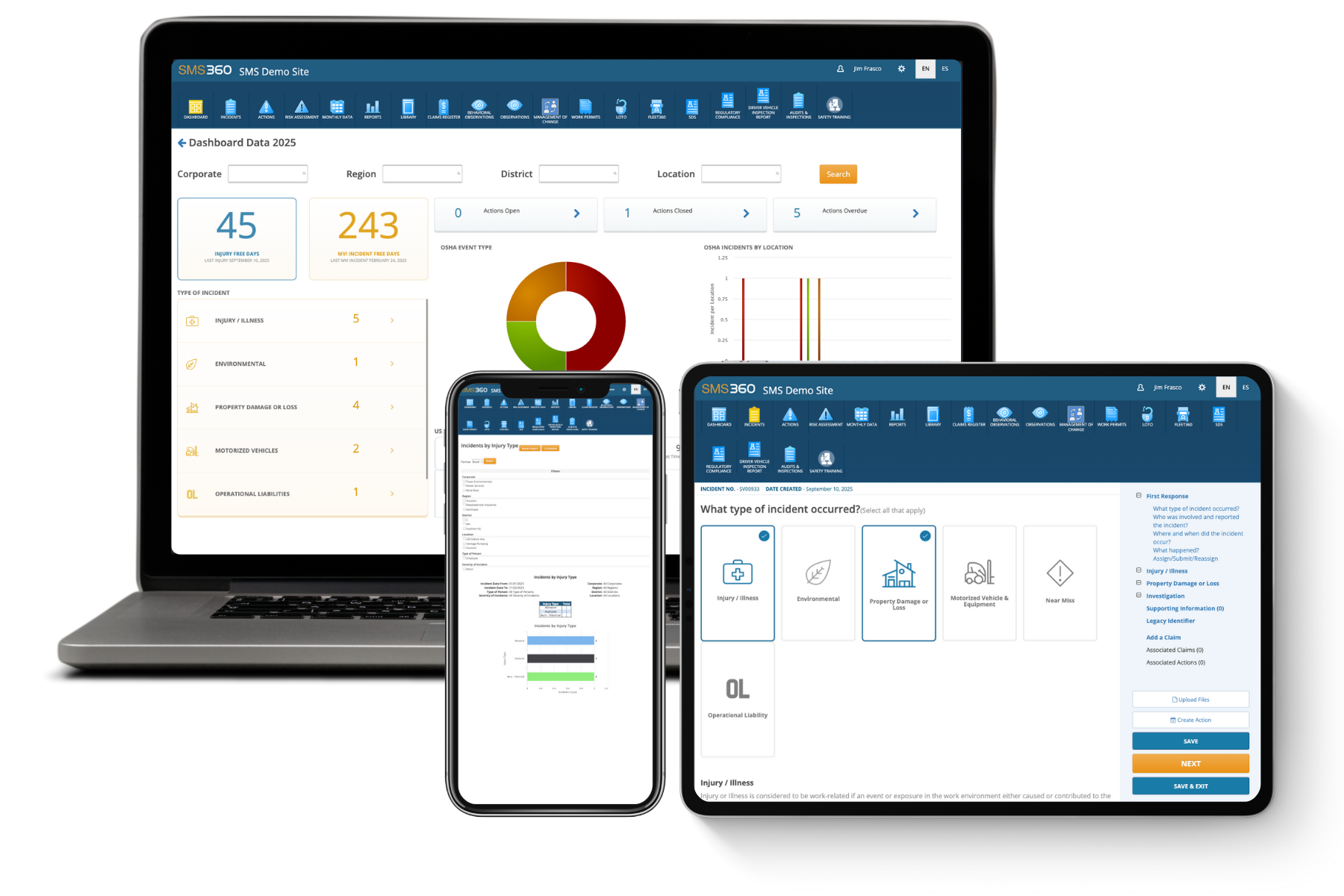
Environmental, Health, and Safety (EHS) programs have evolved far beyond clipboards, spreadsheets, and disconnected reporting tools. As organizations grow, so does operational complexity — more sites, more regulations, more contractors, more data.
EHS software brings structure, visibility, and intelligence to safety management. Instead of reacting to incidents, organizations can proactively manage risk, compliance, and performance across every location.
Below are the most impactful real-world use cases for modern EHS software.
Centralized Incident Management
One of the most common use cases is managing workplace incidents in a structured, trackable system.
Capture Incidents in Real Time
Mobile-friendly platforms allow employees to report:
- Injuries
- Near misses
- Unsafe conditions
- Property damage
Immediate reporting accelerates response and reduces underreporting.
Automate Investigations and Corrective Actions
Once an incident is logged, workflows automatically:
- Assign investigators
- Trigger root cause analysis steps
- Track corrective actions to closure
- Notify stakeholders
This ensures accountability and prevents issues from falling through the cracks.
Risk Assessments and Hazard Identification
EHS software standardizes how risk is evaluated across the organization.
Digital Job Safety Analyses (JSAs)
Teams can conduct structured task-based hazard assessments using mobile forms. Risk scoring models ensure consistency.
Enterprise Risk Visibility
Leadership can compare risk exposure across multiple facilities, identifying high-risk sites and recurring hazards.
Instead of relying on static documents, risk data becomes dynamic and searchable.
Compliance Management and Regulatory Tracking
Regulatory compliance is complex and constantly evolving.
OSHA Recordkeeping
Platforms streamline OSHA 300, 300A, and 301 recordkeeping and reporting.
Audit Management
Organizations can schedule, conduct, and document internal or external audits with standardized templates and automated follow-up actions.
Document Control
Policies, SDS documentation, permits, and procedures can be centrally stored and version-controlled.
Compliance becomes organized instead of reactive.
Training and Competency Tracking
Training gaps are a leading contributor to workplace incidents.
EHS software helps organizations:
- Assign training based on role or risk exposure
- Track certifications and expirations
- Automate renewal notifications
- Maintain defensible training records
Instead of manually tracking spreadsheets, safety teams gain confidence that required training is completed and documented.
Corrective and Preventive Action (CAPA) Management
Corrective action tracking is where many programs fail.
EHS platforms ensure:
- Every hazard or audit finding receives an owner
- Deadlines are clearly defined
- Escalations occur if actions remain open
- Leadership can view completion trends
Accountability drives results.
Safety Observations and Leading Indicators
Modern safety programs focus on prevention — not just recordables.
Near Miss Reporting
Capturing near misses provides early warning signs of systemic risk.
Behavior-Based Safety (BBS)
Observation programs allow teams to log safe and at-risk behaviors, reinforcing positive safety culture.
Tracking leading indicators helps organizations intervene before injuries occur.
Multi-Site Visibility and Executive Reporting
As organizations expand, consistency becomes critical.
EHS software enables:
- Standardized data collection across all facilities
- Executive dashboards showing TRIR, DART, and risk trends
- Real-time reporting filtered by region or business unit
Leadership no longer waits for monthly spreadsheets — they gain live insight into performance.
Contractor and Visitor Management
In high-risk industries, contractors present additional exposure.
EHS software supports:
- Contractor prequalification
- Safety orientation tracking
- Documentation collection
- Incident tracking tied to contractors
Managing contractor risk is essential to enterprise-level safety performance.
ESG and Sustainability Reporting
Many organizations now face environmental and governance reporting obligations.
Modern EHS platforms often support:
- Emissions tracking
- Environmental incident reporting
- Waste management documentation
- ESG data consolidation
This ensures transparency and alignment with broader corporate responsibility initiatives.
Emergency Preparedness and Response
Preparedness planning reduces operational disruption.
EHS software helps organizations:
- Document emergency response plans
- Track drills and preparedness exercises
- Assign emergency response roles
- Maintain communication logs during events
Digital documentation strengthens readiness.
From Operational Tool to Strategic Platform
EHS software is not just about digitization — it’s about intelligence.
With centralized data, organizations can:
- Identify recurring injury types
- Analyze high-risk departments
- Compare safety performance year over year
- Forecast potential exposure
This elevates safety from compliance management to strategic risk management.
Industry-Specific Use Cases
While use cases are broad, industry applications vary.
Manufacturing
- Machine guarding assessments
- Lockout/tagout tracking
- Process hazard analysis
Construction
- Daily field inspections
- Subcontractor safety management
- Mobile incident capture
Oil & Gas
- Permit to work systems
- Confined space monitoring
- Environmental compliance
Transportation & Logistics
- Driver safety reporting
- Fleet incident tracking
- Fatigue management
A configurable EHS platform adapts to operational realities rather than forcing rigid workflows.
The Operational Advantage
Organizations that implement structured EHS software typically experience:
- Faster incident resolution
- Stronger audit readiness
- Improved corrective action completion rates
- Reduced administrative burden
- Greater leadership visibility
The shift is subtle but powerful: safety becomes measurable and scalable.
FAQs About EHS Software Use Cases
1. What industries benefit most from EHS software?
High-risk industries such as manufacturing, construction, energy, logistics, and chemical operations benefit significantly due to complex compliance and hazard environments.
2. Can EHS software replace spreadsheets entirely?
Yes. Most modern platforms centralize incident reporting, audits, training, and compliance tracking — eliminating the need for disconnected spreadsheets.
3. Is EHS software only for large enterprises?
No. While enterprises gain significant multi-site visibility benefits, mid-sized organizations also benefit from standardization and automation.
4. How does EHS software improve safety culture?
By making reporting easier, increasing transparency, and ensuring follow-through on corrective actions, software reinforces accountability and proactive engagement.
5. What is the biggest ROI driver for EHS software?
Reduced incidents and improved corrective action tracking typically deliver the strongest financial impact through lower injury costs and reduced operational disruption.