Mental health is a workplace safety issue — and organizations that treat it as one are seeing better outcomes across the board. Here is what safety managers need to know to build a program that actually supports worker wellbeing.
For most of the history of occupational health and safety, the focus was almost exclusively on physical hazards — the machinery that could crush a hand, the chemical that could burn a lung, the fall that could end a life. Mental health was, at best, an HR concern and, at worst, invisible. That is changing. A growing body of research, regulatory guidance, and real-world experience is establishing what forward-thinking organizations have understood for years: mental health is inseparable from workplace safety. Workers who are struggling with stress, anxiety, depression, burnout, or trauma are more likely to be injured, more likely to make errors, more likely to leave, and less able to contribute to a safety culture that protects everyone.
The business case for taking workplace mental health seriously has never been stronger. And for safety professionals whose mandate is to protect workers from all harm — physical and psychological — the case for owning this issue is equally clear.
The Scale of the Problem
Mental health conditions are among the most prevalent and costly health issues affecting working populations worldwide. The World Health Organization estimates that depression and anxiety cost the global economy over $1 trillion per year in lost productivity. In the United States, mental health conditions are a leading driver of absenteeism, presenteeism (being at work but not fully productive), and employee turnover.
Mental Health and Physical Safety
The connection between mental health and physical safety is well established in research. Cognitive impairment from stress, anxiety, and depression affects attention, decision-making, reaction time, and situational awareness — all critical safety-relevant capabilities. Studies have consistently found that workers experiencing high levels of occupational stress have significantly higher rates of workplace accidents and injuries than their less-stressed counterparts. Fatigue, which is both a cause and a consequence of poor mental health, is a well-documented contributor to workplace incidents across all industries.
High-Risk Industries and Roles
Some industries and roles carry particularly elevated mental health risk. Construction workers have suicide rates that are among the highest of any occupational group. First responders — police, fire, emergency medical services — experience extraordinarily high rates of PTSD, depression, and burnout due to cumulative trauma exposure. Manufacturing, transportation, and logistics workers face chronic stress from production pressure, long hours, shift work, and physical demands. Healthcare workers have experienced a widely documented mental health crisis exacerbated by the COVID-19 pandemic. Safety managers need to understand the specific psychosocial hazards their workforce faces and design programs accordingly.
Psychosocial Hazards: The Workplace Causes of Mental Health Risk
Just as physical hazards are workplace conditions that cause physical harm, psychosocial hazards are workplace conditions that cause psychological harm. Identifying and addressing them is the foundation of a workplace mental health program.
Common Psychosocial Hazards
Key psychosocial hazards in workplace settings include excessive workload and unrealistic production demands, lack of control over work processes and scheduling, poor social support from supervisors and colleagues, job insecurity and organizational change, bullying, harassment, and discrimination, traumatic event exposure, role ambiguity and conflicting demands, and inadequate recognition and reward. These hazards are as real and as manageable as physical ones — they simply require different identification and control methods.
The Hierarchy of Controls Applied to Mental Health
The traditional hierarchy of controls — eliminate, substitute, engineer, administer, protect — applies equally well to psychosocial hazards as to physical ones. Elimination might mean redesigning a job to remove unnecessary sources of pressure or conflict. Substitution might mean changing shift patterns to reduce fatigue. Engineering controls might mean redesigning workflows to give workers more autonomy. Administrative controls include training, workload management policies, and psychological support programs. Personal protective equipment, in this context, means individual coping skills training and access to mental health support services. The most effective programs address psychosocial risk at the organizational level first, rather than relying primarily on individual-level interventions.
Building a Workplace Mental Health Program
Leadership Commitment and Culture
No mental health program will succeed without genuine leadership commitment and a culture in which workers feel safe to acknowledge when they are struggling. This means leaders who model healthy work behaviors, who speak openly about mental health without stigma, and who make it clear through their actions — not just their words — that worker wellbeing is a genuine priority. Psychological safety — the belief that one can speak up, ask for help, or report a concern without fear of ridicule or retaliation — is both a prerequisite for mental health program effectiveness and an important indicator of overall safety culture quality.
Mental Health First Aid and Manager Training
Managers are often the first to notice when a worker is struggling — changes in behavior, performance, attendance, or demeanor that may signal a mental health concern. Training managers to recognize these signs, initiate supportive conversations, and connect workers with appropriate resources is one of the highest-leverage interventions an organization can make. Mental Health First Aid training, which is now widely available, gives non-clinical personnel the skills to provide initial support and appropriate referrals without overstepping their competence.
Employee Assistance Programs
Employee Assistance Programs (EAPs) provide confidential counseling, referral, and support services to employees and their immediate families. They are one of the most commonly available and underutilized mental health resources in organizations. Improving EAP utilization requires active promotion by leadership and managers, regular communication about the program and how to access it, and strong confidentiality assurances that workers genuinely believe.
Integrating Mental Health Into Safety Management Systems
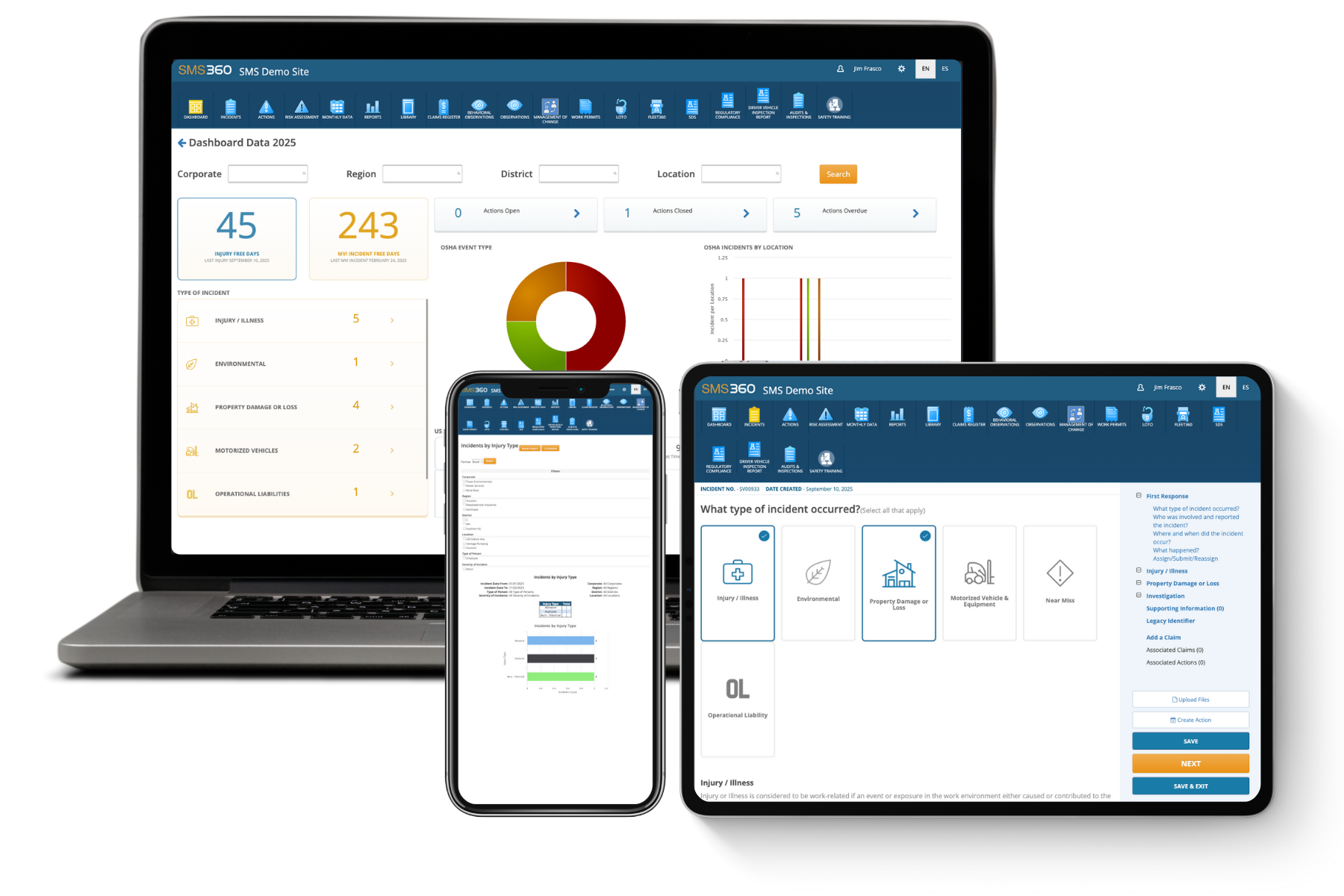
The most progressive organizations are integrating mental health indicators into their safety management systems — tracking psychological injury reports alongside physical ones, including mental health considerations in risk assessments, and building psychosocial hazard identification into inspection and audit programs. SMS360's incident management and corrective action capabilities can support this integration by enabling organizations to report and track psychosocial incidents — workplace bullying, traumatic event exposure, stress-related impairment — with the same systematic rigor applied to physical safety events.
Frequently Asked Questions About Mental Health in the Workplace
Is workplace mental health a safety manager's responsibility or HR's?
It is both — and the most effective programs involve genuine collaboration between safety, HR, occupational health, and leadership. Safety managers have a legitimate and important role because the causes and consequences of poor workplace mental health are directly relevant to their mandate: psychosocial hazards cause harm to workers, and psychological impairment is a material safety risk. Many modern EHS frameworks, including ISO 45001 and emerging OSHA guidance on psychosocial risks, explicitly include psychological health within the scope of occupational health and safety management systems. Safety managers who understand psychosocial hazards, incorporate mental health into risk assessments, and advocate for systemic organizational changes are fulfilling their professional responsibility — not overstepping into HR territory.
How can organizations reduce the stigma around mental health in the workplace?
Reducing stigma requires sustained, consistent effort at multiple levels. Leadership visibility matters most — when senior leaders speak openly about mental health, share personal experiences with stress or help-seeking, and demonstrate through their own behavior that acknowledging struggle is acceptable, it shifts organizational norms more powerfully than any policy document. Language matters: avoiding terms that frame mental health conditions as weakness or character flaws, and using accurate clinical terminology instead, gradually reshapes how mental health is perceived. Visibility of mental health resources — displaying EAP information, making mental health days a standard part of benefits communication, including mental health topics in safety toolbox talks — normalizes the subject. And consistent, non-punitive responses when workers do disclose mental health concerns build the trust that encourages others to seek help before a crisis occurs.
What is the difference between stress and burnout, and why does it matter for safety?
Stress is a temporary physiological and psychological response to demands that exceed perceived resources. In moderate doses, it is normal and even adaptive. Burnout is a state of chronic, unresolved work stress characterized by emotional exhaustion, depersonalization or cynicism toward work, and reduced sense of personal accomplishment. It develops over time when stress is sustained without adequate recovery, recognition, or relief. The distinction matters for safety because burnout affects cognitive function, judgment, and situational awareness in ways that persist even when the worker is physically present at work. A burned-out worker who appears to be performing normally may have significantly compromised safety-critical capabilities. Burnout is also a leading predictor of high-consequence errors in safety-sensitive roles such as healthcare, transportation, and emergency services.
How should organizations respond when a worker experiences a traumatic workplace event?
Traumatic workplace events — fatalities, serious injuries, violent incidents, natural disasters — require a structured response that addresses both the immediate operational response and the psychological needs of affected workers. In the immediate aftermath, providing psychological first aid — which focuses on safety, calming, connection to support, and practical assistance rather than formal psychological debriefing — is appropriate. Ensuring that all affected workers are offered access to EAP services or other mental health support, and actively following up to check on wellbeing in the days and weeks after the event, demonstrates genuine organizational care. Managers should be trained in how to check in with workers without prying, and workers should be informed about normal trauma reactions so they understand what they may experience. Critical Incident Stress Debriefing (CISD), once widely promoted as a universal post-trauma intervention, has a mixed evidence base and should be used selectively and by trained facilitators.
Can safety management software help organizations track and manage mental health programs?
Safety management software can play a meaningful supporting role in workplace mental health programs, even though it is not designed as a clinical mental health tool. Specifically, it can facilitate the reporting of psychosocial incidents and near-misses — workplace bullying events, traumatic exposures, stress-related impairment incidents — creating a data record that allows organizations to identify patterns and hotspots. It can track corrective actions arising from psychosocial risk assessments, ensuring that identified hazards are addressed systematically rather than forgotten. It can manage training assignments for mental health first aid and manager awareness programs. And it can support the integration of mental health considerations into inspection checklists and risk assessment processes, making psychosocial hazard identification a routine part of the safety management workflow rather than a separate, ad hoc activity.
.png)